
1st Choice Residential journal
Do Chimney Sweeping Logs Work? An Honest Answer for DFW Homes
Do chimney sweeping logs work? A little. They loosen light soot, but they can't clear glazed creosote, nests or cracks. Here is how to use one right in DFW.
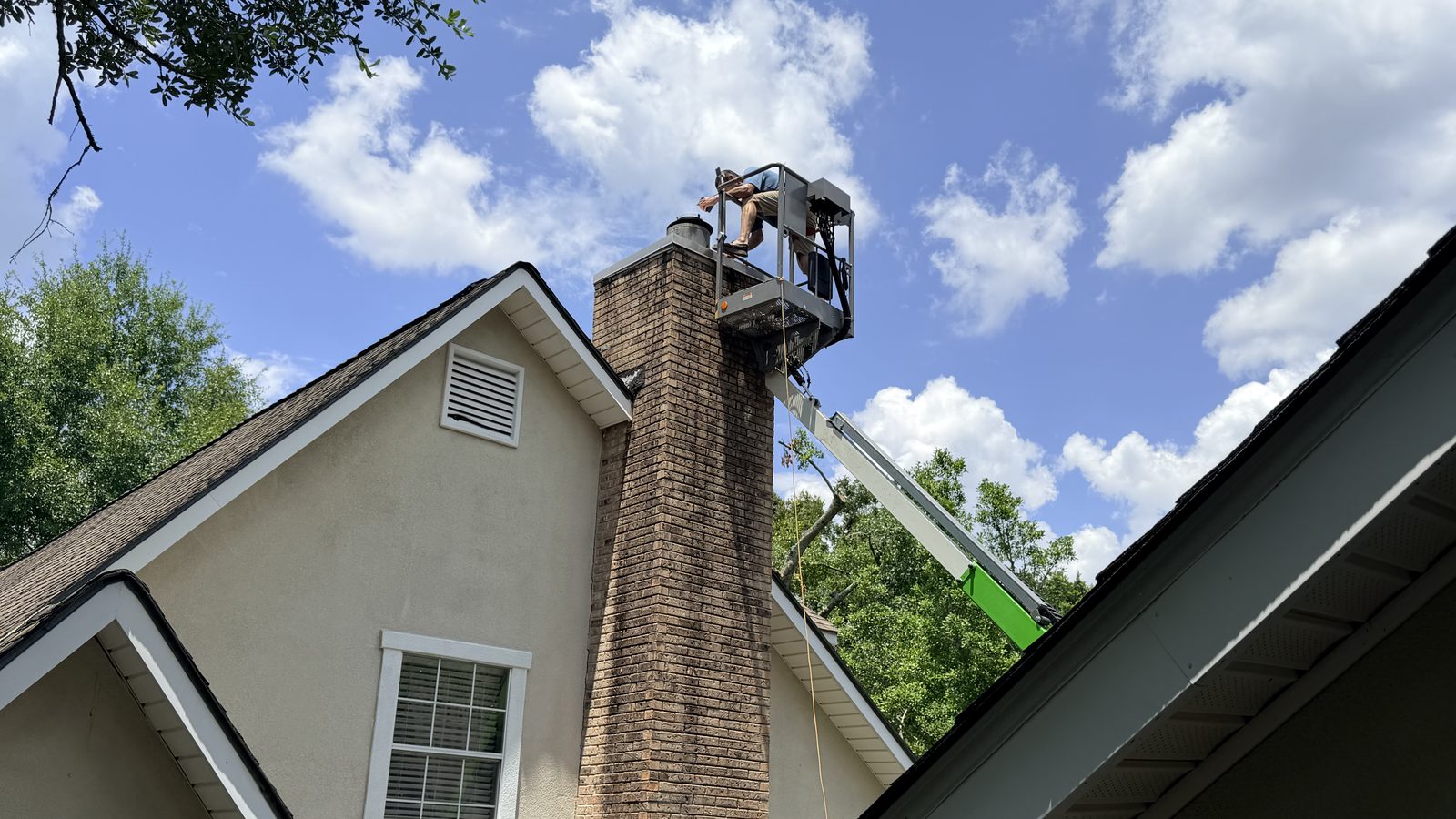
Chimney sweeping logs work a little, not a lot. Burned in a hot wood fire, a sweeping log makes light, flaky soot more brittle so some of it drops into the firebox. It does not remove glazed creosote, clear a bird nest or spot a cracked flue. Use one between sweeps, never instead of one.
Quick answer: A chimney sweeping log is a breath mint for your chimney. Nice to have. Not a toothbrush. It can loosen early-stage soot, but only a brush removes it, and only an inspection tells you the flue is safe for the family fire this holiday season.
Picture it. The first real cold front rolls into Dallas-Fort Worth, the grandkids want s'mores, and there is a box of chimney sweeping logs on the shelf at the hardware store promising a clean chimney for the price of a pizza. Tempting. Here is what that log can do, what it can't, and how to use one without making a mess of your living room.
Do chimney sweeping logs actually work?
Yes, partly. A sweeping log releases additives in its smoke that dry out light creosote and make it flake. Some of that flaky soot falls down into the firebox over the next few days. That is the whole trick.
What it can't do is the part that keeps a house safe. The Chimney Safety Institute of America's safety bulletin says mechanical brushing is the only adequate method for cleaning a chimney. It also warns that creosote that falls and is left in the chimney is a potential fire hazard and can cause a blockage. So the log loosens. A brush removes.
What does a chimney sweeping log do inside the flue?
It works on soft, dusty soot, the early stage of buildup. Creosote gets harder to remove as it builds: first a sooty powder, then crunchy flakes, then a shiny, tar-like glaze. A log has the best shot at the first stage and almost no effect on the glaze. Our guide to the 3 stages of creosote shows what each one looks like.
The loosened soot has to land somewhere. Often it lands on the smoke shelf, the ledge just above the damper, where it sits until someone scoops it out. That is why the log is the start of the job, not the end.
Chimney sweeping log vs. professional chimney sweep
| What you need | Sweeping log | Professional sweep and inspection |
|---|---|---|
| Loosen light, dusty soot | Partly | Yes |
| Remove loosened soot from the chimney | No | Yes |
| Remove glazed, tar-like creosote | No | Yes, or a plan to remove it |
| Clear nests, leaves or debris | No | Yes |
| Find cracked flue tiles or a bad damper | No | Yes, with a camera |
| Safe for gas fireplaces | No | Yes, gas units get their own inspection |
| Cost | The price of the box | $199 sweep and camera inspection in DFW |
Are chimney sweeping logs safe to use?
They are safe when you follow the label in a wood-burning fireplace or stove that is already in decent shape. They are not safe as a fix for a chimney you already suspect is dirty, blocked or damaged. If you see shiny black coating, smell a strong campfire odor in the house, or hear scratching up top, skip the log and call a sweep. Loosening heavy buildup in a chimney you can't see into is not a project for a Saturday afternoon.
Never put a sweeping log in a gas fireplace or on gas logs. They are made for wood fires only.
How to use a chimney sweeping log the right way
If you want to use one between sweeps, here is the safe way to do it:
- Read the box first. Every brand has its own directions. Follow the label, not a shortcut from the neighbor.
- Open the damper all the way. Smoke and loosened soot need a clear path up. A half-open damper is how you smoke out the living room.
- Clear the firebox. Burn the sweeping log by itself, or on a small bed of hot coals if the box allows it. No extra wood on top.
- Light it and keep the screen closed. Light the wrapper as directed, close the metal screen and keep kids and pets back at least 3 feet.
- Let it burn out completely. Stay in the room until it is fully out. Never leave it unattended and never go to bed with it burning.
- Leave the damper open afterward. Loosened soot can keep flaking off for days. Let it fall into the firebox, not stay stuck on the smoke shelf.
- Clean up the firebox and book the sweep. Scoop cold ash into a metal can outside. Then get the flue brushed so what came loose actually leaves the chimney.
DIY stops here: once the log burns out and the firebox is clean, your part is done. Brushing the flue, clearing the smoke shelf and checking the liner take tools, a camera and a ladder, and that is where we come in.
What our techs see
On DFW sweeps, our techs often find the same thing after a homeowner used a sweeping log: a pile of loose, crunchy soot sitting on the smoke shelf, right where the log dropped it. The flue looks a little better from below, and the family assumes the job is done. A few minutes with a brush and a vacuum finishes what the log started, and the camera shows whether the liner is sound before the holiday fires begin.
How often should DFW homes get a real chimney sweep?
Once a year, inspected, and swept when the inspection says so. The U.S. Fire Administration's fireplace safety fact sheet, shared by the Fort Worth Fire Department, says to have your chimney or wood stove inspected and cleaned annually and to burn only seasoned hardwood, since soft, moist wood speeds up creosote. Our burn season is short, but a chimney that sits all summer can collect leaves and nests that no log will move. Not sure where yours stands? Here is how to know if your chimney needs cleaning.
A clean, inspected chimney means a fire that lights fast, draws smoke up instead of into the room, and lets you relax while the kids roast marshmallows. That is the whole point.
Chimney sweeping logs: FAQ
Do chimney sweeping logs really work?
Chimney sweeping logs work a little. Burned in a hot wood fire, they make light, flaky soot more brittle so some falls into the firebox. They do not remove glazed creosote, clear nests or find cracks. For DFW homes, 1st Choice Residential treats a sweeping log as a between-sweeps helper, never a replacement for a real sweep and inspection.
Can a creosote sweeping log replace a chimney sweep?
No. The Chimney Safety Institute of America says mechanical brushing is the only adequate way to clean a chimney, and fallen creosote left in place can be a fire hazard or blockage. A sweeping log can loosen deposits, but someone still has to brush the flue and remove what falls. In DFW, a sweep and camera inspection from 1st Choice Residential is $199.
Can I burn a chimney sweeping log in a gas fireplace?
No. Chimney sweeping logs are made for wood-burning fireplaces and wood stoves. A gas fireplace or gas log set is not built to burn a solid log, and doing it can damage the burner, logs and glass. If your gas fireplace runs sooty or smells odd, have it inspected. 1st Choice Residential checks gas fireplaces in Dallas-Fort Worth for $199.
How often should I use a chimney sweeping log?
Follow the box, which usually means one log at a time in an empty fireplace, used a few times a season at most. In Dallas-Fort Worth, most families burn lightly, so one log midway through the season is plenty. Still book an annual chimney inspection, which the U.S. Fire Administration recommends for every wood-burning chimney or stove.
How do I know if my DFW chimney needs a real sweep instead of a log?
Call for a sweep if you see shiny or tar-like black coating, smell a campfire odor indoors, hear animals, see smoke roll into the room, or have not had an inspection in a year. Those signs need a brush and a camera, not a log. 1st Choice Residential sweeps and camera-inspects DFW chimneys for $199 with a 1-year workmanship warranty.
Book a DFW chimney sweep before the holidays
A sweeping log is a fine helper. A real sweep is the job. 1st Choice Residential does a chimney sweep and camera inspection for $199 with a 1-year workmanship warranty, across Dallas-Fort Worth. Book online or call (817) 791-4606.
Where we serve: Dallas-Fort Worth (817) 791-4606 · Mobile & Baldwin County, AL, including Pensacola, FL (251) 272-1990.
Written by the 1st Choice Residential team. Veteran-owned since 2009, NFI-certified techs, serving DFW and Mobile & Baldwin County.