
1st Choice Residential journal
What Is Glazed Creosote? The 3 Stages, and Why Stage 3 Won't Brush Out
That black, shiny coating in your flue isn't ordinary soot. Here's what the three stages of creosote mean, how to spot glaze, and what removal really takes.
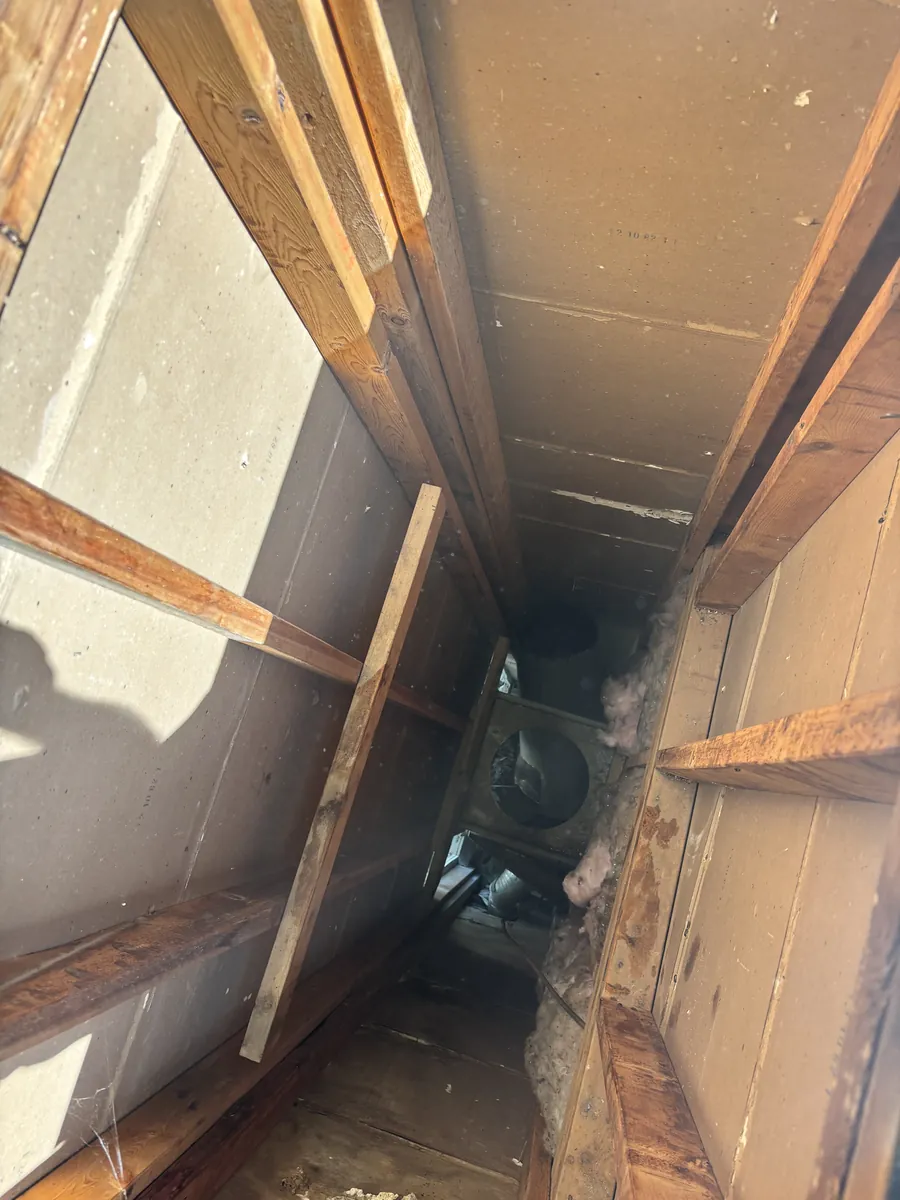
You put your head in the firebox with a flashlight, aimed it up past the damper, and something shined back at you. Not gray dust. Not black powder. Something slick and hard, like tar that ran down the wall and dried in place.
That is glaze. It is a different animal than the soot a brush knocks loose.
Most folks never look. The ones who do usually look right about now — the first cool front is somewhere out over the Gulf, and it occurs to them that the fireplace has been sitting untouched since February. Good instinct. Here is what you are actually looking at, and what it takes to get rid of it.
What creosote actually is
Burning wood does not release all of its energy as heat. Unburned gases, tar droplets and water vapor go up the flue together. When they hit a cool surface, they condense and stick. That residue is creosote.
Two things drive how much you get: how wet the wood is and how cool the flue runs. Damp wood spends the first part of every fire boiling water out of itself instead of burning hot. A smoldering, damped-down fire does the same thing on purpose. The U.S. Consumer Product Safety Commission points to chimneys that are cracked, blocked, or coated with creosote as a leading way fireplaces start house fires, and recommends having flues inspected before each heating season.
The Chimney Safety Institute of America is blunt about the fuel side: only well-seasoned wood belongs in a fireplace. Nothing else.
The three stages, and what the labels really mean
You will hear sweeps say “Stage 1,” “Stage 2,” “level 3 creosote.” Worth knowing up front: these are industry shorthand for texture, not a code definition. There is no federal creosote grading scale. What the words describe is how hard the deposit is to remove — and that is the part that matters to your wallet and your safety.
| Stage | What it looks like | What removes it |
| Stage 1 | Dry, dull, powdery black soot. Smudges on a finger. | A standard sweep with brushes and rods. |
| Stage 2 | Crunchy black flakes, almost like shiny cornflakes packed together. | Rotary tools — whips or chains spun on a drill. |
| Stage 3 (glaze) | Hard, shiny, tar-like. Looks painted or poured on. May be sticky in spots. | Chemical treatment first, then mechanical removal. |
Stage 3 is the one people search for, because it is the one that does not respond to the thing everyone assumes fixes chimneys: a brush.
How to tell what you have without getting on the roof
You can get a reasonable read from inside the house. Cold fireplace, no fire in the last 24 hours, good flashlight.
- Rub a fingertip on the smoke chamber wall just above the damper. Powder that smudges is Stage 1.
- Look for texture. Flaky and matte, like burnt paper stuck to the wall, is Stage 2 territory.
- Look for shine. If the light reflects off it — if it looks wet even though it is bone dry — that is glaze.
- Check the damper edges. Glaze often shows up there first, where the flue narrows and gases slow down.
- Note any tar bleeding. Brown or black streaks running down toward the firebox mean it is thick enough to soften and move.
Stop and call somebody if any of these are true: you can see glaze at all, you had a chimney fire (or heard a roaring, popping sound during a fire and never had it looked at), the deposit is thicker than a nickel, or you simply cannot see well enough to judge. There is nothing a homeowner can safely do about glaze from a stepladder, and scraping at it is how liners get gouged.
The threshold that decides whether you need a sweep
This is where the standards get specific and useful.
CSIA follows NFPA 211, which says chimneys, fireplaces and vents shall be inspected at least once a year for soundness, freedom from deposits, and correct clearances — with cleaning and repairs done if necessary. On top of that, CSIA recommends masonry fireplaces be swept at 1/8” of sooty buildup — and sooner if there is any glaze present in the system.
Read that last part again. Glaze does not have a thickness threshold. Any of it is enough.
If you have a factory-built (prefab) fireplace, the bar is lower still: CSIA says sweep at any appreciable buildup, because the deposits are acidic and eat the components. Not sure which kind you have? Our guide on telling prefab from masonry walks through it in about two minutes.
Why a brush alone will not touch Stage 3
Glaze is not sitting on the flue. It is fused to it. Brushing polishes it.
What actually works, per CSIA: professional-grade chemicals — usually powders — applied by a sweep to change the chemical nature of the glaze into something that will release under a brush. Those products need heat to work, meaning a small fire after application. It is normally more than one round.
If the deposit is gummy rather than hard, chemical treatment or an acid application is about the only route. Acid is used less often because it is harder to apply and has to be neutralized days later. If the deposit is crusty and fractures when struck, rotary cleaning does real work.
And a warning worth passing along, straight from CSIA: the hardware-store creosote logs and powders are not a substitute for a sweep and an inspection. CSIA's concern is that the marketing on those products creates a false sense of security. Even if a product does loosen deposits, the debris still has to come off the smoke shelf and out of the offsets — and a chemical log cannot tell you your liner is cracked.
The Baldwin County wrinkle
Two things about burning wood on the Gulf Coast make glaze more likely than folks expect.
Wood takes longer to season here. Seasoning is just drying, and drying fights ambient humidity. A stack that would be ready in a Texas summer can still be carrying too much water after a Fairhope one, especially if it sat uncovered. Wet wood is the single biggest creosote driver there is.
Short burn seasons produce cool fires. In Baldwin County you might light fifteen fires a year, mostly small evening ones that get damped down early. A cool, slow, smoky fire is exactly the condition that lays down glaze. Ironically, people who burn hard all winter up north often have cleaner flues than people who burn a little, badly.
There is a smell tell, too. If your fireplace stinks in July with the A/C running, that is creosote — humidity and negative pressure pulling the odor down the flue. We covered that one separately in why your fireplace smells in the summer.
What this costs
A chimney sweep with a camera inspection runs $199. That gets you the flue swept and video of what is actually up there — which is the only honest way to grade a deposit. Anyone quoting glaze removal over the phone, sight unseen, is guessing.
Glaze removal itself is quoted after that inspection, and we do not publish a flat price for it on purpose. A light glaze on the damper and a quarter-inch of hardened tar running eight feet of flue are not the same job. One is a single treatment. The other may be three, and in the worst cases the honest answer is that the liner needs replacing rather than cleaning. You deserve to hear which one you have before you pay for it.
If the inspection turns up a missing or rusted-out chimney cap letting rain into the flue — a common find here — caps start at $99. Wet flues make worse creosote, so it is not an upsell, it is the cause.
Frequently asked questions
Can I remove glazed creosote myself?
Realistically, no. The chemicals that convert glaze into brushable material are professional-grade and require controlled heat afterward. Scraping or chiseling risks cracking clay tiles or gouging a metal liner, which turns a cleaning bill into a relining bill.
How dangerous is Stage 3 creosote?
Glaze is concentrated, highly combustible fuel bonded to the inside of your flue. CSIA treats any glaze as reason to sweep immediately rather than waiting for a thickness threshold. CPSC reported roughly 20,600 fires a year associated with fireplaces and chimneys over 1999–2002 — older data, but it is why the annual-inspection rule exists.
Do creosote-remover logs work?
They may loosen some deposits, and sweeps do use professional chemical products as part of a job. But CSIA is clear that chemical products alone are not an adequate substitute for mechanical sweeping and inspection. Use them as a supplement, never as your plan.
How often should I have my chimney swept?
Inspected every year, per NFPA 211, regardless of how much you burn — animals nest and mortar fails whether you light fires or not. Swept when there is 1/8” of buildup, or any glaze at all. For most Baldwin County homes that burn occasionally, that works out to an annual inspection with sweeping some years and not others.
Does burning a hot fire burn off creosote?
No. That is a chimney fire, which is precisely the thing you are trying to prevent. Hot, well-fed fires with dry wood help by producing less creosote in the first place — they do not clean what is already there.
Get a straight answer before you light the first fire
The whole point of looking now, in early September, is that you have time. Find glaze in December and you are choosing between a cold living room over the holidays and burning on a flue you know is coated.
1st Choice Residential has been doing this since 2009. We are veteran-owned, locally owned rather than a franchise, licensed and insured, our technicians are NFI-certified, and we back our work with a 1-year workmanship warranty. More than 500 five-star reviews say we tell people the truth about what we find — including the times the answer is that your flue is fine and you do not need us.
Serving Baldwin County, Fairhope, Mobile and the surrounding Gulf Coast.
- Gulf Coast: (251) 272-1990
- DFW: (817) 791-4606
- Text us: 817-946-8206
Book your $199 chimney sweep and camera inspection online — you will see the footage yourself, and we will grade what is up there honestly.