
1st Choice Residential journal
Can You Burn Wood in a Gas Fireplace? The Honest Answer for All 3 Setups
Gas logs, vent-free, or a sealed insert — the answer is no in all three, but for very different reasons. How to tell which you have and what converting back takes.
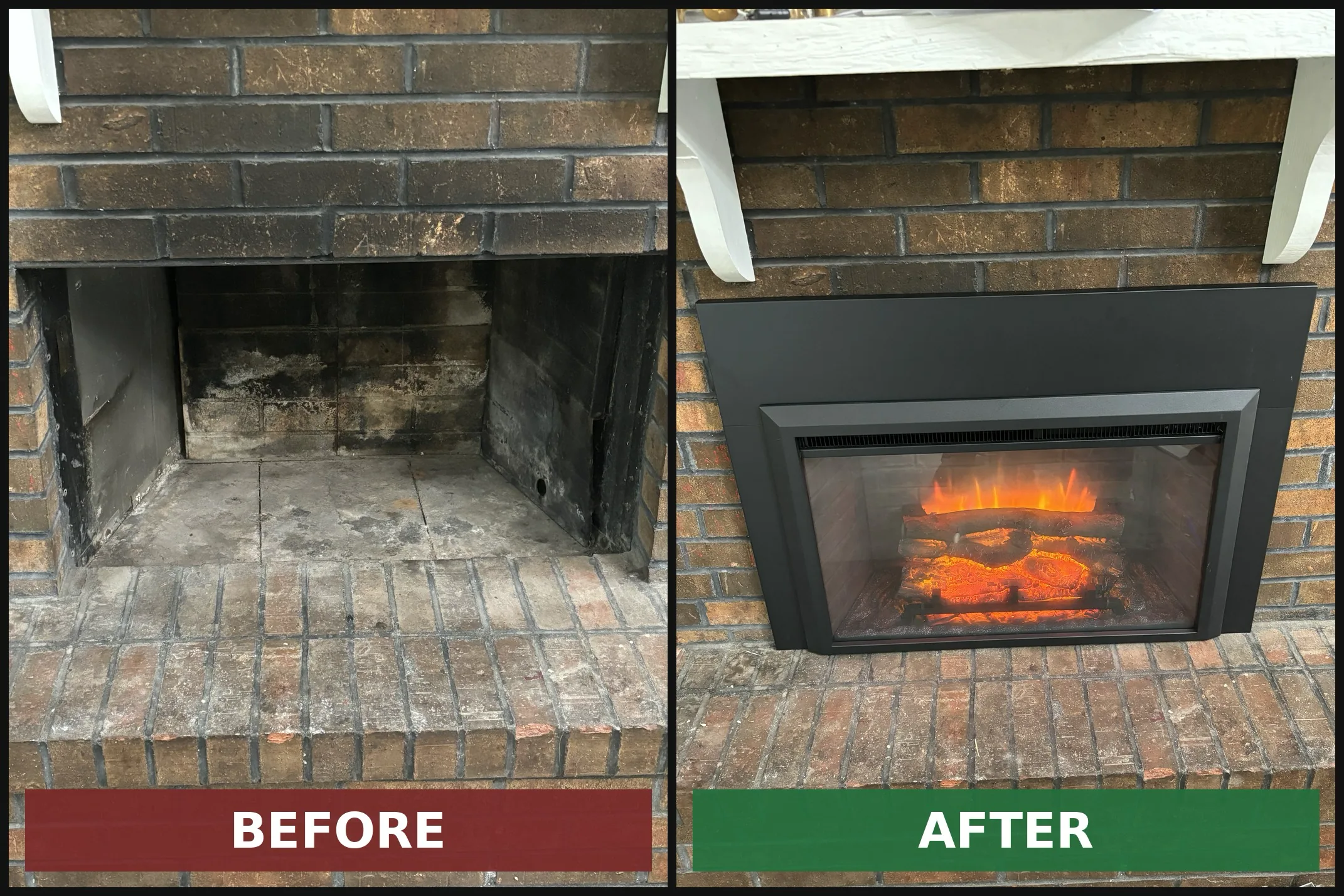
First real cold snap of the year. You've got a bundle of firewood somebody gave you sitting by the back door, and you've got a fireplace — except the fireplace has ceramic logs in it and a gas line running underneath. So you're standing there wondering the obvious thing: can I just pull the fake logs out and build a real fire in here?
It's a fair question. The firebox looks like a firebox. The chimney goes up through the roof like a chimney. Nothing about it screams "don't."
The answer is no — in every setup you're likely to have. But the reason changes depending on which of three you've got, and one of the three is dangerous within minutes.
The short answer, before anything else
Gas log sets, gas inserts, and direct-vent gas fireplaces are all listed appliances. That means they were tested and certified to burn one thing: natural gas or propane. Every manufacturer says so in plain language in the manual that came with the unit.
Hargrove's vented gas log installation guide puts it in a numbered warning list: "Do not burn wood with this set." Napoleon's direct-vent fireplace manual is blunter still — "NOT FOR USE WITH SOLID FUEL."
That isn't a lawyer covering the company. It's a description of what the parts can survive.
Three setups, three different versions of "no"
1. Vented gas logs sitting in a real masonry fireplace
This is the most common one, and the one people are most tempted by — because underneath the ceramic logs there really is a genuine wood-burning firebox that worked fine before the gas went in.
The problem is everything that got added. The burner pan, gas line, control valve and pilot assembly all sit directly in the fire zone. A wood fire runs far hotter than the log set was built for, and it produces something gas doesn't: creosote. That coats the burner ports and the pilot — and a fouled pilot is a fireplace that won't light next fall.
There's a second thing most people miss. When the gas logs went in, the installer was required to fix the damper permanently open — usually a damper stop clamp holding it open at least 3 inches, so combustion byproducts can never be trapped in the room. That clamp is still up there. You can't close the damper anymore, which means a wood fire's smoke control is gone before you strike the match.
2. Vent-free (ventless) gas logs
These are the ones to take seriously. A vent-free set burns without a chimney at all and vents into the room by design, so it's frequently installed in a shallow decorative firebox that was never built to carry a wood fire, sometimes with the flue sealed off entirely.
Put wood in one of these and the smoke has nowhere to go but your living room. This is not a "it'll shorten the life of the unit" problem. It's a same-evening problem.
3. A gas insert or a direct-vent fireplace
If there's a sealed glass front you can't open without tools, you have a direct-vent appliance. It's a closed metal box with its own coaxial vent pipe running out the wall or up the chase — that pipe pulls combustion air in and pushes exhaust out through the same assembly.
There is no open path for wood smoke, the glass is not built for wood-fire temperatures, and the vent pipe is not a chimney liner. This one isn't a judgment call. There's no version of it that works.
What a wood fire actually does to a gas setup
- Warps the burner pan — steel that's fine at gas-flame temperatures deforms under a hardwood fire, and a warped pan sprays flame in the wrong direction afterward.
- Fouls the pilot and thermopile with creosote — the unit stops holding a flame, which reads to most homeowners as a dead fireplace.
- Cooks the control valve and wiring — these sit under and behind the logs, never rated for it.
- Cracks the ceramic logs — they're refractory display pieces, not firewood grates.
- Voids the warranty — manufacturers treat solid fuel as misuse.
The one that matters most: none of this announces itself. The fireplace usually works the next time. It fails three weeks later, on a cold night, with the pilot refusing to stay lit.
Quick comparison
| What you have | Can you burn wood? | The real reason |
|---|---|---|
| Vented gas logs in masonry fireplace | No | Burner, valve and pilot sit in the fire; damper is clamped permanently open |
| Vent-free (ventless) gas logs | No — immediate hazard | Firebox often decorative only; flue may be sealed; smoke enters the room |
| Gas insert / direct-vent | No | Sealed appliance, no smoke path, vent pipe is not a chimney liner |
| Masonry fireplace, gas fully removed and chimney passed inspection | Yes | It's a wood-burning fireplace again |
The one case worth an actual conversation
If your home has a true masonry fireplace and the gas logs were dropped in later, converting back to wood is a real option — it just isn't a Saturday afternoon.
It means a licensed gas professional capping and disconnecting the gas line, removing the burner assembly, and taking the damper clamp off so the damper operates again. Then the chimney gets swept and camera-inspected before the first fire — a flue that's only carried gas for a decade has often gone years without anyone looking at the liner. Cracked tiles and a failed crown don't matter much with gas. They matter enormously with wood.
Not sure which kind of fireplace you're starting with? Our guide on telling a prefab firebox from a masonry one covers it in a couple of minutes.
We don't quote conversion work sight-unseen, and you should be suspicious of anyone who does — whether the liner is intact changes the job completely. Our chimney sweep with camera inspection runs $199 and tells you what you're working with first.
Frequently asked questions
Can I burn wood in my fireplace if I take the gas logs out first?
Not by itself. Removing the logs leaves the burner pan, gas line and control valve in the firebox, and leaves the damper clamped permanently open. The gas has to be properly capped and disconnected and the damper restored before a wood fire is safe. After that, have the chimney swept and inspected.
Is it safe to burn wood in a ventless gas fireplace?
No, and this is the most dangerous version of the question. Vent-free units are often installed in shallow decorative fireboxes with no usable flue — sometimes with the chimney sealed off. Wood smoke would have no exit but the room.
What happens if I already burned wood on my gas logs once?
Don't panic, and don't do it again. Have the unit inspected before the next use. A tech is looking for a warped burner pan, creosote on the pilot and thermopile, heat damage to the valve and wiring, and cracked logs. A gas fireplace inspection and cleaning is $199, and repairs start at $199 if something needs replacing.
Can I use a fire log or fire starter in a gas fireplace?
No. Manufactured fire logs, fatwood, and starter gel are all solid or liquid fuel, and the manuals cover them under the same prohibition as firewood. Nothing goes in a gas fireplace but gas.
How often should a gas fireplace be inspected?
Once a year. NFPA 211 calls for chimneys, fireplaces and vents to be inspected annually for soundness, freedom from deposits, and correct clearances. Gas appliances are quieter about their problems than wood — a partially blocked vent gives no visible warning the way a smoking wood fire does. The Chimney Safety Institute of America publishes homeowner guidance on the same point.
Not sure what you've got? We'll tell you straight.
1st Choice Residential has been working on fireplaces, chimneys and gas appliances since 2009. We're veteran-owned, locally owned rather than a franchise, licensed and insured, and our technicians are NFI-certified. Every repair carries a 1-year workmanship warranty.
If you're staring at a fireplace and can't tell whether it's gas-only, convertible, or already unsafe, that's a 20-minute answer for a tech and a guess for everyone else. We serve Dallas–Fort Worth, Mobile, and Baldwin County.
DFW: (817) 791-4606 · Gulf Coast: (251) 272-1990 · Text us: 817-946-8206
Book an inspection online — or if you're planning a change rather than a repair, start with fireplace installation.