
1st Choice Residential journal
Why Are My Chimney Bricks Crumbling? Spalling Causes and Fixes
Chimney bricks crumble when water soaks in and pops the face off. See where the water gets in, a 5-minute check you can do this weekend, and when to call a pro.
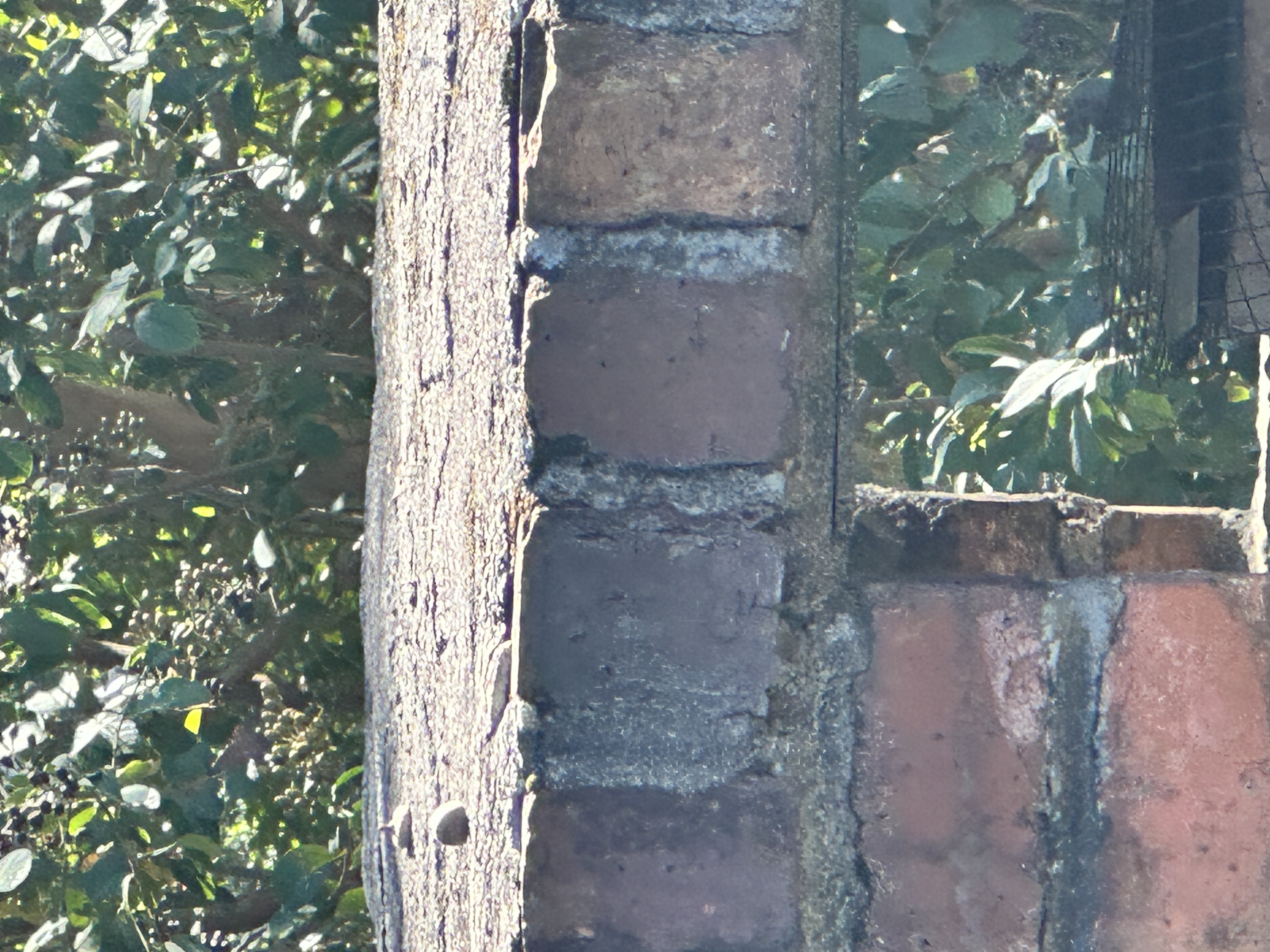
Chimney bricks crumble because water is getting into them. When wet brick freezes, or when salts in the water dry and grow inside the brick, the outer face pops off. That is called spalling. The water almost always comes from a cracked crown, bad flashing, a missing cap or mortar that is too hard. Fix the water first, then the brick.
Quick answer:
- What it is: spalling, the face of the brick flaking or popping off.
- Root cause: water soaking into the masonry, then freezing or leaving salts behind.
- Where water gets in: crown, cap, flashing, mortar joints.
- Fix order: stop the water, replace damaged brick, then use only a breathable water repellent.
- DIY limit: one low brick, maybe. Anything on the roof, call a pro.
You are out hanging the Christmas lights, the kids are handing you tangled strands, and you glance up at the chimney. Little chunks of red brick are sitting in the flower bed. A few bricks near the top look like someone took a bite out of them. Is the chimney falling apart? Usually not. But it is telling you something, and it is worth listening before the grandparents pull up a chair by the fire.
Why are my chimney bricks crumbling?
Your chimney bricks are crumbling because water is soaking into them and breaking the face off from the inside. Brick is like a hard sponge. It takes on water every time it rains. A little is fine, because it dries back out. Trouble starts when water gets in faster than it can dry, or gets trapped.
The Brick Industry Association explains that water trapped in brick raises the risk of freeze-thaw damage, and that water-soluble salts crystallize, grow and "can create enough expansive pressure to cause spalling of brick." Translation: the brick gets pushed apart from the inside like a too-full suitcase.
Chimneys get hit harder than the walls of your house. They stick up above the roof, catch wind-driven rain from every side and have no roof overhang to protect them. The BIA's maintenance guide for brick masonry lists chimneys with parapets and copings as the parts that "experience more severe exposures."
Where is the water getting into my chimney?
Most of the time, water gets into a chimney from the top or where it meets the roof. Here are the usual suspects and what each one looks like from the ground.
| Water source | What you see | Typical fix |
|---|---|---|
| Cracked or crumbling crown | Spalling worst on the top few rows of brick | Seal or rebuild the crown |
| Missing or rusted cap | Rain falling straight down the flue, damp firebox | New stainless cap |
| Failed flashing | Damage near the roofline, stains on the ceiling by the chimney | Reseal or replace flashing |
| Hard or failing mortar joints | Brick edges chipping next to the joints, gaps in mortar | Repoint with softer mortar |
| Wrong sealer or paint | Peeling paint or cloudy coating with flaking brick behind it | Remove coating, use a breathable repellent |
| Sprinklers or gutters | Damage only low on one side | Aim the sprinkler away, fix the gutter |
The BIA also lists missing or damaged flashing and incompletely filled mortar joints among the causes of spalled brick. If you have white chalky streaks too, that is efflorescence, the same salt that does the damage. Our post on white stains on chimney bricks explains what it means.
Is crumbling chimney brick dangerous?
A few chipped brick faces on the outside are not an emergency, but they are a warning. Spalling means water is moving through the chimney. That same water can crack the flue liner, rust the damper and rot the framing around the chimney.
Treat these as a stop sign and skip the fire until it is checked:
- Loose or missing bricks near the top of the chimney.
- Mortar you can rake out with a key.
- Bits of clay tile or grit in the firebox or on the smoke shelf.
- A chimney that leans or has pulled away from the house.
- Water stains on the ceiling or wall next to the fireplace.
Do it this weekend: a 5-minute chimney brick check
You do not need to climb on the roof to learn a lot. Grab binoculars and a flashlight and do this from the yard and the living room.
- Walk all four sides with binoculars. Note which side and how high the damage is. Top-only damage points to the crown or cap.
- Look at the very top. Can you see a metal cap with mesh? No cap means rain goes straight in.
- Check the roofline. Look for gaps, rust or tar patches where the chimney meets the shingles.
- Check the ground below. Brick chips, sand from mortar or bits of concrete from the crown all tell a story.
- Shine a light in the firebox. Damp ash, rust on the damper or tile fragments mean water is getting inside too.
- Take photos. They help a tech quote faster, and they let you see if it gets worse after the next storm.
Kid hack: give the youngest the job of "brick detective" with a phone camera on the ground floor. They will find every chip, and you get your photos.
Should I seal or paint crumbling chimney bricks?
Do not paint them, and do not seal them until the water source is fixed. The BIA recommends only breathable coatings and warns that coatings with low vapor transmission "can trap water within the brickwork." Paint and glossy film-forming sealers do exactly that, so the brick keeps spalling behind a pretty finish.
If a sealer makes sense after repairs, it should be a penetrating silane or siloxane water repellent, which the BIA says coats the pores instead of bridging them, so the brick can still breathe.
What our techs see
When we are called out for crumbling chimney brick, the brick is almost never the real problem. The real problem is usually sitting on top of it: a crown with open cracks, a cap that rusted off years ago, or flashing that was patched with a tube of caulk. We also see chimneys where someone repointed with a hard cement-rich mortar, and the brick edges started breaking next to the new joints. Fixing the water source is what makes a brick repair last.
When does DIY stop?
DIY stops at the roof. A handy homeowner can replace one loose brick low on a chimney using a cold chisel and a soft mortar that matches the original. The BIA says repointing mortar must be equal to or lower in strength than the original, because stronger mortar "can lead to spalling of the brick face." Anything above the roofline, near the crown, around flashing, or more than a couple of bricks is a job for a pro with fall protection.
What does fixing crumbling chimney brick cost?
Brick and mortar repair is quoted after inspection. A few chipped faces and a top that needs rebuilding are not the same job, and a price given sight unseen is a guess. What we do offer at a set price is our chimney sweep and camera inspection for $199. It checks the crown, cap, flashing and flue in one visit, so you know where the water is coming from. If the fix is a new cap, chimney caps start at $99. All work carries a 1-year workmanship warranty.
Want to know more about the slab on top? Read our guide to a cracked chimney crown. Get the water stopped and the brick stays put, the fireplace stays the warm center of the room, and nobody has to dodge brick chips while hanging the lights.
Where we serve
1st Choice Residential inspects and repairs chimneys across Dallas-Fort Worth, call (817) 791-4606, and across Mobile and Baldwin County, Alabama, including Pensacola, call (251) 272-1990. Or book your chimney inspection online.
Crumbling chimney brick FAQ
Why are my chimney bricks crumbling?
Chimney bricks crumble, or spall, when water soaks into the brick and the face breaks off as salts crystallize or water freezes inside. The water usually gets in through a cracked crown, bad flashing, a missing cap or hard mortar. 1st Choice Residential finds the water source with a $199 chimney sweep and camera inspection.
Is a chimney with spalling bricks safe to use?
A few chipped brick faces on the outside are not an emergency, but they mean water is getting into the chimney. Loose bricks near the top, crumbling mortar or pieces of tile in the firebox are a stop sign. Have the chimney inspected before the next fire. 1st Choice Residential checks the outside and the flue in one visit.
Can I seal my chimney bricks to stop spalling?
Only with a breathable penetrating water repellent, and only after the leak source is fixed. The Brick Industry Association warns that coatings that trap moisture can cause spalling. Paint and film-forming sealers make it worse. 1st Choice Residential checks the crown, cap and flashing first so a sealer is not hiding an active leak.
How much does it cost to fix spalling chimney bricks?
Spalling repair is quoted after inspection because a few chipped faces and a crumbling top that needs rebuilding are very different jobs. At 1st Choice Residential, the chimney sweep and camera inspection is $199 and chimney caps start at $99. We serve Dallas-Fort Worth and Mobile and Baldwin County, Alabama.
Can I replace a crumbling chimney brick myself?
A handy homeowner can replace one loose brick low on a chimney with a ladder, a chisel and the right soft mortar. The Brick Industry Association says repointing mortar must not be stronger than the original. Work on a roof, near the crown or with several loose bricks belongs to a pro like 1st Choice Residential.
Written by the 1st Choice Residential team. Veteran-owned since 2009, NFI-certified techs, serving DFW and Mobile & Baldwin County.