
1st Choice Residential journal
Chimney Crown vs Chimney Cap: What's the Difference?
A chimney crown is the concrete slab sealing the top of your brick. A chimney cap is the metal hood over the flue. Here's what each does and how to spot trouble.
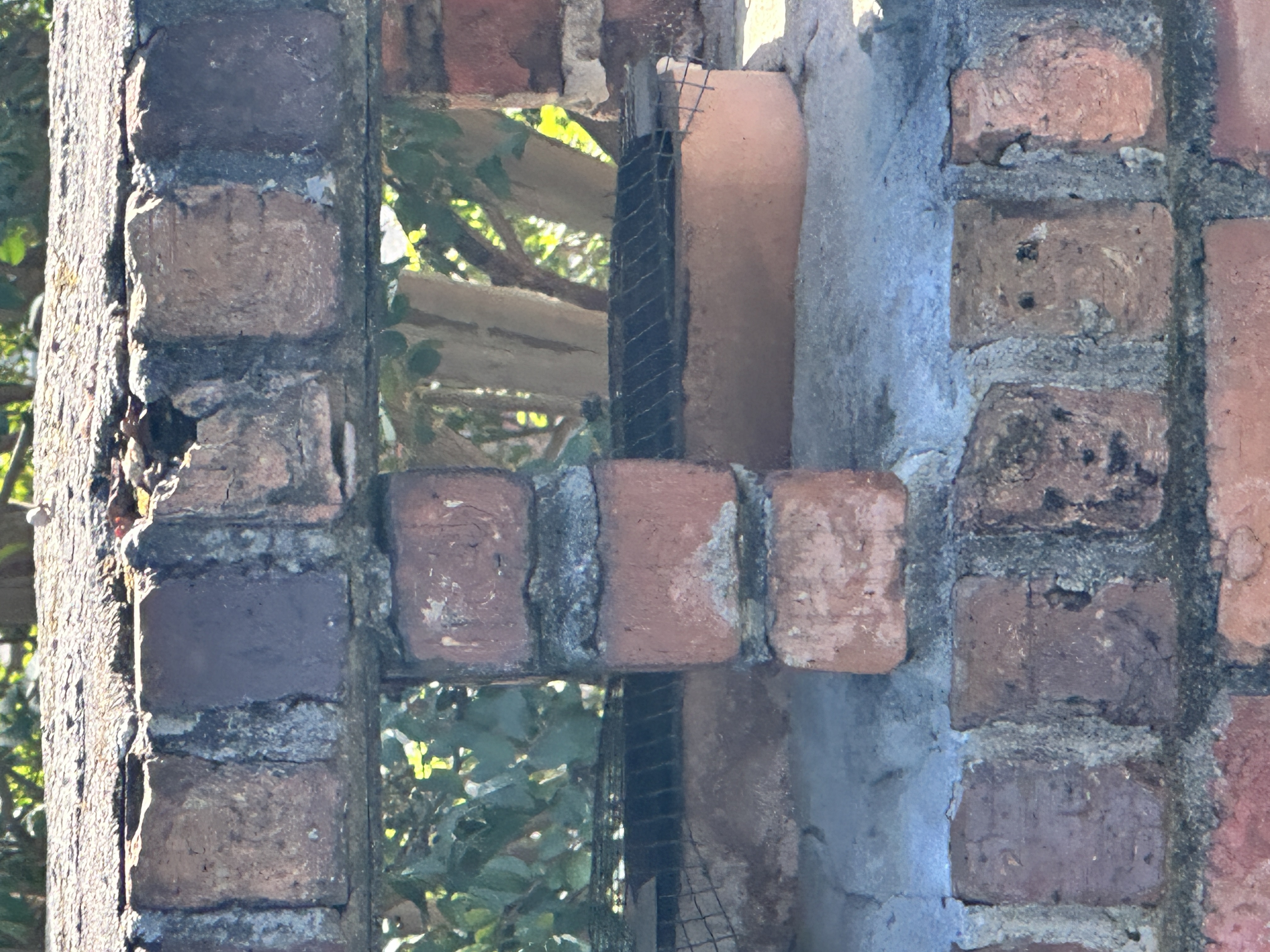
A chimney crown and a chimney cap are two different parts that guard the top of your chimney. The crown is the sloped concrete slab that seals the top of the brick around the flue. The cap is the metal hood and screen that covers the flue opening. The crown stops water from soaking the brick. The cap stops rain, critters and sparks.
Quick answer
- Crown: concrete, part of the chimney, sheds water off the masonry.
- Cap: metal, bolts or clamps on top, keeps rain, animals and embers out of the flue.
- You want both. A great cap on a cracked crown still leaks. A perfect crown with no cap still lets in rain and raccoons.
- Check them yearly as part of a chimney inspection.
Think of it this way: the crown is your chimney's roof, and the cap is its hat. Nobody looks sharp at the holiday photo in just one of the two. Here's how to tell them apart, spot trouble from your own driveway, and know when to call.
What is a chimney crown?
A chimney crown is the slab of concrete that covers the top of a masonry chimney, from the outer brick edge in to the flue tile. Its job is to close the gap between the flue liner and the chimney wall and shed rainwater off the chimney.
The Chimney Safety Institute of America's technical paper notes that many crowns are just a thin layer of brick mortar spread across the top, and those deteriorate fast. A good crown is cast concrete several inches thick, slopes away from the flue, and is not bonded tight to the flue tile, so the tile can expand with heat. A flexible sealant closes that small joint instead.
CSIA also recommends that crowns project about two inches past all sides of the chimney so water drips clear of the brick instead of running down the face.
What is a chimney cap?
A chimney cap is a metal cover with a solid top and a mesh screen that mounts over the flue opening. It keeps rain from pouring straight down the flue, blocks birds, squirrels and raccoons, and works as a spark arrestor so embers don't land on your roof.
Caps come in single-flue models that clamp onto one flue tile and full-width models that cover the whole crown. Stainless steel lasts longest. Galvanized costs less but rusts sooner, especially in salty Gulf Coast air.
Chimney crown vs chimney cap: what's the difference?
The crown protects the chimney's masonry. The cap protects the flue opening. Here's the side-by-side:
| Chimney crown | Chimney cap | |
|---|---|---|
| Material | Cast concrete (or mortar on older homes) | Stainless or galvanized steel with mesh |
| Where it sits | Across the top of the brick, around the flue | Over the flue opening, on top of the crown |
| Main job | Sheds water off the masonry | Keeps rain, animals and sparks out of the flue |
| Common failure | Cracks, crumbling, missing overhang | Rust, bent mesh, blown off in a storm |
| Who has one | Masonry chimneys only | Every chimney, masonry or prefab |
| Our price | Quoted after inspection | From $99 |
Do you need both a chimney crown and a chimney cap?
Yes, if you have a masonry chimney. They solve different problems, and one can't cover for the other.
CSIA puts it bluntly: water does more damage to masonry chimneys than fire. A cracked crown lets water soak into the brick and run down beside the flue liner, where it rusts dampers and stains ceilings. A missing cap lets water pour straight down the flue and gives every squirrel in the neighborhood a free apartment. If you only fix one, the other keeps leaking.
How can you tell if your chimney crown or cap is failing?
You can do most of this from the ground with binoculars or your phone's zoom. Stay off the roof.
- Look for the cap. No metal hood on top? Then you have no cap. That one's easy.
- Check the cap's color. Orange rust or holes in the mesh mean it's near the end.
- Scan the crown edge. Chunks missing, dark cracks, or plants growing up top mean water is getting in.
- Check the brick below the top. White powder (efflorescence) or flaking brick faces near the top point to a crown problem.
- Open the damper with a flashlight. Rust flakes, water drips or a musty smell after rain all trace back up top.
- Listen. Scratching or chirping in the flue usually means the cap is missing or the mesh is torn.
Kid-friendly bonus: turn the binocular check into a backyard "chimney spy" game. The first one to spot a crack picks the movie.
What our techs see
The most common thing our techs find up top is a crown that was never really a crown: a thin skim of mortar troweled over the brick with no overhang, cracked in a spiderweb pattern. Right behind it is a cap that's there but rusted through, so it looks fine from the yard and lets everything in. Both usually show up first as a rusty damper inside the house.
When does DIY stop?
DIY stops at the gutter line. Spotting trouble from the ground is smart. Climbing onto a roof to patch a crown or bolt on a cap is not, especially on a two-story house or a steep pitch. Crown sealants also only help sound crowns. Coating over a crumbling one just hides the problem until the next storm.
Call a pro if you see crumbling concrete, a missing or rusted cap, water in the firebox, or animals in the flue.
What does chimney crown and cap work cost?
At 1st Choice Residential, chimney caps start at $99. Crown repair and rebuilds are quoted after inspection, because a hairline crack and a crown that's falling apart are not the same job. Our $199 chimney sweep with camera inspection checks the crown, cap and flue in one visit, so you know exactly what you're paying for before any work starts. All work carries a 1-year workmanship warranty.
Want more on this? Read our guide to why chimney crowns crack and how they're repaired, or whether you really need a chimney cap.
Where we serve
- Dallas-Fort Worth: (817) 791-4606. Hail and hard freezes are tough on crowns and caps.
- Mobile and Baldwin County, including Pensacola: (251) 272-1990. Salt air and tropical storms chew through cheap caps.
A dry chimney means a cozy, worry-free fire when the family's home for the holidays. Book your chimney inspection online and we'll take a look at the top for you.
Chimney crown vs chimney cap FAQ
Is a chimney crown the same as a chimney cap?
No. A chimney crown is the concrete slab that seals the top of a masonry chimney around the flue. A chimney cap is the metal hood and screen that sits over the flue opening. The crown keeps water out of the brick. The cap keeps rain, animals and sparks out of the flue. 1st Choice Residential checks both on every chimney inspection in DFW and Mobile and Baldwin County.
How much does a chimney cap cost from 1st Choice Residential?
Chimney caps from 1st Choice Residential start at $99 in Dallas-Fort Worth and in Mobile and Baldwin County, Alabama. The final price depends on flue size, how many flues share the chimney, and whether you want a single-flue cap or a full-width cap. We measure on site and give you the price before any work starts.
Can a cracked chimney crown be repaired, or does it need replacing?
Small hairline cracks in a sound crown can often be sealed with a crown repair coating. A crown that is crumbling, loose, or built from thin mortar instead of cast concrete usually needs to be rebuilt. 1st Choice Residential quotes crown work in DFW and on the Gulf Coast only after an inspection, because a hairline crack and a failed crown are different jobs.
Do prefab fireplaces have a chimney crown?
No. A factory-built (prefab) fireplace vents through a metal pipe inside a framed chase, so it has a metal chase cover instead of a concrete crown. It still needs a cap on top of the pipe. Rust streaks down the siding usually mean the chase cover is failing. 1st Choice Residential inspects chase covers and installs caps in DFW, Mobile and Baldwin County.
How often should a chimney crown and cap be inspected?
Once a year. NFPA 211, the national standard for chimneys and fireplaces, calls for an annual chimney inspection, and the crown and cap are part of it. In DFW, check after hail. On the Gulf Coast, check after any tropical storm. 1st Choice Residential's $199 chimney sweep includes a camera inspection that covers the crown, cap and flue.
Written by the 1st Choice Residential team. Veteran-owned since 2009, NFI-certified techs, serving DFW and Mobile & Baldwin County. Sources: NFPA 211, Chimney Safety Institute of America.