
1st Choice Residential journal
Chimney Crown Cracked in Mobile, AL? Why It Happens (and What to Do About It)
A cracked chimney crown lets water into the brick and flue liner. Here's why it happens faster in Mobile's climate, and when it's a simple seal vs. a full rebuild.
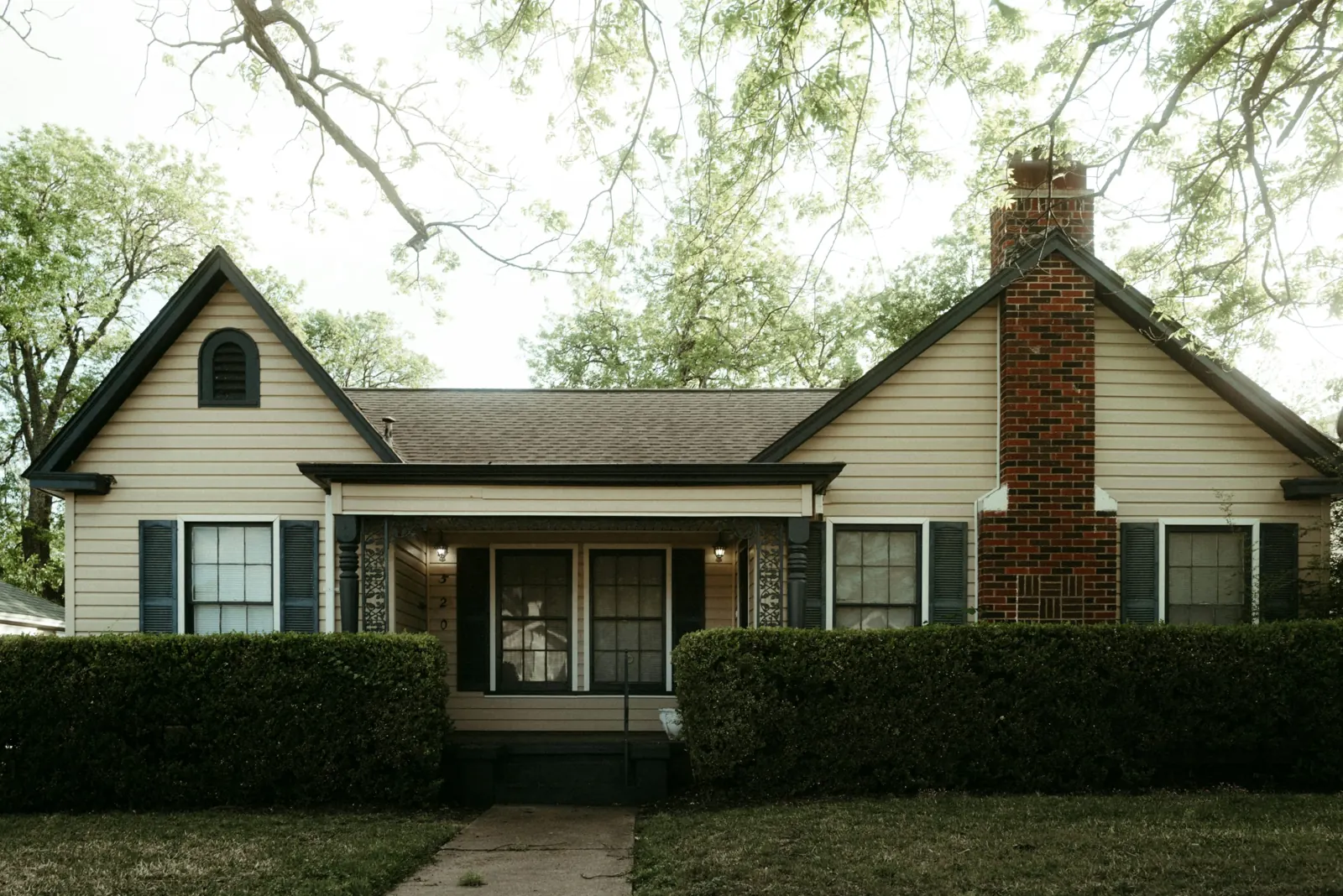
You're up on a ladder in Mobile checking the gutters before the next round of rain, and you glance over at the top of your chimney. There's a hairline crack running across that flat concrete slab on top — the part most homeowners never think about until it looks wrong. Or maybe you never went up there at all. You just noticed a musty smell near the fireplace after a heavy rain, or a brownish stain creeping down the inside of the firebox wall. Either way, you're looking at the most common entry point for water on the entire chimney: the crown.
It's a small, unglamorous slab of concrete, and it takes more punishment than almost anything else on your house. Here's what's actually going on, why it happens faster near the coast, and what's worth fixing versus what's just cosmetic.
What the Crown Actually Does
The crown is the flat (or slightly sloped) cap poured over the top of a masonry chimney, sealing the brick and the flue tile from the weather. A properly built one isn't just a slab — it's engineered to shed water. Technical guidance published by the Chimney Safety Institute of America (CSIA) calls for a crown that overhangs the chimney by about 2½ inches, slopes roughly 1 inch per linear foot, and has a distinct drip edge about an inch out from the brick, so runoff drips clear of the masonry instead of running down it. There's also supposed to be an expansion joint between the crown and the flue tile, since concrete and clay expand at different rates.
A lot of older or budget-built chimneys skip most of that. Instead of a real poured crown, they get a thin "mortar wash" troweled on with no overhang and no separation from the flue. Those fail years faster, and if yours is one of them, a crack isn't really a repair problem — it's a design problem that a coating alone won't fix.
Why Crowns Crack Faster in Mobile's Climate
Up north, freeze-thaw cycling is usually the villain: water gets into a hairline crack, freezes, expands, and widens the crack every winter. Mobile doesn't get many hard freezes, so that's not the main driver here — but it's not zero, either. An occasional January cold snap can still finish off a crown that's already compromised.
What does the damage here, day in and day out, is heat and water. Gulf Coast summers put a chimney crown through wide daily swings — baking in direct sun, then cooling fast in an afternoon storm. That constant expansion and contraction stresses hairline cracks a drier climate would leave alone. Add wind-driven rain off the bay, hitting chimneys at an angle a flat crown wasn't built to shed, and the crown is doing more work here than it would in, say, Dallas.
Once a crack lets water in, it doesn't stay a surface problem. Water reaches the brick underneath and repeated wetting and drying — or the rare hard freeze — causes the outer face of the brick to pop off, a process called spalling. From there it travels down into the flue liner and eventually shows up as staining or dampness around your firebox or damper, which is usually the first sign homeowners actually notice.
Signs Your Crown Has Actually Failed
- Visible cracks in the concrete cap, especially ones wide enough to catch a fingernail
- Chunks of concrete or brick in the flower bed or on the roof below the chimney
- White, chalky staining (efflorescence) on the crown or upper bricks
- Rust streaks running down the outside of the chimney from a damaged cap or chase cover
- Water stains, musty odor, or a damp firebox after rain, even with no active fire
- Standing water pooling on the crown instead of running off
One or two hairline surface cracks with no other symptoms usually isn't an emergency — it's worth sealing before it becomes one. Standing water, spalling brick, or interior water stains mean it's already past the "watch it" stage.
Crown, Cap, and Chase Cover — They're Not the Same Thing
These three get mixed up constantly, and they fail for different reasons:
| Component | What it is | What fails |
|---|---|---|
| Crown | The concrete slab sealing the top of a masonry chimney | Cracks from thermal stress and water intrusion |
| Cap | The metal (or mesh) cover over the flue opening that keeps out rain, embers, and animals | Rusts out or gets knocked loose, letting water and wildlife into the flue |
| Chase cover | The metal panel over a prefab, factory-built chimney's top — no crown involved | Rusts through, especially near salt air, and starts leaking at the seams |
If your chimney is a factory-built, metal-flue unit rather than full masonry, you don't have a crown at all — you have a chase cover, and that's a different repair. Not sure which you have? That's exactly what a camera inspection sorts out in a few minutes.
Repair or Replace?
A crown with a few hairline cracks and sound concrete underneath usually just needs a flexible, waterproof sealant applied while it's dry. A crown that's fragmented, spongy, or missing chunks needs to come off and be rebuilt to the proper overhang and slope — patching over a structurally failed crown just delays the same repair at a higher cost later.
We don't post a flat price for crown repair — a hairline crack and a crumbling, spalled crown aren't the same job, and a number given sight-unseen isn't an honest one. What we do offer at a set price is the $199 chimney sweep and camera inspection, which is how a crown problem gets caught early. If the cap itself has failed rather than the crown, replacement starts at $99 — see our chimney cap page. Every repair carries a 1-year workmanship warranty.
Frequently Asked Questions
How do I know if my chimney crown is cracked?
Look for visible cracks in the concrete cap from ground level with binoculars, or check inside the firebox for water stains after rain. Loose concrete pieces near the base of the chimney or on the roof are another giveaway. A camera inspection is the only way to see the full picture, including cracks you can't spot from the ground.
Can I seal a chimney crown crack myself?
For a genuinely minor hairline crack, a masonry crack filler or flexible elastomeric coating can buy time. The risk is coating over a crown that's already compromised underneath, which just hides the problem until it's worse. If you're not sure which situation you're in, get a professional look before you climb up there.
How much does chimney crown repair cost?
It depends entirely on condition. A crack-seal job on a sound crown is modest; a full rebuild with proper overhang and drip edge costs more. We quote it after inspection, because two different failures just aren't the same job.
Is a cracked chimney crown dangerous?
Not usually an immediate hazard, but it's a slow one. Left alone, water intrusion through the crown leads to spalling brick, a damaged flue liner, and eventually moisture reaching your firebox and framing. Catching it early keeps it a small repair instead of a structural one.
Do I need a chimney crown or a chase cover?
That depends on your chimney type. Full masonry chimneys (stacked brick, built on a footing) have a concrete crown. Factory-built, prefab chimneys with a metal flue pipe have a chase cover instead, no crown involved. If you're not sure which you have, that's a quick answer during a sweep and inspection.
Get It Checked Before the Next Rain
A chimney crown is easy to ignore because it's out of sight — and expensive to ignore because water damage doesn't stay contained to one spot. If you're seeing cracks, stains, or loose concrete around your Mobile-area chimney, get it looked at before the next round of Gulf Coast rain finds the gap.
1st Choice Residential is veteran-owned, licensed and insured, locally owned rather than a franchise, and has been doing this work since 2009 with NFI-certified technicians. We're an Angi Super Service Award winner, Thumbtack Platinum-rated, and back our work with a 1-year workmanship warranty. Call the Gulf Coast team at (251) 272-1990, or book your $199 chimney sweep and camera inspection online and we'll tell you exactly what's happening up there.