
1st Choice Residential journal
Chimney Pulling Away From the House? What That Gap Really Means in Baldwin County
Not every gap between a chimney and a house is a foundation problem. Here's how Baldwin County homeowners can tell sealant failure from actual movement.
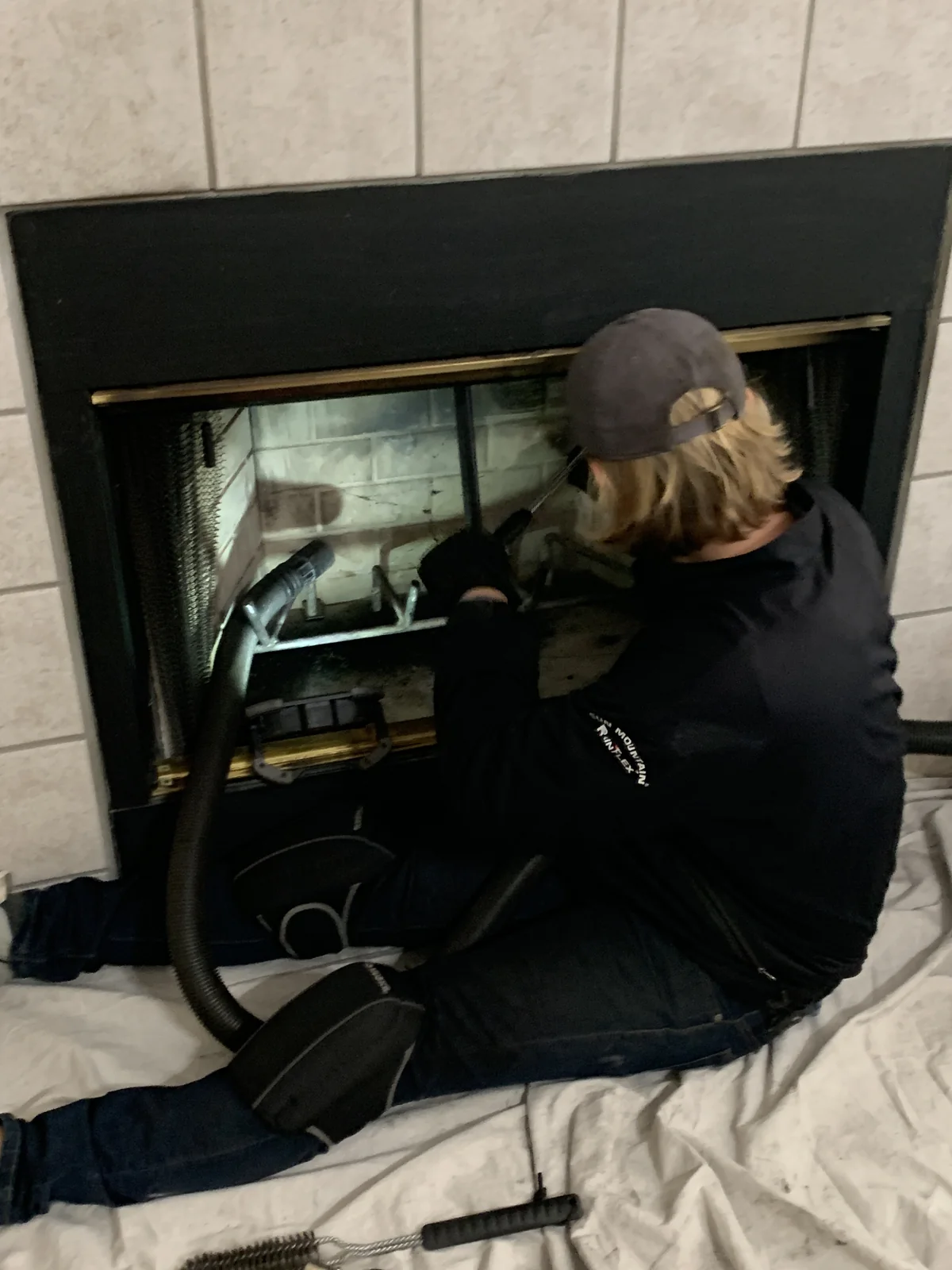
You're walking the side of the house after a storm, picking up limbs, and you notice it. There's a gap where the chimney meets the siding. Last spring you could barely slide a business card in there. Now you can get a finger in.
That is an unsettling thing to see. Search it and within thirty seconds some website is telling you your house is going to fall down.
Here's the honest version. Most gaps between a chimney and a house are not structural. A lot of them are a failed bead of caulk that did exactly what caulk does after eight Gulf Coast summers. Some of them are real movement, and those matter a great deal. You can narrow down which one you're looking at in about five minutes, before you call anybody.
What that joint is actually supposed to be
Where a masonry chimney meets the wall of your house, there is almost never a rigid connection. There's a joint, and it's filled with sealant and covered by flashing and trim. That joint exists on purpose. Brick and wood framing expand and contract at different rates, so the two are allowed to move slightly against each other.
Sealant is the part that fails first. It's the cheapest thing in the assembly and it takes the most sun. When it lets go, you get a dark line, then a visible gap, and it looks exactly like the chimney is walking away from the house. Usually it isn't.
The five-minute check you can do yourself
Stay on the ground for all of this. Nothing here requires a ladder.
- Measure the gap at the bottom and at the top. This is the single most useful thing you can do. A sealant failure tends to open up fairly evenly, or worst at the top where the sun hits it. Real tilting opens up in a wedge — wider at the top than at the bottom, or the reverse if the footing is sinking on the outside edge.
- Look at the gap from both sides of the chimney. If one side is tight and the other is open, that's a rotation, not a caulk problem.
- Put a level on the brick face. A four-foot level held vertically against the outside of the chimney tells you a lot. A little out-of-plumb can be original construction. An obvious, visible lean is not.
- Look down at the base. Cracked or heaved dirt, a separated concrete pad, a downspout dumping straight onto the chimney footing, a sunken flower bed on that side. That's where the story usually starts.
- Go inside and look at the firebox and hearth. Fresh cracks in the firebox mortar joints, a hearth extension separating from the floor, or a new gap between the mantel and the wall are indoor symptoms of the same outdoor movement.
- Check where the chimney passes through upstairs. New drywall cracking that radiates from the chimney corner is worth photographing.
Take pictures with something in frame for scale — a coin, a tape measure — and date them. If somebody tells you in six months that the gap hasn't changed, you'll actually know.
Why the ground moves here
Baldwin County gives a chimney more reasons to settle than most places do.
Most masonry chimneys sit on their own footing, poured separately from the house foundation. That's normal construction. It also means the chimney can move independently of the house — the house stays put and the chimney doesn't, or the other way around. Everything that makes the gap visible comes from that one fact.
Then add our conditions. Soils around here swing between sandy and clay-heavy, sometimes within the same lot. We have high water tables near the bay and the rivers. We get rain in quantities that arrive all at once rather than over a week. And we get tropical systems that push sustained wind against a tall, heavy, narrow masonry column that is already the most exposed part of the house.
Drainage is the part you can actually control. A downspout discharging a couple of feet from the chimney base, year after year, is one of the more common contributors we see, and it is also one of the cheapest to fix.
What's really wrong, and who you actually need
| What you're seeing | What it usually is | Who handles it |
| Even gap, same top and bottom, chimney still plumb | Failed sealant or aged flashing trim | Chimney or siding contractor — minor work |
| Wedge-shaped gap, wider at the top | Chimney tilting away from the house | Structural engineer first, then foundation contractor |
| Gap plus cracked, heaved, or sunken ground at the base | Footing settlement | Structural engineer or foundation contractor |
| Gap plus stair-step cracks running through the brick | Movement the masonry is absorbing | Structural engineer, then a mason |
| Gap with staining and water marks where the chimney shoulder tapers | Water entry at the flashing or crown | Chimney contractor |
We want to be straight with you about the middle rows of that table. 1st Choice Residential does not do foundation underpinning or structural masonry rebuilds. If your chimney is genuinely tilting, the right first call is a licensed structural engineer — not a chimney company, and not a salesperson. An engineer works for you and doesn't sell you the repair, which is exactly what you want from the person deciding whether your chimney is moving.
What we do is the chimney side of it: document the condition of the flue, the crown, the flashing and the firebox, and tell you in writing what that movement has done to the part of the system that carries smoke and combustion gas out of your house.
If that chimney vents a gas appliance, don't wait it out
This is the part that changes the urgency, and it's the part most articles skip.
If the chimney only serves a wood-burning fireplace you haven't used since 2019, a gap is a repair project you can schedule. If that same chimney vents a gas log set, a gas insert, a water heater, or a furnace, movement can loosen or separate a vent connection inside the wall where you will never see it.
The Consumer Product Safety Commission is specific on this point. Its guidance on fuel-burning appliances says an annual professional inspection should include checking chimneys, flues and vents for leakage, for blockage by debris, and to make sure they are not loose or disconnected. A chimney that has shifted is the textbook case for that last one.
Stop using the appliance and get it looked at if any of these are true: the gap appeared or widened suddenly, a working CO alarm has sounded, anyone in the house has had headaches or nausea that get better when they leave, or you can see soot staining around the appliance or the vent connector.
What a proper inspection looks at after movement
After something that could have damaged a chimney, the industry standard isn't a flashlight and a look up the flue. The Chimney Safety Institute of America's standard operating procedure calls for a Level 2 inspection when there has been a building or chimney fire, a weather or seismic event, or any operating malfunction likely to have caused damage. That same document requires video scanning of the chimney interior, roof access, and a look through accessible attics and crawl spaces — and it specifically tells the inspector to note irregularities where the chimney joins the structure, and staining where the chimney shoulder tapers.
That is the right scope here, because the damage that matters from movement is usually hidden. Flue tiles crack and shift long before anything shows on the outside. NFPA 211 calls for chimneys, fireplaces and vents to be inspected at least once a year for soundness, freedom from deposits and correct clearances — and a chimney that has moved has a live question about soundness.
Our chimney sweep and camera inspection is $199 and includes the internal video scan, so you get footage of your flue rather than an opinion about it. If you are buying or selling a home with a gap like this, our home sale inspection is built to produce a document both sides can work from.
Repairs beyond that are quoted after we look. We are not going to price a chimney repair sight-unseen, because a failed sealant joint and a cracked flue liner are not remotely the same job, and quoting them the same way is how people end up surprised.
Frequently asked questions
Is a chimney pulling away from the house dangerous?
It depends entirely on whether the chimney is actually moving or the sealant simply failed. A failed sealant joint lets water in, which is a maintenance problem. Genuine structural movement is serious, especially if the chimney vents a gas appliance, because the vent connection can separate where you cannot see it. The measuring check above is what separates the two.
How much does it cost to fix a gap between the chimney and the house?
Re-sealing and re-flashing that joint is minor work. Correcting actual footing settlement is foundation work and is priced by a foundation contractor, not by us. We price what we can see: our chimney sweep with camera inspection is $199, and any chimney repair is quoted after that inspection, because the cause determines the job.
Do I need a structural engineer for a leaning chimney?
If the gap is wedge-shaped, if the chimney is visibly out of plumb, or if the ground at the base has cracked or sunk — yes, start with a licensed structural engineer. An engineer is not selling you the repair, so their assessment is the one worth paying for first.
Can a hurricane cause a chimney to separate from the house?
A storm can absolutely reveal or accelerate it. Sustained wind against a tall masonry column, combined with saturated ground around the footing, is a real load. That is also why CSIA's guidance lists a weather event as a trigger for a Level 2 inspection rather than a routine one.
Can I just caulk the gap myself?
If you have measured it, it is even from top to bottom, the chimney is plumb, and the ground at the base is undisturbed — sealing it is reasonable homeowner maintenance. If any one of those is not true, filling the gap just hides the thing you need to be watching.
Get a straight answer about your chimney
1st Choice Residential has been working on fireplaces and chimneys since 2009. We are veteran-owned, locally owned rather than a franchise, licensed and insured, our technicians are NFI-certified, and everything we do carries a 1-year workmanship warranty. We serve Baldwin County including Fairhope, Daphne, Foley and Gulf Shores.
If you have a gap you don't like the look of, send us a photo with a tape measure in it. We will tell you honestly whether it is ours to fix or whether you need an engineer first.
Gulf Coast: (251) 272-1990 · DFW: (817) 791-4606 · Text us at 817-946-8206
Book a chimney sweep and camera inspection online — $199, and you will see the inside of your own flue.