
1st Choice Residential journal
Gas Fireplace Pilot Light Won't Stay Lit? What to Check in Mobile, AL
Gas fireplace pilot light won't stay lit? Learn the usual causes, what you can safely check yourself in Mobile, AL, and when to call a pro. Repairs from $199.
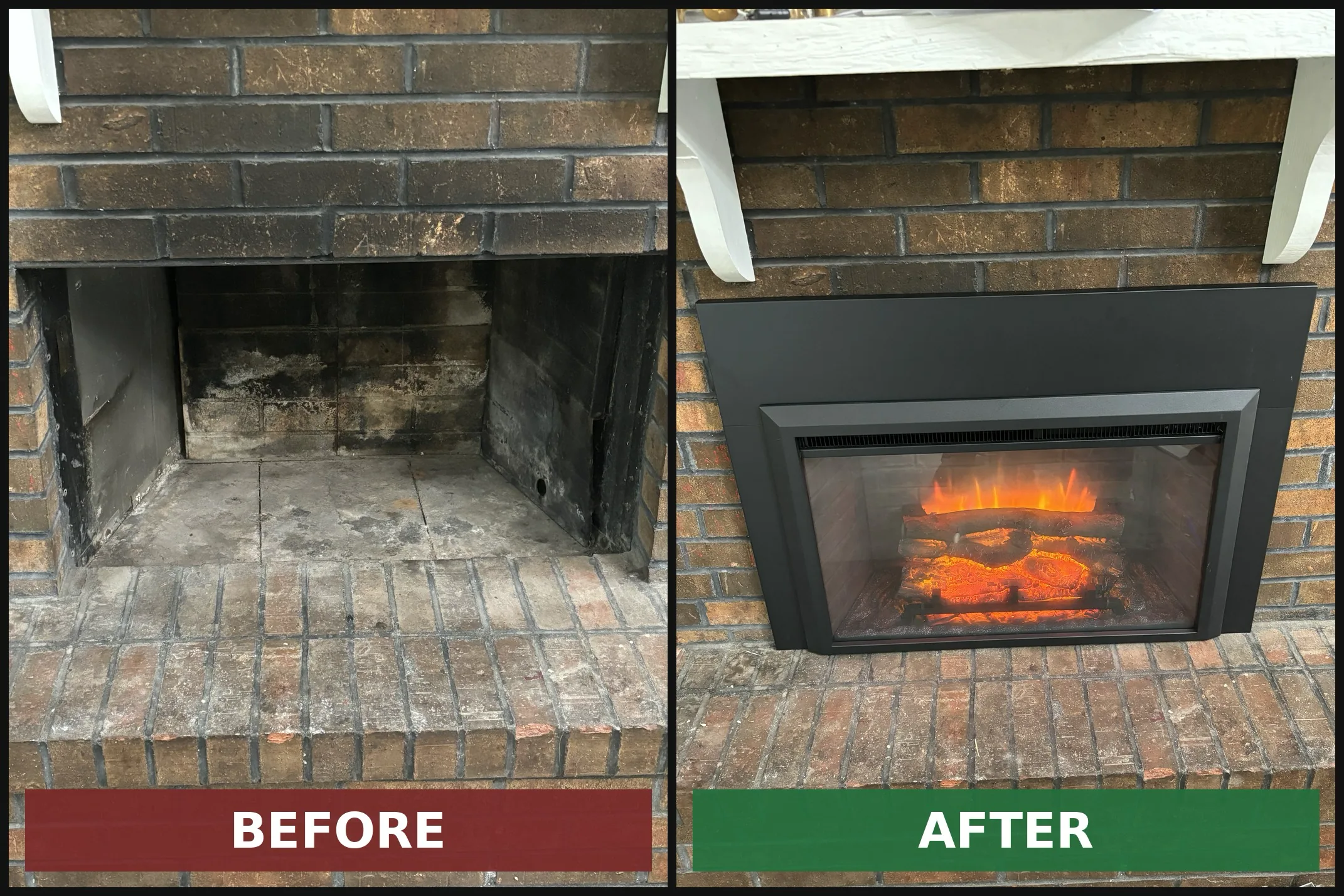
It is a cool November night in Mobile. You flip the switch, the flame comes up, and ten minutes later it is gone. You relight the pilot. Same thing again. Now you are kneeling on the hearth with a lighter and a flashlight, wondering if you broke something.
You probably didn't. A pilot that won't stay lit is one of the most common gas fireplace calls we get, and the cause is usually small. Here is how to work through it, what you can safely do yourself, and where to stop.
Why a gas fireplace pilot goes out
Your fireplace has a safety sensor sitting in the pilot flame. Older units use a thermocouple. Many newer ones use a thermopile. Either way, it makes a tiny bit of electricity from heat. That electricity holds the gas valve open. If the sensor cools off or stops working, the valve closes and the pilot goes out. That is the safety system doing its job.
So the real question is: why is the sensor not getting enough heat?
| Likely cause | What you see | DIY? |
|---|---|---|
| Dirty or sooty sensor | Pilot lights, then dies after you let go of the button | Sometimes |
| Weak or wrong-shaped pilot flame | Small, lazy, yellow or flickering flame | Clean only |
| Worn-out thermocouple or thermopile | Pilot stays lit while you hold the button, dies soon after | Pro job |
| Draft or downdraft | Goes out when wind blows or a fan runs | Find the draft |
| Failing gas valve | Pilot lights fine but burner won't come on, or everything is inconsistent | Pro job |
What you can safely check yourself
Start with the easy stuff. Turn the fireplace off and let it cool completely.
- Read the label. Every unit has lighting instructions on or near the control panel. Follow them exactly. Hold the pilot button in for the full time listed, usually 30 to 60 seconds.
- Look at the pilot flame. A healthy pilot is a steady blue flame that wraps around the tip of the sensor. Yellow, tiny, or wobbling means something is dirty or restricted.
- Check for drafts. Does it only go out when the ceiling fan, range hood, or dryer is running? A house pulling air down the vent can blow the pilot out. Turn the fans off and test again.
- Check the batteries. If your unit has a remote or a battery-powered control, replace the batteries first. It costs a couple of dollars and fixes more calls than you would guess.
- Look for dust and pet hair. Gulf Coast humidity turns dust into a sticky film. A soft brush or a can of compressed air, used gently with the gas off, can clear light buildup around the pilot assembly.
Do not bend the sensor, poke wires into the pilot orifice, or take the gas valve apart. Those are the moves that turn a $199 visit into a bigger one.
Why Mobile homes see this a lot
Most people in Mobile light their fireplace a handful of times a year. It sits cold and damp through a long humid summer. Dust, small bugs, and a little corrosion settle into the pilot assembly. The first cold snap comes, you fire it up, and the pilot chokes. That is a maintenance problem, not a bad fireplace. If you want the full seasonal picture, check the Mobile, AL service page.
A quick note on safety
If you smell gas, do not keep trying to light it. Leave the house and call your gas utility. Also, the U.S. Consumer Product Safety Commission says to schedule a yearly professional inspection of all fuel-burning home heating systems, and that list includes fireplaces, chimneys, flues and vents. A working carbon monoxide alarm on each level of the home is smart, too.
DIY stops here
Call a pro if any of these are true:
- The pilot lights but dies again within a minute or two of letting go of the button.
- The flame is yellow, tall, or sooty after you cleaned the dust.
- You have relit it more than twice and it keeps going out.
- You smell gas, or you see soot on the glass or walls.
- The burner won't ignite even though the pilot is steady.
Why stop? Because at that point the cause is a failing part or a gas valve, and testing those takes the right meter and the right know-how. Guessing with gas is not a good trade. Our gas fireplace repair starts at $199, and a full gas fireplace inspection and cleaning is $199. Parts vary by brand and model, so we quote any replacement after we see what failed. Our NFI-certified technicians are licensed and insured, and our workmanship carries a 1-year warranty.
Frequently asked questions
Why does my gas fireplace pilot light keep going out?
The most common cause is a dirty or worn thermocouple or thermopile, the small sensor that sits in the pilot flame. If it cannot sense heat, the gas valve shuts the pilot off. Other causes are a dirty pilot assembly, a weak pilot flame, drafts, or a failing gas valve.
Can I relight my gas fireplace pilot myself?
Usually yes. Follow the lighting instructions on the label inside your unit. Turn the control to PILOT, hold the pilot button down while you light it, and keep holding for about a minute. If you smell gas at any point, stop, leave the house, and call your gas utility.
How much does a gas fireplace repair cost in Mobile?
Gas fireplace repair from 1st Choice Residential starts at $199. Parts like a thermocouple, thermopile, or gas valve change the final number, so we quote after we diagnose the problem.
Is a pilot light that keeps going out dangerous?
The safety system is doing its job when it shuts the gas off. The risk is in repeatedly relighting a fireplace with an unfixed problem. If it goes out again and again, stop relighting it and get it looked at.
How often should a gas fireplace be serviced?
The U.S. Consumer Product Safety Commission recommends a yearly professional inspection of fuel-burning home heating equipment, including fireplaces, chimneys, flues and vents. A gas fireplace inspection and cleaning is $199 with us.
Book your gas fireplace repair in Mobile
Veteran-owned and locally owned since 2009. Book online here or call (251) 272-1990. You can also text 817-946-8206.