
1st Choice Residential journal
Gas Fireplace Sitting Unused for Years? What to Check Before You Light It
Haven't lit your gas fireplace in years? Here's what Mobile humidity, dust and insects do to a dormant unit, what you can safely check, and when to stop.
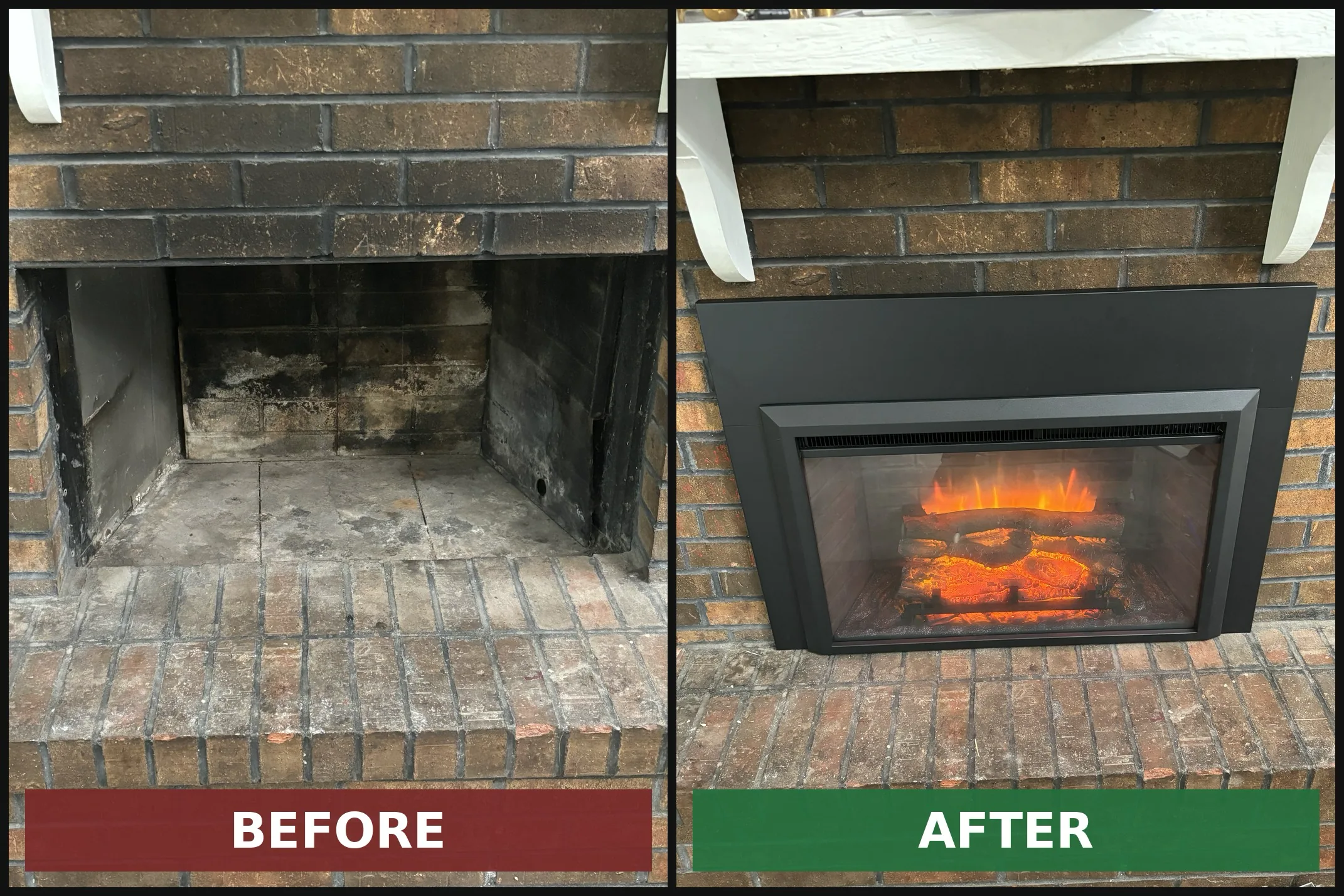
The first real cold front hits Mobile sometime in November, and it always catches people off guard. You walk over to the fireplace you haven't touched since you bought the house, turn the key or flip the wall switch, and nothing happens. Or it does light, and within thirty seconds the room smells like something burning that shouldn't be.
Here's the situation almost every Gulf Coast homeowner is in. Your fireplace runs maybe four weeks a year. The other forty-eight, it sits in a warm, humid house doing nothing at all while dust settles on the burner, spiders work their way into the gas train, and salt-heavy coastal air goes after every steel part it can reach.
A gas fireplace that hasn't run in three years is not the same appliance you shut off three years ago. This is what actually changes, what you can check yourself, and where you need to stop.
Is it safe to light a gas fireplace that hasn't been used in years?
Usually, yes. But not before somebody looks at the vent.
The manufacturers are blunt about this. Heat & Glo's installation and service manual lists "Checking Vent System" at a frequency of before initial use and at least annually thereafter, and calls for a qualified service technician to perform an appliance checkup at the beginning of each heating season. That's the company that built the thing telling you to have it looked at before the first fire of the year, every year.
The national standard says the same thing in broader language. NFPA 211 requires that chimneys, fireplaces, and vents be inspected at least once a year for soundness, freedom from deposits, and correct clearances. The Chimney Safety Institute of America spells out why that applies even to a fireplace nobody uses: "even if you don't use your chimney much, animals may build nests in the flue or there may be other types of deterioration that could make the chimney unsafe."
CSIA is equally direct about gas appliances specifically. Gas burns clean, but a flue can still be made non-functional by bird nests or other debris. Clean fuel does not mean a clear vent.
What actually goes wrong on a dormant gas fireplace
Four things, in roughly the order we find them.
1. The pilot orifice clogs
The pilot orifice is about the size of a pinhead. Dust, carbon film, and spider webs close it up over a season or two of sitting still. This is the single most common reason a long-unused fireplace clicks, sparks, and refuses to catch.
Do not poke it with a wire, a needle, or a paperclip. That orifice is machined to a calibrated size, and opening it up even slightly changes how the appliance burns. It gets cleaned with compressed air and a soft brush, not with something sharp.
2. The thermopile weakens
The thermopile is what proves to the gas valve that a flame is present. Sitting unused, its tip picks up white oxide film, and its millivolt output drops. The symptom is specific and recognizable: the pilot lights and holds while you're pressing the knob, then dies the moment you let go.
3. Insects and nests get in the vent
This one is worse on the Gulf Coast than almost anywhere. Mud daubers love a warm, sheltered, unused pipe. A direct-vent termination cap on an exterior wall in Mobile can pick up a nest over a single summer. Heat & Glo's manual tells you plainly to inspect the external vent cap so no debris interferes with airflow.
4. Humidity corrodes what it can reach
Coastal humidity gets into the firebox, the control compartment, and the vent. Surface rust on a burner tube is cosmetic. Rust that has closed off burner ports, seized a valve, or eaten into a vent seam is not, and telling those apart is a hands-on judgment call.
What you can safely check yourself
- Look at the vent cap from outside. Stand on the ground and look. Wasp nest, leaves, a bird's nest, spider webbing across the screen, dryer lint blown over from next door: all disqualifying until it's cleared.
- Open the glass and look at the burner. Loose ember material sitting on burner ports, heavy dust, cobwebs across the pilot assembly, or logs that have shifted out of position are all worth noting.
- Check the log placement against the diagram. Most gas fireplaces have a log layout diagram in the manual or a decal inside. Logs moved out of position cause sooting, and sooting on a vented unit is the beginning of a real problem.
- Confirm your CO alarms work. Push the test button on every one in the house. If they're older than ten years, replace them. CSIA covers the basics in its carbon monoxide guidance.
- Look for the gas shutoff. Usually a key valve in the floor or wall near the hearth, or a valve inside the control compartment. Know where it is before you need it.
Stop and call somebody if any of this is true
These aren't judgment calls. Any one of them means you stop.
- You smell gas at any point, with the fireplace on or off. Leave the house, then call the gas utility.
- The unit lights but the flames are lifting off the burner, floating, or burning yellow and lazy across the whole log set.
- There's a nest or blockage in the vent termination.
- The glass is cracked, chipped, or the gasket around it is crumbling. That glass is a sealed combustion component on a direct-vent unit, not a decorative panel.
- You see soot inside the firebox or a black film on the glass after a short burn.
- You don't know whether the unit is vented or ventless, or whether it's ever been serviced.
What a startup service actually involves
| What gets done | Why it matters after years of sitting |
| Vent and termination cap inspection | Nests and debris are the top safety issue on a dormant unit |
| Pilot and burner orifice cleaning | Clogged orifices are the top no-light cause |
| Thermopile millivolt reading | Numbers tell you whether it's weak or failed; guessing doesn't |
| Gas connection leak check | Fittings loosen and gaskets dry out over time |
| Log placement and flame pattern check | Wrong log position is a leading cause of sooting |
| Glass, gasket, and firebox inspection | Seal integrity is what keeps combustion gases where they belong |
Our gas fireplace inspection and cleaning is $199. If something needs fixing, repairs start at $199 and every job carries a 1-year workmanship warranty. Parts like thermopiles, valves, and glass gaskets are quoted after we see the unit, because a dusty thermopile and a failed gas valve are not remotely the same job and quoting either one sight-unseen would just be a number we made up.
Frequently asked questions
How long can a gas fireplace sit unused before it needs service?
One heating season off is enough to warrant a check before the next one. Manufacturer guidance is to inspect the vent system before initial use and at least annually thereafter, regardless of how much you ran it. After three or more idle years, treat it as a full startup service rather than a quick look.
Why won't my gas fireplace light after years of not being used?
The two most common causes are a pilot orifice clogged with dust or spider webbing, and a weakened thermopile that can no longer hold the gas valve open. Both are normal wear on a dormant unit and both are repairable. Clicking with no flame usually points at the orifice or a dead battery in the igniter; a pilot that dies when you release the knob usually points at the thermopile.
Do gas fireplaces need the chimney swept?
Not swept the way a wood-burning fireplace is, since gas leaves almost no creosote. But the flue or vent absolutely needs inspecting. CSIA is explicit that gas appliances need annual chimney inspections, because nests and debris block a gas flue just as effectively as they block a wood one. Our chimney sweep and camera inspection is $199 if your gas unit vents through a masonry chimney.
Is a smell coming from my gas fireplace when I first light it normal?
A faint burning-dust smell for the first ten or fifteen minutes of the first fire of the season is normal and clears on its own. A sharp chemical smell, a smell that doesn't fade, or anything resembling rotten eggs or sulfur is not. Shut it off and get it looked at.
Can I just replace the thermopile myself?
The part is inexpensive and it is possible. What you can't do at home is verify millivolt output under load, confirm there's no leak at the connections you disturbed, or check that the flame pattern is still correct afterward. On a sealed combustion appliance, those checks are the whole point.
Get it looked at before the first cold front
September and October are the right time for this. Once the first real cold snap hits Mobile, every fireplace company on the coast is booked out, and the people calling are the ones who found out their fireplace didn't work on the coldest night of the year.
1st Choice Residential has been doing this since 2009. We're veteran-owned, locally owned rather than a franchise, licensed and insured, with NFI-certified technicians and 500+ 5-star reviews. We serve Mobile and the surrounding Gulf Coast.
Call the Gulf Coast line at (251) 272-1990, text 817-946-8206, or see our gas fireplace repair and service page for what's included.