
1st Choice Residential journal
Chimney Damper Stuck? How to Tell If Yours Is Open, Closed, or Rusted Shut
Your fireplace damper will not budge. Here is how to tell if it is open or closed, why Gulf Coast air rusts them shut, and what a safe repair actually involves.
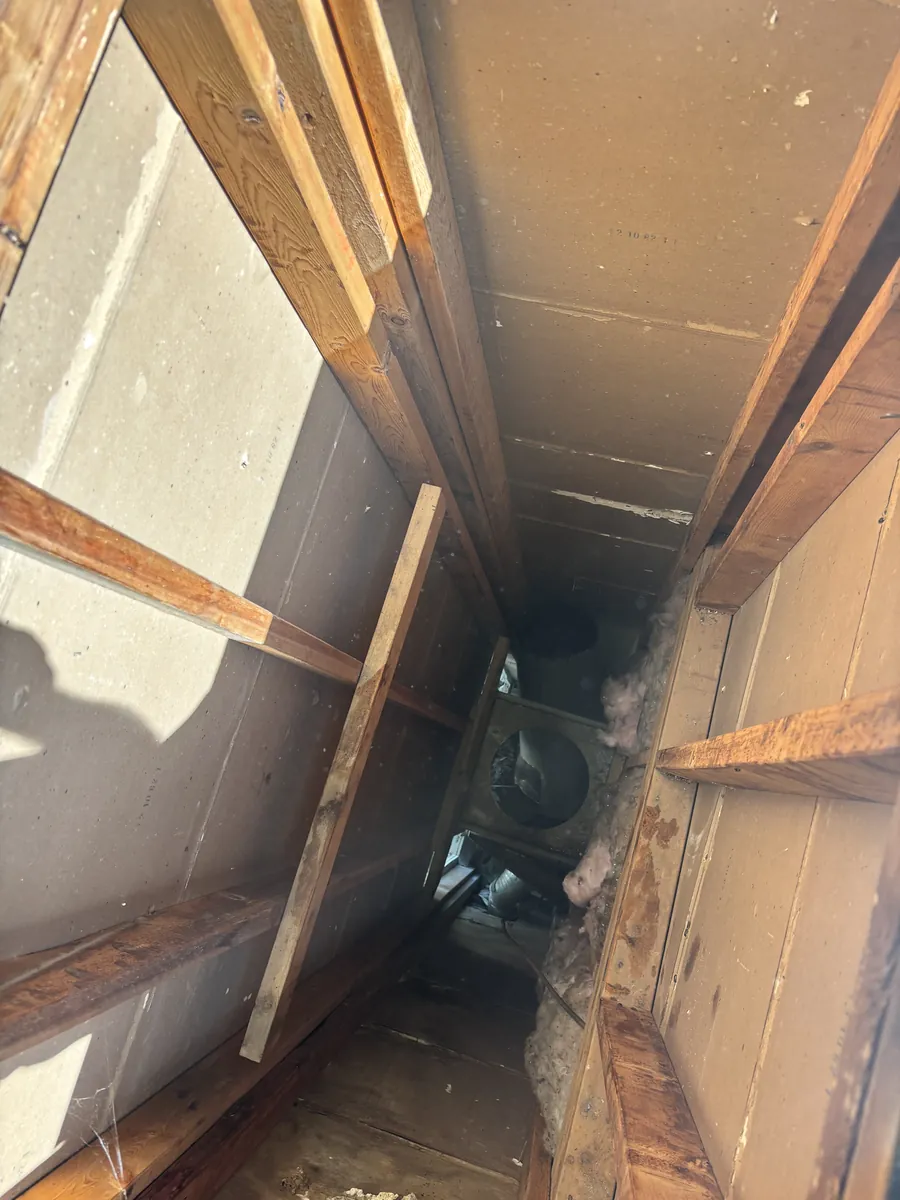
You reached up into the firebox, found the handle, and pulled. Nothing moved. Or it moved an inch and stopped cold. Now you are crouched in front of your fireplace with a flashlight, wondering whether your chimney is open, closed, or somewhere in between.
Do not light anything until you know. A stuck damper is usually a cheap problem. A fire burning behind a closed one is not.
Here is how to tell what you are dealing with, why this happens so often on the Gulf Coast, and what an honest fix looks like.
Step one: find out if it is open or closed
Before you touch the handle again, look. Grab a bright flashlight and get your head as close to the firebox opening as you comfortably can.
- Look straight up. If you can see the flue running up into darkness, the damper is open. If you see a flat metal plate a foot or so above your head, it is closed.
- Use your hand. On a cool day, hold your hand up inside the firebox. Moving air coming down means the damper is at least partly open.
- Check for daylight. On a straight masonry flue with a clean cap, some homeowners can see a small square of daylight when the damper is open. No daylight does not automatically mean closed, though. It can also mean a blocked flue.
- Listen to the handle. A throat damper that swings freely makes a distinct metal clunk when it seats. A handle that moves with no clunk usually means the plate has broken away from the pivot.
If you cannot tell for certain, stop there. Guessing wrong is the expensive version of this problem.
Why dampers seize up around Mobile and Baldwin County
Throat dampers sit directly above the firebox, and they are usually cast iron or steel. That is a rough spot to live on the Gulf Coast.
Moisture and salt air
Every rainstorm that gets past a missing or damaged cap runs down the flue and lands on the damper plate. Add year-round humidity and salt-loaded coastal air, and cast iron corrodes fast. Rust in the pivot is the single most common reason a damper freezes in place.
Creosote and soot buildup
On wood-burning fireplaces, creosote and soot collect on the damper plate and in the hinge. Enough of it and the plate cements itself into position. This is one of the things a sweep clears as part of a normal service.
Heat warping
The damper takes the direct heat of every fire you have ever built. Over years, thin metal plates warp. A warped plate binds against the frame and will not seat or swing.
Animals and debris
Birds, squirrels, and wasps build in open flues, especially uncapped ones. Nesting material packed on top of a damper plate stops it from moving and blocks the flue at the same time.
Nobody used it
A damper that sits in one position for ten years is far more likely to be stuck than one that gets cycled. In our climate, a lot of fireplaces run a handful of times a winter and sit the rest of the year.
Throat damper vs. top-sealing damper
If your throat damper is beyond saving, you have two paths. This is the comparison most homeowners are actually deciding between.
| Throat damper (original) | Top-sealing damper | |
|---|---|---|
| Where it sits | Just above the firebox | At the top of the flue, on the crown |
| Material | Usually cast iron or steel | Aluminum or stainless with a high-temp silicone gasket |
| Seal when closed | Metal on metal, loosens with age | Gasket seal, much tighter |
| Keeps rain out of the flue | No | Yes, when closed |
| Exposure to fire heat | Direct, every burn | Minimal |
| How you operate it | Handle inside the firebox | Steel cable down the flue to a firebox handle |
| Rust risk in coastal air | High | Low |
Manufacturers of top-sealing units, like the Lyemance style dampers, use a silicone gasket instead of metal-to-metal contact, which is why they seal tighter than the plate that came with your fireplace (product specs here). That matters most in July, when your air conditioning is fighting a wide-open chimney.
What you can safely try yourself
Some stuck dampers loosen up with five minutes of work. Try these, in order:
- Clear the plate. Wear gloves and eye protection. Use a stiff brush to knock soot and debris off the top of the damper plate and out of the frame.
- Work it gently. Rock the handle in small movements instead of one hard pull. Rusted pivots often break loose gradually.
- Use a high-temp penetrating lubricant on the pivot only. Never spray anything flammable into a firebox, and never grease the plate face.
- Check the handle hardware. Poker-style and rotary handles have set screws and nuts that back out. A loose handle spinning on a good damper is a five-minute fix.
Now the part that matters more. Stop if any of this is true: the handle is snapped off, the plate has separated from the pivot, you see nesting material, you smell smoke in the room after a burn, or you have to put real force on it. Forcing a corroded damper is how a cracked frame or a chunk of falling masonry turns a $200 visit into a real repair.
The safety part, plainly
A fireplace burning behind a closed or partly blocked damper pushes smoke and combustion gases into the room instead of up the flue. Those gases include carbon monoxide, which you cannot see or smell. The U.S. Consumer Product Safety Commission recommends carbon monoxide alarms on every level of the home, outside each sleeping area, and a yearly professional inspection of fuel-burning heating systems including fireplaces, chimneys, flues, and vents (CPSC home heating guidance).
That annual inspection recommendation is not just CPSC. NFPA 211, the national standard for chimneys and vents, calls for chimneys, fireplaces, and vents to be inspected at least once a year (NFPA 211). The Chimney Safety Institute of America publishes plain-English homeowner guidance on what those inspections cover (CSIA homeowner resources).
The other half of the problem is the half nobody thinks about: a damper stuck open is not a safety issue, but it is a hole in your house. Conditioned air goes up it all summer, and humid coastal air comes back down.
What it costs to sort out
Most stuck dampers get diagnosed during a normal sweep and inspection, because the tech is already in the firebox with a camera.
- Chimney sweep with camera inspection — $199. This is where we clear the plate, check the pivot, look at the flue above it, and tell you what is actually wrong. Details on our chimney sweep service.
- Chimney cap — from $99. If rain has been landing on your damper for years, a proper cap is what stops the next one from rusting shut.
- Damper repair or replacement gets quoted after the inspection, because a bent handle and a corroded frame are not the same job. We will not price that over the phone without seeing it.
All of our work carries a 1-year workmanship warranty.
Frequently asked questions
Can I burn a fire if the damper is stuck open?
Yes. A damper stuck open is safe to burn with. It costs you money in lost heating and cooling and lets rain and animals in, so it still needs fixing, but it is not a fire or carbon monoxide hazard the way a closed damper is.
How do I know if my damper is open without climbing anything?
Shine a flashlight straight up inside the firebox. If you see the flue running up, it is open. If you see a flat metal plate a foot or two above the opening, it is closed. Feeling air movement on your hand also means it is open.
Why does my damper rust shut so fast on the Gulf Coast?
Humidity, salt air, and rain entering an uncapped or poorly capped flue all attack cast iron. Coastal homes in Mobile and Baldwin County corrode faster than inland homes for the same reason cars and grills do here.
Should I replace a bad throat damper or install a top-sealing damper?
If the throat damper frame is intact and only the plate or handle failed, repair is usually the cheaper answer. If the frame itself is corroded or cracked, a top-sealing damper at the crown is often the better long-term fix, and it seals against rain and downdrafts at the same time.
Does a stuck damper mean I need a full chimney inspection?
It is a good reason to get one. Whatever seized the damper — water, creosote, or a nest — is also sitting in your flue. A camera inspection sees the whole run, not just the piece you can reach.
Get it looked at before burn season
August is the right time for this. Chimney work backs up the week the first cold front comes through, and a damper that needs parts is not a same-day job in December.
1st Choice Residential has been doing this since 2009. We are veteran-owned, licensed and insured, locally owned rather than a franchise, and our technicians are NFI certified. We serve homeowners across Mobile, AL, Baldwin County, and the Dallas–Fort Worth area.
- Gulf Coast: (251) 272-1990
- DFW: (817) 791-4606
- Prefer to text? iMessage us at 817-946-8206
Book your $199 chimney sweep and camera inspection online and we will tell you exactly what your damper needs — and what it does not.