
1st Choice Residential journal
Do You Need a Carbon Monoxide Detector Near Your Gas Fireplace?
A gas fireplace can produce carbon monoxide when combustion goes wrong. Here's where CPSC says to put your detector, plus the warning signs DFW homeowners should know.
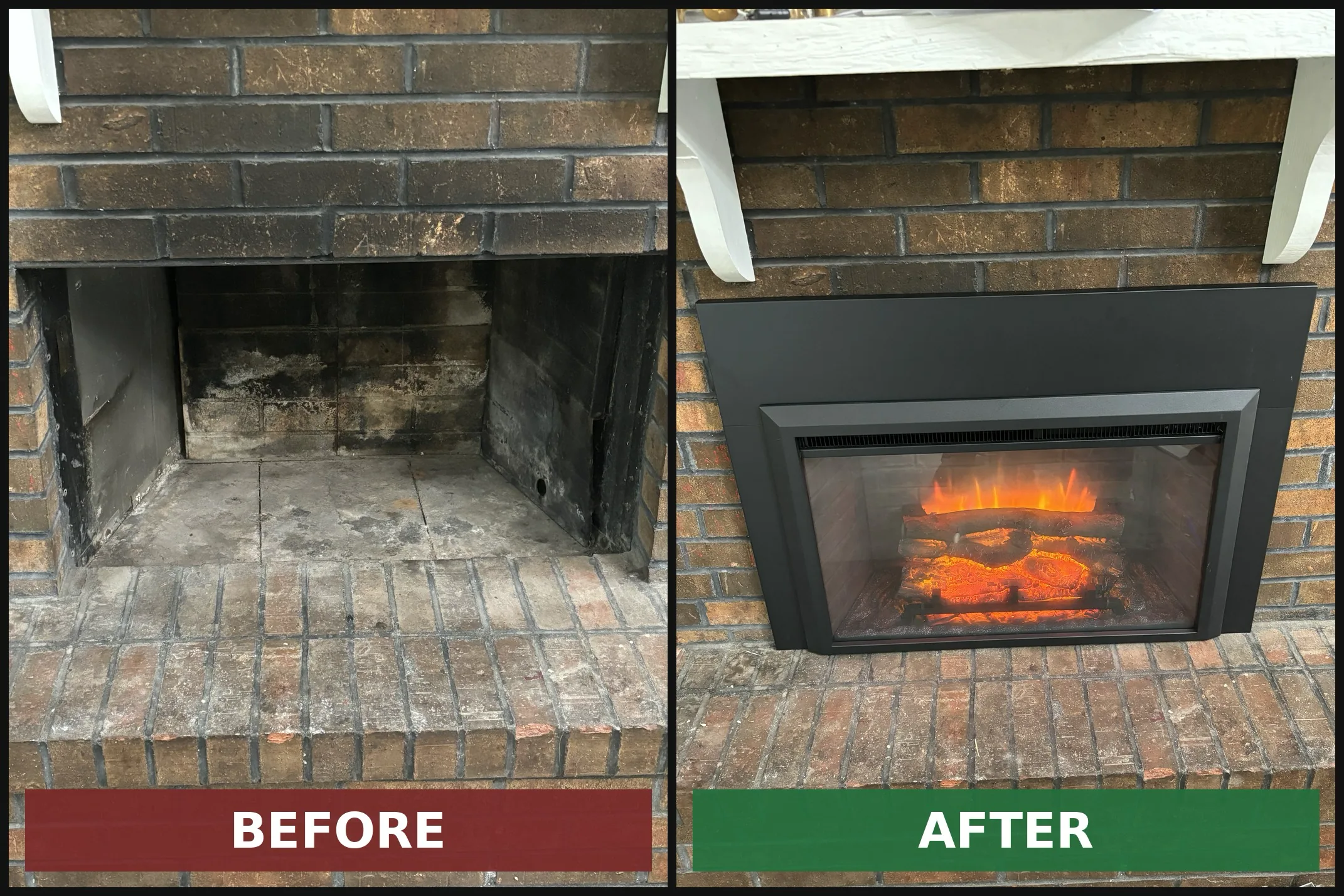
It's 9 degrees outside, the windows are shut tight, and your gas fireplace has been running since dinner. Nobody in the house smells anything wrong. Nobody feels anything wrong — yet. That's the trouble with carbon monoxide: by the time you notice it, you're already breathing it.
Most Dallas–Fort Worth homeowners think of a carbon monoxide detector as something you install near the furnace or the garage. Few think about the fireplace sitting in the living room, quietly burning gas every winter night. That's worth fixing, because a gas fireplace can produce CO just like any other fuel-burning appliance — and it's one of the few you run for hours at a stretch, in the room you're actually sitting in.
How a Gas Fireplace Can Produce Carbon Monoxide
A gas fireplace burns clean when three things line up: the burner gets the right air-to-fuel mix, the flue or vent stays clear, and the flame burns all the way. When any one of those slips — a partially blocked vent, a dirty burner, a cracked heat exchanger on some direct-vent units — combustion turns incomplete. Carbon monoxide is what's left over when gas doesn't fully burn.
You often can't tell just by looking. A fireplace can throw a good-looking flame and still be producing CO. The clearest visual clue is a flame that's running mostly yellow or orange instead of blue, which we cover below — but plenty of problem fireplaces still look ordinary to an untrained eye.
Where to Put a Carbon Monoxide Detector, According to CPSC
The U.S. Consumer Product Safety Commission recommends installing a CO alarm on every level of the home and outside each sleeping area, so an alarm going off at 3 a.m. actually wakes someone. CPSC also advises against installing one directly above a fuel-burning appliance or inside the kitchen, where cooking exhaust can trigger false alarms, and recommends mounting units high on a wall or in a plug-in receptacle, away from heating vents or furniture that could block airflow to the sensor.
Many fire-safety guides also recommend keeping a little distance — a few feet — between an alarm and any single fuel-burning appliance like a gas fireplace: close enough to catch a real problem, far enough that normal startup fumes don't trip a false alarm every time you light it.
| Where to install | Where to avoid |
|---|---|
| One alarm on every level of the home | Directly above the fireplace or any fuel-burning appliance |
| Just outside each bedroom or sleeping area | Inside the kitchen |
| High on a wall, or a plug-in unit away from vents | Behind curtains, furniture, or in dead-air corners |
Symptoms Worth Taking Seriously
CPSC lists headache, fatigue, shortness of breath, nausea, and dizziness as the early signs of low-to-moderate CO exposure — symptoms that get waved off constantly because they feel like a cold, or just being tired. Keep breathing it and it progresses to confusion, vomiting, loss of coordination, and worse. More than 200 people in the U.S. die every year from CO produced by consumer products, according to CPSC — a mix of generators, heaters, and other fuel-burning equipment. If everyone in the house feels better outside and worse again once the fireplace has been running a while, don't write that off as coincidence.
What You Can Check Yourself — and Where DIY Stops
You can and should do a few things on your own: keep a working CO alarm installed and test it monthly with the test button (CPSC notes that button checks the alarm's circuitry, not the accuracy of the sensor itself — replace the unit on the schedule printed on the back), keep batteries current, and watch the flame. A steady blue flame is normal combustion. A flame running mostly yellow or orange, or soot collecting on the glass, means combustion isn't complete — turn the fireplace off and stop using it until it's inspected.
What you can't safely do yourself is diagnose why. Finding a partially blocked flue, a misaligned log set, or a cracked heat exchanger takes a camera and someone who does this every day — it's not a weekend project, and running the fireplace while you "keep an eye on it" isn't a safe middle ground. Our gas fireplace inspection and cleaning is $199 flat and covers exactly this: a full check of the burner, flame pattern, and venting. If the chimney or flue itself is in question, a chimney sweep with camera inspection, also $199, shows us the flue from the inside instead of guessing. Every job carries our 1-year workmanship warranty, and we never claim a certification we don't hold — just NFI-certified technicians who do this daily.
Frequently Asked Questions
Where should I put a carbon monoxide detector if I have a gas fireplace?
On every level of your home and just outside sleeping areas, mounted high on a wall or in a plug-in unit, and not directly above the fireplace itself or inside the kitchen, per CPSC guidance.
Can a gas fireplace actually cause carbon monoxide poisoning?
Yes, if combustion is incomplete — from a dirty burner, blocked venting, or a damaged heat exchanger. It's less common than furnace-related CO incidents, but a gas fireplace is a fuel-burning appliance like any other and can produce CO when something is wrong with it.
How do I know if my carbon monoxide alarm is actually working?
Press the test button monthly. CPSC notes this checks the alarm's circuitry, not the sensor's long-term accuracy, so replace the unit on the schedule printed on the back — commonly every 5 to 10 years depending on the model.
Is a yellow flame on my gas fireplace dangerous?
It can be. A healthy gas flame burns mostly blue. Yellow or orange flame, or soot building up on the glass, usually means the burner isn't getting a clean air-to-fuel mix — a sign to shut it off and have it inspected rather than keep using it.
How often should a gas fireplace be inspected for safety?
Once a year, ideally before the start of burn season, is a reasonable baseline for most DFW homes — sooner if you notice flame color changes, soot, or a smell when it starts up.
1st Choice Residential has kept Dallas–Fort Worth and Gulf Coast fireplaces, chimneys, dryer vents, and grills running safely since 2009 — veteran-owned, licensed and insured, with NFI-certified technicians and a 1-year workmanship warranty on every job. Call (817) 791-4606 (DFW) or (251) 272-1990 (Gulf Coast), text 817-946-8206, or book your gas fireplace inspection online.