
1st Choice Residential journal
Why Is My Chimney Leaking When It Rains? 6 Real Causes
Brown ceiling ring after a storm? A chimney leak comes from one of six specific places. Here is the clue each one leaves, and which ones you can check yourself.
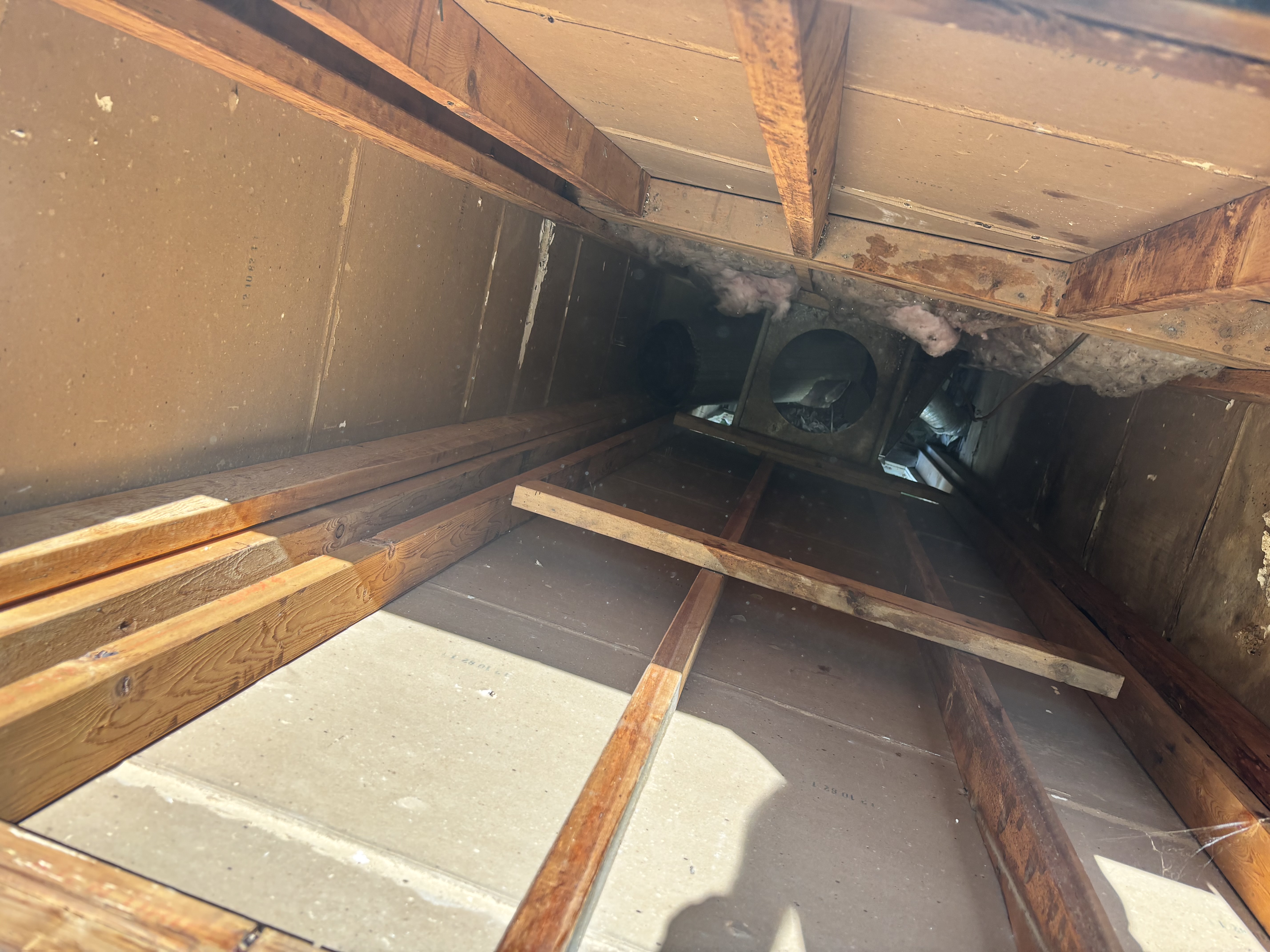
It rained hard Tuesday night. Wednesday morning there's a brown ring on the ceiling next to the fireplace, or a damp smell in the firebox, or actual drips landing on the hearth. You look up at the chimney from the driveway and it looks fine. So where is the water getting in?
A leaking chimney almost never leaks from one obvious hole. It leaks from one of six specific places, and each one leaves a different clue. Here are all six, in the order we find them on service calls around Mobile and Baldwin County.
Why Gulf Coast chimneys leak more than most
Mobile averages about 66 inches of rain a year, according to the City of Mobile. That's roughly double the national average, and July alone brings close to eight inches of it. Add salt air off the bay, wind-driven rain from summer storms, and constant humidity, and you get a structure that stays wet far more of the year than a chimney in a dry climate.
Water is the real enemy here. The Chimney Safety Institute of America puts it plainly: water causes more damage to masonry chimneys than fire does. Rusted dampers, cracked flue liners, rotted framing, ruined drywall, spalling brick. All of it starts with water finding a way in and nobody noticing for two or three years.
The six places chimney water actually comes from
Here's the short version. Details on each one below.
| Leak source | The telltale clue | Typical fix |
|---|---|---|
| Missing or damaged cap | Water drips straight into the firebox; damp ashes; animal noise | New stainless cap |
| Cracked crown | Staining on the chimney face itself, near the top | Crown repair or rebuild |
| Failed flashing | Ceiling stain a foot or two out from the chimney, not in the firebox | Reflash and seal |
| Rusted chase cover | Prefab chimney; rust streaks down the siding | Stainless chase cover |
| Porous or spalled brick | Leak only during long, wind-driven rain | Repoint, then waterproof |
| Gutters and roof runoff | Leak worse in heavy rain; overflowing gutter above chimney | Gutter repair or redirect |
1. A missing, damaged, or undersized cap
The cap sits on top of the flue. No cap means the flue is an open pipe pointed at the sky. Every inch of rain goes straight down it and lands on your damper and smoke shelf. If your ashes are damp, if you hear dripping inside the chimney during a storm, or if birds have moved in, start here. CSIA notes that a well-designed cap keeps out rainwater and stops birds and animals from nesting inside.
This is also the cheapest fix on the list. Our chimney caps start at $99, and on the coast we push stainless over galvanized every time for the same reason your grill rusts here: chlorides in salt air eat cheap metal fast.
2. A cracked crown
The crown is the concrete slab at the top of a masonry chimney that seals the brick around the flue. Sun, rain, and temperature swings crack it. Once it cracks, water runs into the space between the flue liner and the brick, where you can't see it and it can't dry out. Crown cracks are one of the biggest single causes of chimney leaks, and they're invisible from the ground.
3. Failed flashing
Flashing is the metal that ties the chimney to the roof. It's the most common cause of a roof leak around a chimney, period. It fails when it was installed wrong, when the sealant dries out, or when it corrodes and pulls away from the brick.
The tell: your ceiling stain is near the chimney but not in the firebox. Water gets past the flashing, runs along the framing, and shows up a foot or two away. People spend months blaming the roof for this.
4. A rusted chase cover
If you have a prefab or factory-built fireplace, the top of your chimney chase is covered by a metal pan instead of a concrete crown. Builders often used galvanized steel. Galvanized rusts, water pools in the low spot, and eventually you get pinholes. Look for rust streaks running down the siding below the chimney top. That's water that has already been inside.
5. Porous brick and failed mortar joints
Brick is a sponge. Mortar joints are the weak point. When joints wash out or bricks start flaking apart, the whole chimney face starts absorbing water. The signature here is a leak you only see during long, hard, wind-driven rain and never during a light shower.
Waterproofing helps, but only with the right product. CSIA specifically warns that professional-grade masonry water repellents let the structure breathe while blocking water, and that waterproofing will not fix bad or spalled brick. Sealing a damaged chimney with the wrong product traps moisture inside and makes the problem worse.
6. Gutters and roof runoff
This one gets missed constantly. A clogged gutter above the chimney, or a downspout dumping toward it, can throw hundreds of gallons against the masonry in one storm. CSIA lists gutter problems as a common source of water showing up in odd places around the chimney. Check your gutters before anyone touches your brick.
What you can check yourself, and where to stop
- Safe from the ground: Look for a cap. Look for rust streaks. Look for staining on the brick face. Check your gutters above the chimney line.
- Safe inside: Open the damper and feel for damp. Check the firebox floor after a storm. Note exactly where the ceiling stain sits relative to the chimney.
- Stop here: Crown inspection, flashing repair, and chase cover replacement all happen on a wet, pitched roof. That's not a DIY Saturday. Get someone with a ladder, fall protection, and insurance.
Frequently asked questions
Why does my chimney only leak during heavy rain?
Wind-driven rain hits the chimney sideways and gets pushed into openings that shed water fine during a normal shower. Porous brick, hairline crown cracks, and marginal flashing all behave this way. A leak that only shows up in storms is still a real leak, and it's usually one of those three.
Can I just seal the chimney with waterproofing spray?
Only after the actual defect is repaired, and only with a breathable masonry repellent. Hardware-store sealers that form a film trap moisture inside the brick. CSIA is clear that waterproofing does not fix spalled or damaged brick. Fix first, then seal.
Does homeowners insurance cover a chimney leak?
Usually it covers sudden damage, like a storm tearing off flashing, and usually it does not cover deterioration from years of neglect. That distinction is why documenting the leak with a dated inspection report matters. We're not insurance experts, so check with your carrier.
How do I know which of the six it is without climbing up there?
You often can't, and guessing gets expensive. A camera inspection puts eyes on the crown, cap, flue liner, and flashing in one trip. Our chimney sweep with camera inspection runs $199 and covers all of it, including photos you can keep.
My fireplace is gas. Do I still need to worry about this?
Yes. Gas appliances still vent through a chimney, and that chimney still has a cap, a crown, and flashing. Water in a gas system rusts the burner assembly and corrodes valves and connections. If your unit is acting up after a wet season, gas fireplace repair starts at $199.
Find the leak before it finds your framing
A chimney leak is one of the few home problems that gets meaningfully cheaper the earlier you catch it. A $99 cap today beats a crown rebuild in three years, and both beat replacing rotted framing and drywall.
1st Choice Residential has been doing this since 2009. We're veteran-owned, locally owned instead of a franchise, licensed and insured, and our technicians are NFI-certified. Every job carries a 1-year workmanship warranty, and we've earned the Angi Super Service Award, Thumbtack platinum status, and 500+ 5-star reviews along the way.
Book a chimney sweep and camera inspection for $199:
- Gulf Coast: (251) 272-1990
- Dallas-Fort Worth: (817) 791-4606
- iMessage: 817-946-8206
- Book online here
If you're buying or selling a home with a fireplace, ask about our home sale inspection instead. Water damage is one of the most common chimney findings that derails a closing, and it's a lot easier to handle before the offer than after.