
1st Choice Residential journal
Is It Safe to Leave a Propane Tank Outside in the Heat?
Is it safe to leave a propane tank outside in summer heat? Here is the straight answer, the storage spots that cause real trouble, and a 5-minute safety check.
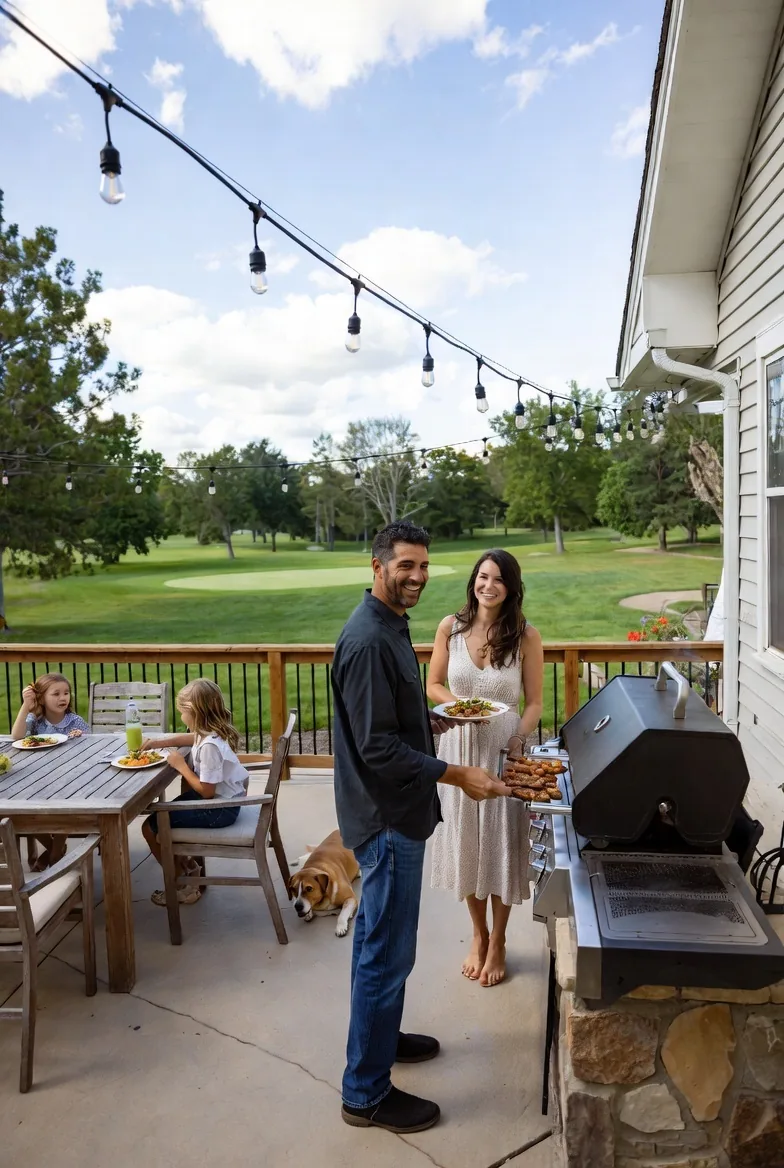
It is late August. Your propane tank has been parked next to the grill on a slab that has been baking since June. You walk past it every day and the same thought shows up: is that thing going to blow out here?
Short answer: no. A propane cylinder sitting outdoors, upright, is doing what it was built to do. What actually gets homeowners in trouble is where they move the tank when they are trying to be careful. The garage. The shed. The back seat of a hot car. That is the part most people get backwards, and it is worth five minutes of your time to get right.
The short answer: outside is the correct place
Propane cylinders belong outdoors. NFPA grilling safety guidance is direct about this: never store or place a propane cylinder indoors or in an enclosed space such as a basement, garage, shed, or tent. Always keep it upright.
The reason is simple. A cylinder has a pressure relief valve. If internal pressure climbs too high, that valve does its job and vents a little propane. Outdoors, that gas disperses into the air and nothing happens. Inside a closed garage, it pools. Propane is heavier than air, so it settles low and sits there waiting on an ignition source. A water heater pilot. A garage door opener sparking. That is the actual failure mode, and it has nothing to do with the sun.
What heat really does to a tank
NFPA warns against storing cylinders in areas of excessive heat, defined as 120 degrees or higher, and away from stoves, fireplaces, or other heat sources. Here is the practical read on that number:
- Ambient air on a brutal North Texas afternoon tops out around 105 to 110. Hot, but not the danger zone for a cylinder sitting in open air.
- A closed car, truck bed, or trunk can pass 140 degrees easily. This is where the exchange-tank run home from the store turns into a real hazard.
- A closed garage or metal shed in August holds heat long after sundown and traps anything that vents.
So the risk is not the tank being outside. The risk is the tank being enclosed.
Where the tank should and should not live
| Location | OK? | Why |
|---|---|---|
| Outdoors, upright, beside the grill | Yes | Any vented gas disperses. This is the intended storage spot. |
| Outdoors in shade, off hot metal or asphalt | Best | Lower surface temperature, less pressure cycling, less rust. |
| Spare tank tucked under the grill | No | NFPA specifically warns against storing a spare cylinder under or near a grill. |
| Garage, shed, basement, or covered porch enclosure | No | Vented propane pools and does not clear. |
| Laid on its side | No | Cylinders are designed to be used and stored vertically. |
| Trunk or closed car for hours | No | Interior temps blow past 120 degrees fast. |
The 5-minute tank check worth doing today
Do this before the fall cooking season gets going.
- Look at the collar for a date. Cylinders are stamped with a manufacture date. Per US DOT PHMSA guidance, most portable cylinders are good for 12 years from manufacture, then must be requalified before a refill station will legally fill them. After the first requalification the interval is typically shorter. If your tank is older than 12 years and has never been requalified, exchange it.
- Check the valve. Cylinders in the 4 to 40 pound range are required to have an overfill prevention device (OPD), usually a triangular handwheel. An old round-handle tank without one should be retired.
- Look for rust and pitting, especially at the base where the tank meets concrete. Gulf Coast salt air eats footrings. Surface haze is fine. Flaking metal or deep pits are not.
- Soap-test the connection. Brush a 50/50 mix of dish soap and water on the hose and regulator connection with the valve open and the burners off. Growing bubbles mean a leak. Close the valve and replace the hose.
- Check the hose itself for cracking, chew marks, or a hard, chalky feel. Rubber does not survive many Texas or Alabama summers on a patio.
When it is the grill, not the tank
Most of the calls we get that start with "I think my tank is bad" turn out to be the grill. Low flame, uneven heat, a burner that will not light, or a smell of gas at startup usually traces back to a clogged burner port, a spider web in the venturi tube, a failing regulator, or grease buildup, not the cylinder. Swapping tanks costs you $25 and fixes nothing.
A grease-loaded firebox is the bigger safety issue anyway. If you have not looked under the cooking grates in a year, that is the job to book. Our BBQ grill cleaning and repair service starts at $239 for a deep clean, and we pull, scrape, and inspect burners, tubes, and the ignition system while we are in there. Repairs carry a 1-year workmanship warranty.
Frequently asked questions
Can a propane tank explode in the sun?
Not from normal outdoor sun exposure. Cylinders have a pressure relief valve that vents excess pressure. The danger comes from storing a cylinder in an enclosed space where vented gas can collect, or exposing it to heat sources at 120 degrees or higher, which NFPA advises against.
Is it OK to leave a propane tank connected to the grill year-round?
Yes, as long as the grill is outdoors and the tank stays upright. Close the cylinder valve when you are not cooking, and soap-test the connection a couple of times a year.
Can I store my propane tank in the garage over winter?
No. NFPA guidance says never store a cylinder indoors or in an enclosed area, including a garage, basement, shed, or tent. Leave it outside, upright, and off direct heat.
How long does a propane tank last before it has to be replaced?
US DOT rules qualify most portable cylinders for 12 years from the manufacture date stamped on the collar. After that it must be requalified to be refilled, and the requalification interval is shorter. Exchange programs handle this for you, which is one reason many homeowners just swap tanks.
Why does my grill run weak even with a full tank?
Usually a tripped regulator flow-limiting device, a blocked burner port, or an obstructed venturi tube. Turn everything off, disconnect, wait a minute, reconnect with burners closed, then open the cylinder valve slowly. If it still runs weak, it is a service issue, not a fuel issue.
Get the grill checked before fall
1st Choice Residential has been a licensed and insured, veteran-owned, locally owned company since 2009, with NFI-certified technicians on staff. We clean and repair freestanding and built-in gas grills across Dallas-Fort Worth and Baldwin County, Alabama, plus Mobile.
Grill deep clean from $239. Call DFW at (817) 791-4606, the Gulf Coast at (251) 272-1990, or text us at 817-946-8206. You can also book online in about two minutes.