
1st Choice Residential journal
How to Winterize an Outdoor Kitchen in DFW: What Freezes First and What to Do About It
DFW outdoor kitchens don't die in the cold — they die from water left in the lines. Here's what freezes first, what to drain, and where to stop and call.
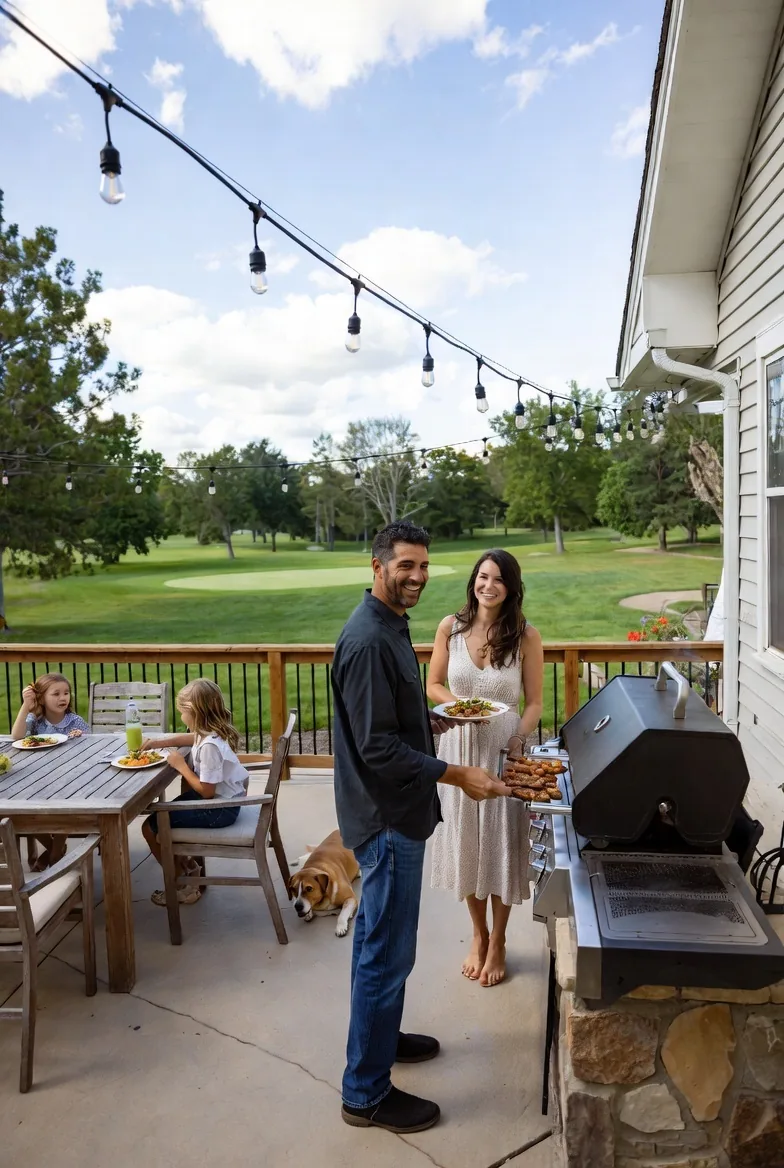
It's still hot. That's exactly why we're writing this now.
Every year in North Texas the same thing happens. A cold front drops in overnight in December or January, the temperature sits below freezing for two days, and in February somebody walks out to their outdoor kitchen, turns the sink on, and water comes pouring out of the bottom of the island instead of the faucet. The grill is fine. The stone is fine. A half-inch water line behind the cabinet panel split open, and nobody knew until spring.
Winterizing an outdoor kitchen in Dallas-Fort Worth is not complicated, and most of it you can do yourself in an afternoon. But the order matters, and the part people skip is the part that costs money. Here's what actually freezes, what to do about it, and where you should stop and hand it to somebody.
What Actually Freezes and Breaks
Water expands when it turns to ice. That's the whole story. Anything in your outdoor kitchen holding water is a candidate for damage; anything that isn't holding water mostly just gets dirty.
Sorted by how much trouble each one causes:
| Component | Freeze risk | What it costs you |
| Supply lines to the sink | High | Split line inside the island — often means cutting into stone or stucco to reach it |
| Sink P-trap | High | Cracked trap, water under the cabinet, slow discovery |
| Ice maker and its feed line | High | Ruined unit plus a leak |
| Outdoor refrigerator | Medium | Most aren't rated to run in freezing temps; compressor and seals suffer |
| Grill burners and manifold | Low | Metal doesn't care about cold. Grease and moisture do. |
| Stainless doors, drawers, grates | Low | Rust and pitting from trapped moisture, not from cold itself |
Notice where the grill sits on that list. Your grill is the most expensive thing out there and the least likely to be damaged by a freeze. A wet winter is what hurts it, not a cold one.
Step One: Get the Water Out
This is the whole job. Everything else is housekeeping.
- Find the shutoff and close it. On most DFW outdoor kitchens the supply valve is either inside the island behind an access door, in a nearby irrigation box, or in the garage on the wall the line runs through. Find it now, in September, with a flashlight and no urgency. Finding it during an ice storm is a different experience.
- Open both faucet handles and leave them open. Hot and cold. This breaks the vacuum and lets the line drain instead of holding a column of water.
- Open any drain or bleeder valve on the line and let it run out. If there's a low-point drain, that's what it's for.
- Blow the line out if you can. A shop compressor at low pressure clears what gravity leaves behind. Gravity alone leaves plenty in a horizontal run.
- Protect the P-trap. The trap under the sink is designed to hold water — that's how it blocks sewer gas — so it won't drain on its own. Pour a cup or two of RV or marine antifreeze down the drain. Use the propylene glycol kind, the pink stuff sold for drinking-water systems. Never automotive antifreeze; ethylene glycol is poisonous and it should not be anywhere near a place people eat.
- Disconnect and drain the ice maker feed, then empty and dry the bin.
- Unplug the outdoor fridge unless the manufacturer specifically says it can run below freezing. Prop the door open a crack so it doesn't grow mildew inside over the winter.
Do this before the first hard freeze, not during the week of one. In DFW the first freeze usually lands sometime in November, but it has come earlier, and the forecast does not always give you a weekend of warning.
Then Deal With the Grill
Clean it before you close it up
Grease left on the burners and in the firebox over a wet winter is the real enemy. It holds moisture against metal, it feeds corrosion, and it turns into a hardened layer that is much harder to remove in March than it is today. If you only do one thing to the grill before winter, take the grates and flavorizer bars out, scrape the firebox, and empty the grease tray.
If you want it done properly — burners pulled, ports cleared, firebox degreased, ignition and gas connections checked — that's our BBQ grill cleaning and repair service, and it starts at $239. Fall is the right time for it. Spring is when everybody calls at once.
Covers help, until they don't
A grill cover is worth having. It is also the single most common reason we see rust on a grill that was never left out in the rain.
The problem is trapping. Put a cover over a grill that's still warm, or still damp, or sitting on a patio that stays wet, and you've built a humidity chamber around stainless steel. Two rules solve it:
- Only cover the grill when it is cold and dry. Never right after cooking.
- Take the cover off on dry days now and then and let everything breathe.
If your island is under a covered patio in Southlake or Frisco and stays genuinely dry, you may not need a cover at all for a DFW winter.
Propane and Where the Tank Goes
Cold is not the reason your propane grill runs badly in winter. Propane stays liquid down to about 44 degrees below zero, which North Texas is not going to reach. What does happen is that tank pressure drops as the temperature falls, so a nearly empty tank on a 25-degree morning can struggle to feed the burners. A full tank in the same weather is fine.
The storage rule matters more than the cold. NFPA guidance is that propane grills and cylinders belong outdoors — away from the house, away from deck railings, and out from under eaves. That does not change in December. A propane cylinder does not go in the garage for the winter, and it does not go in the house. Propane vapor is heavier than air; if a valve seeps in an enclosed space, it settles and stays. NFPA's grilling safety tip sheet is a one-page read and worth having.
If yours is a natural gas grill, leave the gas on. There is nothing to drain and nothing to freeze in a gas line.
Do It Yourself, Up to a Point
Draining lines, pouring antifreeze in a trap, cleaning grates, unplugging a fridge — all of that is homeowner work and you should feel fine doing it.
Stop and call somebody if:
- You smell gas at any point, at the tank, the hose, or the island. Shut the supply off, leave it alone, and call.
- You can't find the water shutoff, or the valve won't turn. Forcing a corroded valve is how a small job becomes a plumbing job.
- The gas line into the island is buried, flexible, or you can't see where it connects.
- A burner or the ignition system was already acting up before you closed everything down. It will not be better in March.
Frequently Asked Questions
Do I really need to winterize an outdoor kitchen in Texas?
If it has a sink, an ice maker, or any plumbed water, yes. DFW gets hard freezes — not many, but enough, and February 2021 reminded everyone what a multi-day one does to exposed water lines. If your outdoor kitchen is grill-only with no water, winterizing is really just a good cleaning and a cover.
When should I winterize my outdoor kitchen in DFW?
Do the cleaning and the tune-up in late September or October while the weather is pleasant. Drain the water lines by early to mid November, before the first hard freeze. Doing it in October costs you an afternoon; doing it after a freeze can cost you the island.
Can I leave my grill outside all winter in DFW?
Yes. A built-in grill isn't going anywhere, and a freestanding one is fine outdoors too. Cold doesn't damage a grill. Clean out the grease first, cover it only when it's cold and dry, and store the propane cylinder outside rather than in the garage.
Will a freeze crack my outdoor kitchen countertop or stone?
Usually not by itself. Granite and stone take the cold fine. What cracks stone is water that gets into an unsealed seam or a hairline gap, freezes, and expands. Sealing the countertop and making sure water drains off it rather than pooling handles most of that.
What happens if I forget and we get a freeze?
Shut the water supply off immediately and leave the faucets open. Don't run water through the line to test it until the temperature is back above freezing and you can watch the inside of the island for leaks. If you find a split, turn the water off at the house and get a plumber before you chase anything else.
Getting Your Outdoor Kitchen Ready for the Season
We've been doing this across Dallas-Fort Worth since 2009 — veteran-owned, licensed and insured, locally owned rather than a franchise, with NFI-certified technicians and over 500 five-star reviews. Every job carries a one-year workmanship warranty.
Fall is our busiest window for a reason. A grill deep clean starts at $239. And if the same cold front that closes down the outdoor kitchen is about to have you lighting the fireplace inside, a gas fireplace inspection and cleaning is $199 — worth booking in the same visit. See our grill cleaning and repair and gas fireplace repair pages for what each one covers, or our Dallas-Fort Worth service area page to check that we cover your neighborhood. We also work throughout Southlake and the surrounding communities.
Call (817) 791-4606 in DFW, or text 817-946-8206 if that's easier. You can also book online and pick your own time.