
1st Choice Residential journal
Gas Fireplace Glass Turning Black? What That Soot Is Telling You
A light haze on gas fireplace glass is normal. Heavy black soot is not. Here are the 7 real causes, what you can safely clean yourself, and when to call a tech.
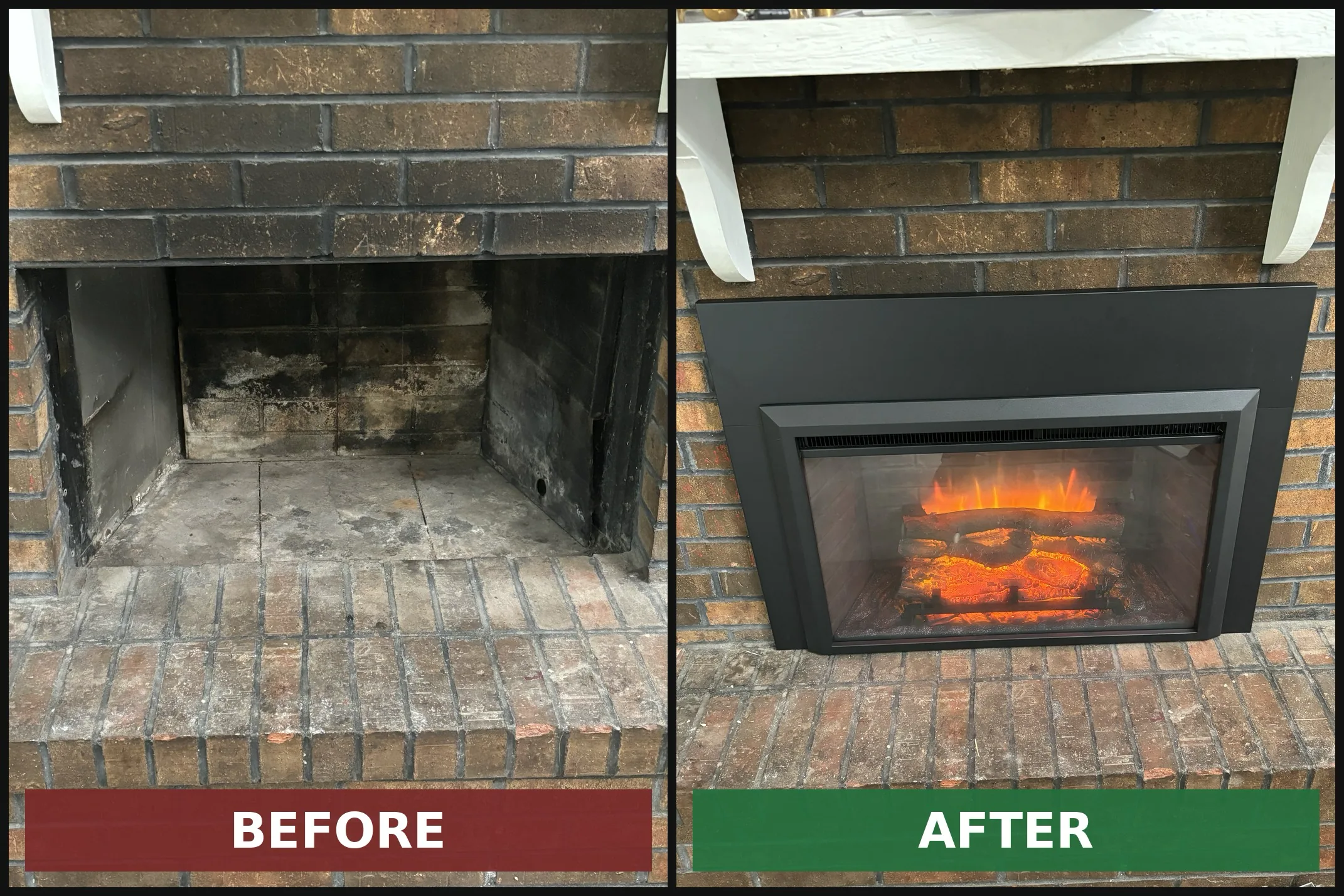
You run the gas fireplace for a few evenings and notice a gray haze on the glass. A month later it is dark enough that the flames look dim and brownish. Nothing is obviously broken. It still lights, still throws heat. So is the black glass normal, or is it telling you something?
Honest answer: a faint film is normal on most gas fireplaces. Heavy black soot is not. Soot is the easiest-to-see sign that your fireplace has stopped burning cleanly, and in most homes we visit the cause is small, cheap, and fixable in one trip.
What the black film on your fireplace glass actually is
Soot is unburned carbon. When a gas flame gets all the air it needs, it burns the fuel almost completely and leaves very little behind. When it does not get enough air, or when the flame hits something solid before it finishes burning, the leftover carbon has to land somewhere. It lands on the coldest surface in the firebox, and that is your glass.
So blackened glass is not really a glass problem. It is a combustion problem showing up on the glass.
7 reasons gas fireplace glass turns black
- The logs got moved. This is the number one cause we find. Manufacturers are blunt about it: Hearth & Home Technologies gas log instructions state that log positioning is critical to safe, clean operation and that sooting and other problems may result if the logs are not positioned exactly as shown. A log nudged half an inch during cleaning is enough to push flame into the ceramic instead of letting it burn in open air.
- Clogged burner ports. Dust, pet hair, spider webs, and bits of ceramic block the small holes the gas comes out of. Blocked ports make lazy, ragged flames that soot.
- The air shutter is out of adjustment. Many gas log sets have an adjustable shutter that sets the air-to-fuel mix. Vibration, a past repair, or a rushed install can leave it too closed, which starves the flame of air.
- Decorative embers in the wrong place. Those glowing ember chips belong in specific spots. Piled onto burner ports, they smother the flame and produce carbon fast.
- You are burning propane. Manufacturer instructions note that natural gas log sets generally produce less soot than propane sets. If you are on LP in Baldwin County or out past the DFW gas lines, expect to clean the glass more often than your neighbor on natural gas.
- A restricted vent. On a direct-vent unit, the sealed system pulls combustion air from outside and pushes exhaust out the same termination. A bird nest, wasp nest, or crushed vent cap changes that balance and the flame goes dirty.
- Dirty glass stays dirty. Once a layer bakes on, new soot grabs onto it faster. Cleaning resets the clock.
Black soot vs. white haze vs. cloudy film
Not every mark on the glass means the same thing. Use this to sort out what you are looking at.
| What you see | Most likely cause | What to do |
|---|---|---|
| Faint gray haze after several burns | Normal light residue from combustion | Clean it with a fireplace glass cleaner a couple times per season |
| White or milky film on a brand-new unit | Curing residue from paint and sealants during the first burns | Clean it early, before it bakes on permanently |
| Heavy black soot that returns within days | Log placement, blocked ports, air shutter, or venting | Stop using it and get it inspected |
| Cloudy film that will not wipe off | Household cleaner baked onto hot glass | Ask about glass replacement, since some etching is permanent |
| Soot plus a strong smell or headaches | Incomplete combustion, possible venting fault | Shut it off, ventilate, check your CO alarm, call a pro |
Is sooting dangerous, or just ugly?
Mostly it is ugly. Here is why we still do not ignore it. Almost all heating appliances, whether gas, oil, wood, or coal, depend on a chimney or vent to carry carbon monoxide out of the house, which is why the Chimney Safety Institute of America points to NFPA 211, the standard calling for chimneys, fireplaces, and vents to be inspected at least once a year. Heavy sooting means the burn is incomplete, and incomplete combustion is the same condition that raises carbon monoxide. That does not mean your fireplace is poisoning you. It means whatever is making the soot deserves a look, and every home with a gas appliance needs working CO alarms.
One more note while the glass is on your mind. The Hearth, Patio & Barbecue Association reports that ANSI standards effective January 1, 2015 require new glass-front gas fireplaces to ship with a protective barrier, because the glass gets hot enough to burn a child on contact. If your fireplace predates 2015 and has no barrier screen, a retrofit screen is one of the cheapest safety upgrades you can make.
What you can safely do yourself
- Turn it off and let it cool completely. Hours, not minutes.
- Check your owner manual before removing the glass. On sealed direct-vent units the glass and its gasket are part of the venting system. If it goes back on crooked or with a damaged gasket, the unit can leak exhaust into the room.
- Clean with a cleaner made for fireplace glass. Soft cloth, never a scouring pad. Household cleaners left behind can bake on during the next fire and stain the glass for good.
- Photograph the logs before you touch them. Compare against the diagram in your manual and put every piece back exactly where the manufacturer shows it.
- Look outside at the vent. Nests and leaves around a sidewall termination are easy to spot and easy to clear.
What not to do: do not rearrange logs to make the flames look better, do not add lava rock or embers that did not come with the unit, and do not adjust the air shutter by guesswork. All three make sooting worse and can void the warranty.
When it is time to call somebody
Call if the soot comes back within a week of cleaning, if the flames are tall and orange with dark tips instead of mostly blue at the base, if you smell gas at any time, or if the unit has never been serviced. Our NFI-certified technicians pull and inspect the burner, clean the ports, reset log and ember placement to the manufacturer diagram, check the air shutter and gas pressure, and inspect the venting.
Straight pricing, no surprises. A gas fireplace inspection and cleaning is $229, and repairs start at $229. If your unit vents into a masonry chimney, a chimney sweep with camera inspection is also $229. Every repair carries a 1-year workmanship warranty.
Frequently asked questions
Is black soot on a gas fireplace dangerous?
A light film is not dangerous. Heavy soot that returns quickly is a sign of incomplete combustion, the same condition associated with elevated carbon monoxide, so it should be inspected rather than just wiped away. Keep working CO alarms in the home either way.
Can I clean gas fireplace glass with Windex?
We do not recommend it. Ordinary household glass cleaners can leave residue that bakes onto the hot glass and permanently clouds it. Use a cleaner labeled for fireplace or stove glass and a soft cloth.
Why are my gas logs turning black too?
Same cause. The carbon that lands on the glass also lands on the ceramic logs. On vented sets some darkening is normal over time, but logs that blacken quickly usually point to placement or burner problems.
How much does it cost to fix a gas fireplace that is sooting?
Most sooting jobs are solved during a $229 inspection and cleaning, since burner cleaning, log repositioning, and shutter adjustment are part of that visit. If a part has failed, repairs start at $229 and we quote the price before we start.
Get the glass clear and the burn right
1st Choice Residential has been servicing fireplaces since 2009. We are veteran-owned, licensed and insured, locally owned rather than a franchise, and our technicians are NFI-certified. We serve Dallas-Fort Worth and the Gulf Coast including Baldwin County, Alabama.
Call DFW at (817) 791-4606, the Gulf Coast at (251) 272-1990, or text 817-946-8206. You can also book your gas fireplace inspection online and pick your own time slot.