
1st Choice Residential journal
Why Does My Gas Grill Flare Up So Much? 6 Real Causes (and the Fix for Each)
Flare-ups are not just a nuisance — NFPA says an uncleaned grill is a leading factor in home grill fires. Here is what actually causes them and how to stop it.
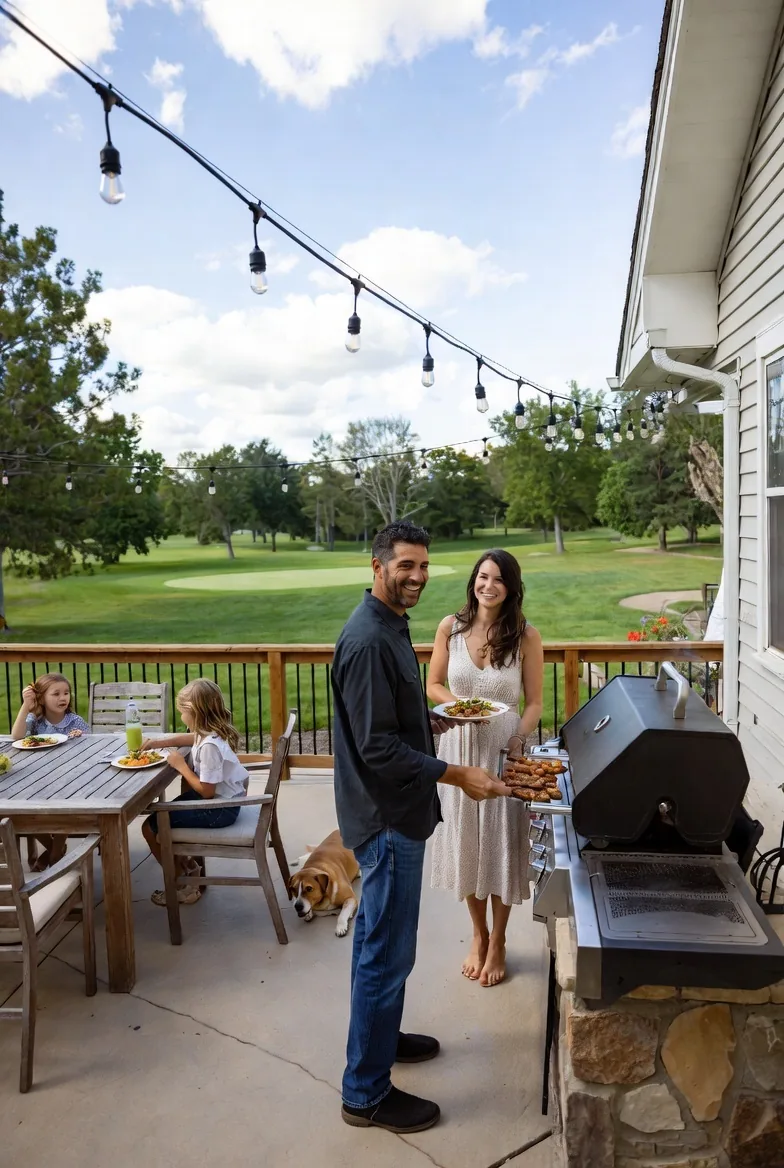
You put the chicken thighs on, drop the lid, and thirty seconds later there is orange light glowing around the edges. You open it and a wall of flame is coming up through the grates. One side of the skin is already black. The other side is still raw.
That is a flare-up. A short one is normal. Fat drips, hits something hot, and burns off. That is part of how grilling works, and it is where a lot of the flavor comes from.
But if your grill torches every single time you cook, that is not technique. That is the grill telling you something. And it matters more than a ruined dinner: according to NFPA grilling safety data (2020–2024 annual averages), the grill had not been cleaned in roughly one-fifth of home grill fires, and gas grills were involved in an average of 9,235 home fires a year.
Here is what actually causes constant flare-ups, in the order we find it on service calls.
First, how to shut a flare-up down safely
Do this before you troubleshoot anything.
- Move the food off the flame. Slide it to a burner that is turned off, or up onto the warming rack.
- Turn the burners down or off. No fuel, no fire.
- Close the lid. Cutting the oxygen smothers most flare-ups in a few seconds.
- Do not spray it with water. Water hits burning grease, flashes to steam, and throws flaming grease out of the box. A spray bottle is not a fire extinguisher.
- If it keeps burning after the gas is off, leave it and call 911. If you can safely reach the tank valve or the shutoff on the gas line, close it. Then get away from the grill.
One more thing worth saying plainly: NFPA reports that nearly a quarter of grill structure fires start on an exterior balcony or open porch. Where the grill sits matters as much as how clean it is. Keep it away from the house, off the deck railing, and out from under eaves.
The six causes we actually find
1. The grease tray is full
This is the number one cause, and it is not close. Every gas grill has a drip pan, catch pan, or grease cup under the cook box. It fills up. When it is full — or when the tray is warped and grease has run past it onto the bottom of the cabinet — you have a puddle of fuel sitting a few inches under an open flame.
Pull the tray out and look. If it has a solid crust rather than liquid grease, it has been a while. Weber’s own guidance on preventing flare-ups starts with exactly this: wipe the catch pan clean of accumulated fats and oils.
2. Heat tents or flavorizer bars are missing, crooked, or burned through
Those angled metal bars sitting over the burner tubes are not decoration. They catch dripping grease, vaporize it for flavor, and steer the rest away from the flame. Weber notes that when Flavorizer Bars are not positioned correctly, grease can find its way straight down to the burners.
They also rust out. On a grill that lives outside — and especially near the coast, where salt air chews through thin steel faster — heat tents burn through in the middle and open a hole right over the burner. Every drop of fat that finds that hole lands on fire. Pull the grates and look at the bars from above. If you can see burner tube through them, they are done.
3. Carbon buildup on the grates and under the lid
The black flakes that rain down when you scrape the lid are old carbonized grease. It is fuel. Grates coated in a thick, sticky layer hold fat on the surface instead of letting it drain, and it lights.
A clean grate should be dark and dry, not tacky. If your brush skates over the surface without taking anything off, that layer is past brushing.
4. Clogged or corroded burner ports
A healthy gas burner flame is mostly blue and even along the whole tube. If yours is yellow, lazy, or only burning at one end, the ports are partially blocked — rust flakes, food debris, or an insect nest in the venturi tube where the gas enters. Spiders love those tubes.
A weak, uneven flame does not burn drippings off cleanly. It lets them pool and then ignite all at once. Worse, a burner tube that has corroded through will vent flame outside the tube, in a place the heat tents were never designed to cover.
5. Fatty cuts, heavy oil, and sugary sauce on direct high heat
Sometimes the grill is fine and the cooking is the problem. Untrimmed ribeye, chicken thighs with skin on, bacon-wrapped anything, or a sugar-heavy barbecue sauce brushed on at the start of a cook will flare on a spotless grill. Trim the heavy fat, go easy on the oil, and save sweet sauces for the last few minutes.
6. There is nowhere to move the food
If every burner is on high, a flare-up has you cornered. Leave one burner off. That cool zone is where you park food while the fat burns off — and it is the difference between a two-second flare and a burnt dinner.
Quick diagnosis
| What you see | Most likely cause | Fix |
|---|---|---|
| Flames on every cook, from the whole cook box | Full grease tray or grease pooled in the cabinet | Empty and scrape the tray; clean the cabinet floor |
| Flames from one spot, same place every time | Burned-through heat tent or flavorizer bar | Replace that bar |
| Flakes falling on the food, sticky grates | Carbon buildup | Deep clean the grates and lid |
| Yellow or lazy flame, one end of the burner only | Clogged ports or insect nest in the venturi | Clear the ports; replace a rusted-through burner |
| Flare only with certain foods | Fat, oil, or sugar load | Trim, oil lightly, sauce late |
Where to stop and call somebody
Most of the list above is homeowner work. These are not:
- You smell gas, or you see flame anywhere around the hose, regulator, or fittings. Shut the gas off and stop.
- A burner tube is rusted through and flame is coming out somewhere other than the ports.
- The fire kept burning after you shut the gas off.
- It is a built-in grill in an outdoor kitchen. There is a lot less room in that cabinet, grease collects in places you cannot see from the front, and the gas connection is usually hard plumbed.
What a deep clean actually gets you
A professional BBQ grill cleaning and repair is not a wire brush and ten minutes. We break the grill down — grates, heat tents, burners, drip tray, cabinet floor — scrape the carbon out, clear the burner ports, and check the tubes and fittings while everything is apart. That is when we find the burned-through bar or the corroded burner that has been causing the flare-ups all along.
Our grill deep clean starts at $239, and all our workmanship carries a 1-year warranty. If a part is shot, we will tell you what it costs before we touch it. We do not quote burner or valve replacements sight unseen, because a clogged port and a rotted-out tube are not the same job and pretending they are is how people get surprised on the invoice.
Frequently asked questions
Is it normal for a gas grill to flare up?
A brief flare-up when fat hits the heat is normal, and it is part of how grilling develops flavor. Flames that build for several seconds, engulf the food, or happen on every cook are not normal. That pattern almost always points to grease buildup, a failed heat tent, or a burner that is not burning cleanly.
How do you stop a grill flare-up?
Move the food to a burner that is off, turn the flame down, and close the lid. Closing the lid starves the fire of oxygen and usually puts it out within seconds. Never use water on a grease fire — it can throw burning grease out of the grill. If the fire continues after the gas is shut off, leave the area and call 911.
Does a flare-up mean my grill needs cleaning?
Usually, yes. Grease and carbon buildup are the most common cause of repeated flare-ups, and NFPA data shows the grill had not been cleaned in roughly one-fifth of home grill fires. Pull the grates and the drip tray. If either has a hard crust rather than a light film, cleaning is overdue.
How often should you deep clean a gas grill?
It depends far more on what you cook than on the calendar. Someone searing fatty cuts every weekend will load a grill faster than someone grilling vegetables twice a month. Two honest markers: empty the grease tray whenever it looks close to full, and get the grill broken down and deep cleaned when brushing stops making a difference — or once a season if you grill regularly.
Can flare-ups damage the grill itself?
Repeated large flare-ups run temperatures well above what the grill was designed for. Over time that warps heat tents and grates, discolors the lid, and shortens burner life. The flare-up is not just cooking your dinner wrong — it is aging the grill.
Get it looked at
1st Choice Residential has been cleaning and repairing grills since 2009. We are veteran-owned, locally owned rather than a franchise, licensed and insured, with NFI-certified technicians and 500-plus 5-star reviews behind us.
We work built-ins and freestanding grills across Dallas–Fort Worth and the Gulf Coast, including Mobile and Baldwin County.
Call (817) 791-4606 in DFW, (251) 272-1990 on the Gulf Coast, or text 817-946-8206. You can also book online and pick your own time.