
1st Choice Residential journal
Repair or Replace Your Built-In Gas Grill? An Honest Cost Guide
Rusty burners, weak flames, dead igniters — before you rip out that built-in grill, learn which problems are cheap fixes and which mean it's time to replace.
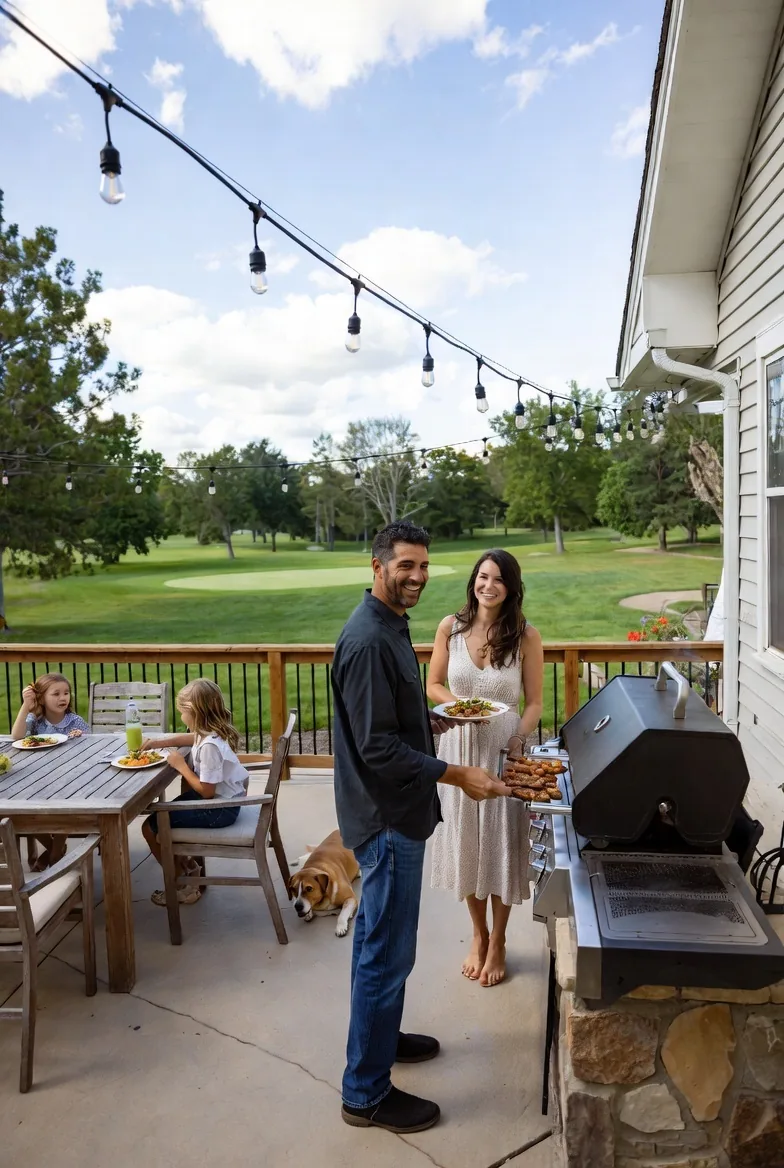
Your built-in grill was the centerpiece of the outdoor kitchen when it went in. Now the burners rust, one side barely lights, and the igniter clicks at nothing. So you're standing in front of it wondering: do I fix this thing, or rip it out and start over? It's a real decision, because a built-in isn't like a cart grill you wheel to the curb. It's set into stone or stucco, sized to a specific cut-out, and replacing it can touch the whole island. Here's how to make the call without wasting money in either direction.
Start With What's Actually Broken
Most "dead" built-in grills aren't dead. They're dirty, corroded in replaceable spots, or starved for gas. Nearly every part that takes abuse on a grill is designed to be swapped out:
- Igniters and ignition modules — the most common failure, and usually the cheapest fix.
- Burners — rust out over time, especially near salt air. They unbolt and replace.
- Flame tamers / briquette trays — the shields over the burners take the worst of the grease. Fully replaceable.
- Cooking grates — rusted or flaking grates swap out in minutes.
- Valves and regulators — weak, uneven, or low flames often trace back here, not to the burners at all.
- Thermometers, knobs, and lights — cosmetic and cheap.
The one part that is not replaceable is the firebox — the welded stainless shell everything else bolts into. That distinction drives the whole repair-or-replace decision.
Repair vs. Replace at a Glance
| Situation | Smart Move | Why |
|---|---|---|
| Igniter clicks but won't light | Repair | Ignition parts are inexpensive and quick to swap |
| Rusted burners or flame tamers | Repair | Bolt-in parts; many premium brands cover burners for life |
| Low or uneven flames | Repair | Often a regulator, valve, or clogged burner — not a dying grill |
| Heavy grease buildup, flare-ups | Deep clean first | Buildup mimics mechanical failure and is a fire risk |
| Firebox rusted through or warped | Replace | The shell can't be rebuilt economically |
| Brand is defunct, no parts available | Replace | Chasing obsolete parts costs more than it returns |
When Repair Is the Smart Money
If the firebox is solid, repair almost always wins. A quality built-in head from Blaze, Lynx, Coyote, DCS, or Kalamazoo was built to be serviced, and the premium brands stand behind that: Blaze warrants its main burners, cooking grids, and grill body for life (on registered grills), and several other high-end makers offer similar coverage on burners. Before you pay for any replacement part, dig out your paperwork — you may only owe labor.
There's a safety reason to fix problems promptly, too. The National Fire Protection Association reports that July is the peak month for grill fires, and a grill that hadn't been cleaned is the leading contributing factor, involved in about one in five grill fires.
Our grill cleaning and repair service handles all of this: we diagnose the actual failure, source the right parts for your brand, and back the work with a 1-year workmanship warranty.
When Replacement Wins
Three situations tip the math toward a new grill head:
- The firebox is gone. Rust holes in the shell, a warped hood that won't seal, or welds letting go mean the structure itself has failed. Parts bolted to a failing shell are wasted money.
- The brand disappeared. Plenty of grills sold during the outdoor-kitchen boom came from importers that no longer exist. No parts pipeline means every repair is a custom project.
- You already want to upgrade. If you've been eyeing a bigger head, sear burners, or a rotisserie, putting money into the old unit delays what you actually want.
One caution on replacement: built-in grills drop into a cut-out, and cut-out dimensions are not standardized between brands. Measure the opening — width, depth, and height — before you fall in love with a new model, or plan on masonry work to resize the island. If you're rebuilding the outdoor kitchen anyway, that's the moment to get the layout right; the Hearth, Patio & Barbecue Association is a good starting point for what's current in outdoor kitchen design.
The Step Most Homeowners Skip: Deep Clean Before You Decide
Here's the honest-advisor part. A large share of "failing" grills are just filthy. Years of grease and carbon clog burner ports, block gas flow, kill igniter spark, and cause the flare-ups and hot spots that make a grill feel worn out. You cannot fairly judge a grill's condition through that buildup.
A professional deep clean — from $239 — strips the grill to bare metal, and it doubles as an inspection. Once it's clean, we can tell you exactly what's genuinely worn versus what was just buried. Homeowners from Dallas–Fort Worth to Fairhope are often surprised how much grill is left under there.
Frequently Asked Questions
How long should a built-in gas grill last?
A quality stainless built-in typically lasts 10 to 20 years with maintenance, because the wear parts — burners, grates, igniters, flame tamers — are all replaceable. Budget grills with thinner steel fireboxes fail sooner, and coastal salt air shortens every grill's life if it isn't cleaned regularly.
Is it worth repairing an old built-in grill?
Yes, if the firebox is structurally sound and parts are still available for your brand. Repairs on serviceable brands like Blaze, Lynx, Coyote, and DCS usually cost a fraction of a new head plus installation, and burner warranties can cut the cost further.
Can I put a different brand of grill in my existing cut-out?
Sometimes. Cut-out dimensions vary by brand and model, so a new head must match your opening within tight tolerances or the island has to be modified. Always compare the manufacturer's published cut-out specs to your measured opening before buying.
Why is my built-in grill not getting hot enough?
The usual suspects are clogged burner ports, a failing regulator, or a partially closed valve — not a worn-out grill. These are all repairable. A deep clean plus inspection typically identifies the cause in one visit.
Get a Straight Answer Before You Spend
You don't have to make this call alone. 1st Choice Residential is veteran-owned and has been servicing fireplaces and grills since 2009 — we'll tell you plainly whether your grill is worth fixing, because we do both repairs and replacements and have no reason to steer you wrong. Grill deep cleans start at $239, and every repair carries a 1-year workmanship warranty.
Book your grill cleaning or repair online, or call us: DFW (817) 791-4606 · Gulf Coast (251) 272-1990 · iMessage 817-946-8206.