
1st Choice Residential journal
Gas vs. Charcoal for Your Built-In Outdoor Kitchen Grill: How to Choose
Choosing between a gas or charcoal built-in grill? Here's how flavor, cost, upkeep, and Texas or Gulf Coast weather should shape your outdoor kitchen decision.
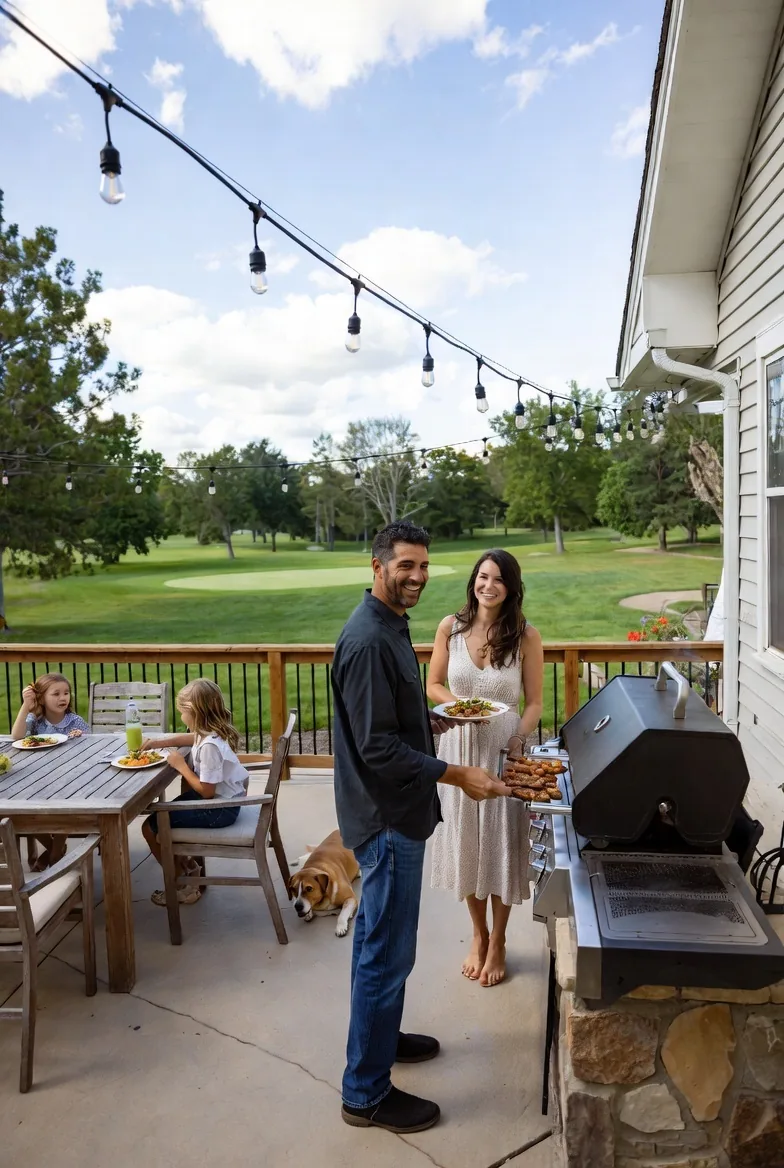
You're building an outdoor kitchen. The countertop is designed, the stone is picked, and now you're staring at the one decision you can't easily undo: gas or charcoal for the built-in grill? Unlike a cart grill you can swap out next season, a built-in head unit gets a permanent cutout, a gas line (or not), and a spot in your counter for the next 10 to 20 years. Get this one right the first time.
We've cleaned, repaired, and installed grills across Dallas–Fort Worth and the Alabama Gulf Coast since 2009. Here's the honest breakdown we give homeowners before they cut the counter.
The Real Difference: Convenience vs. Ritual
Strip away the marketing and the choice comes down to how you actually cook.
Gas is push-button. You're grilling in 10 minutes, the temperature holds steady, and cleanup is fast. If you cook on weeknights — burgers Tuesday, chicken Thursday — gas gets used. That matters, because the most expensive grill is the one that sits cold.
Charcoal is a process. You light it, wait 15 to 25 minutes for coals to ash over, and manage the fire by moving coals and adjusting vents. The payoff is real: higher searing temperatures and the smoky flavor gas can't fully match. The Hearth, Patio & Barbecue Association has tracked this split for years — gas dominates American backyards for convenience, while charcoal keeps a loyal base for flavor.
Be honest about which cook you are, not which cook you want to be.
Side-by-Side: Gas vs. Charcoal Built-Ins
| Built-In Gas | Built-In Charcoal (or Kamado) | |
|---|---|---|
| Startup time | 5–10 minutes | 15–25 minutes |
| Flavor | Clean, neutral heat | Smoky, high-sear char |
| Temperature control | Turn a knob | Vents and coal placement — a learned skill |
| Fuel | Natural gas line or propane | Lump charcoal or briquettes, bought per cook |
| Weeknight friendly | Yes | Rarely |
| Cleanup | Brush grates, empty grease tray | Ash removal every few cooks |
| Install needs | Gas line, shutoff valve, proper venting in the island | Insulated jacket or masonry surround for combustible enclosures |
One install note most homeowners miss: a built-in gas grill needs ventilation cut into the island so gas can't pool inside the enclosure, and a kamado set into a combustible structure typically needs an insulated base or jacket — check your manufacturer's install manual, like Big Green Egg's built-in guidance, before framing anything.
What DFW and Gulf Coast Weather Do to Each
Your climate should push the decision more than most buying guides admit.
Dallas–Fort Worth
North Texas heat and wind are hard on grill exteriors, but the bigger factor is usage: DFW homeowners grill nearly year-round. That favors gas — when the grill is a 10-minute tool instead of a weekend project, it gets used in February too. If you run natural gas, you'll also never haul a propane tank in 105° heat.
Mobile and Baldwin County
Salt air is the enemy on the Gulf Coast. It attacks burners, valves, and ignition parts on gas grills — the components with the most metal-to-air exposure. A ceramic kamado shrugs off salt air better than almost any gas grill, which is one reason kamados are so popular near the water. If you go gas near the coast, buy marine-grade 304 or 316 stainless and keep it covered.
Safety: What the Numbers Say
According to the National Fire Protection Association, gas grills are involved in far more home fires each year than charcoal grills — leaks and breaks in gas lines and connections are a leading cause. That's not a reason to avoid gas; it's a reason to have the gas connections, burners, and valves on a built-in inspected and cleaned regularly, because a built-in hides its plumbing inside a stone island where you'll never spot a problem yourself.
Charcoal's risks are different: hot ash disposal and lighting flare-ups. Never dump ash until it's fully cold — 48 hours in a metal container is the safe standard.
Can You Have Both?
Plenty of our customers do. The most common outdoor kitchen layout we service pairs a built-in gas grill as the daily driver with a kamado in a side cutout for weekend smoking. Brands like Blaze, Coyote, Lynx, and DCS all make built-in gas heads that share counter space nicely with a ceramic cooker. If your budget forces a choice today, design the island with a future second cutout — adding a kamado later is easy; adding a gas line later is not.
The Long-Term Cost Nobody Budgets For: Maintenance
Whichever fuel you pick, a built-in grill is an appliance living outside 365 days a year. Grease buildup is the number one killer we see — it corrodes burners, blocks ports, and causes the flare-ups that ruin food and scorch components. A professional grill deep clean (from $239) strips the grease from places a wire brush never reaches, and it's when we catch failing igniters, cracked burners, and chewed-through gas hoses before they become a bigger bill. Every repair we do carries a 1-year workmanship warranty.
Gas grills need this more often than charcoal — more parts, more failure points. Kamados mainly need gasket checks and ash management.
FAQ
Is gas or charcoal better for a built-in outdoor kitchen grill?
Gas is better for most built-in outdoor kitchens because it's faster, easier to use year-round, and connects to a permanent natural gas line. Charcoal wins on flavor and searing heat. Many homeowners install a built-in gas grill plus a kamado for both.
Does a built-in gas grill need ventilation?
Yes. Built-in gas grills require vent openings in the island enclosure so leaked gas cannot collect inside — propane is heavier than air and pools low. Follow the manufacturer's cutout and venting specs exactly.
Can you put a charcoal grill in a built-in island?
Yes, but most charcoal built-ins are ceramic kamados, and setting one into a combustible structure usually requires an insulated jacket or masonry surround per the manufacturer's install manual.
Which lasts longer near the coast, gas or charcoal?
Ceramic charcoal cookers generally outlast gas grills in salt air because they have fewer exposed metal parts. Coastal gas grills should be high-grade stainless (304/316), covered, and cleaned regularly.
Deciding on a Built-In? Talk to Us Before You Cut the Counter
1st Choice Residential is a veteran-owned company serving Dallas–Fort Worth and the Alabama Gulf Coast, including Fairhope and Baldwin County, since 2009. Whether you're planning a new outdoor kitchen or your current built-in needs a deep clean or repair, we'll give you a straight answer.
Book online · DFW: (817) 791-4606 · Gulf Coast: (251) 272-1990 · iMessage: 817-946-8206