
1st Choice Residential journal
Gas Logs vs. Gas Fireplace Inserts: Which Is Right for Your DFW Home?
Gas logs look great but send most of their heat up the chimney. Inserts heat for real. Compare cost, heat output, and installation for your DFW home.
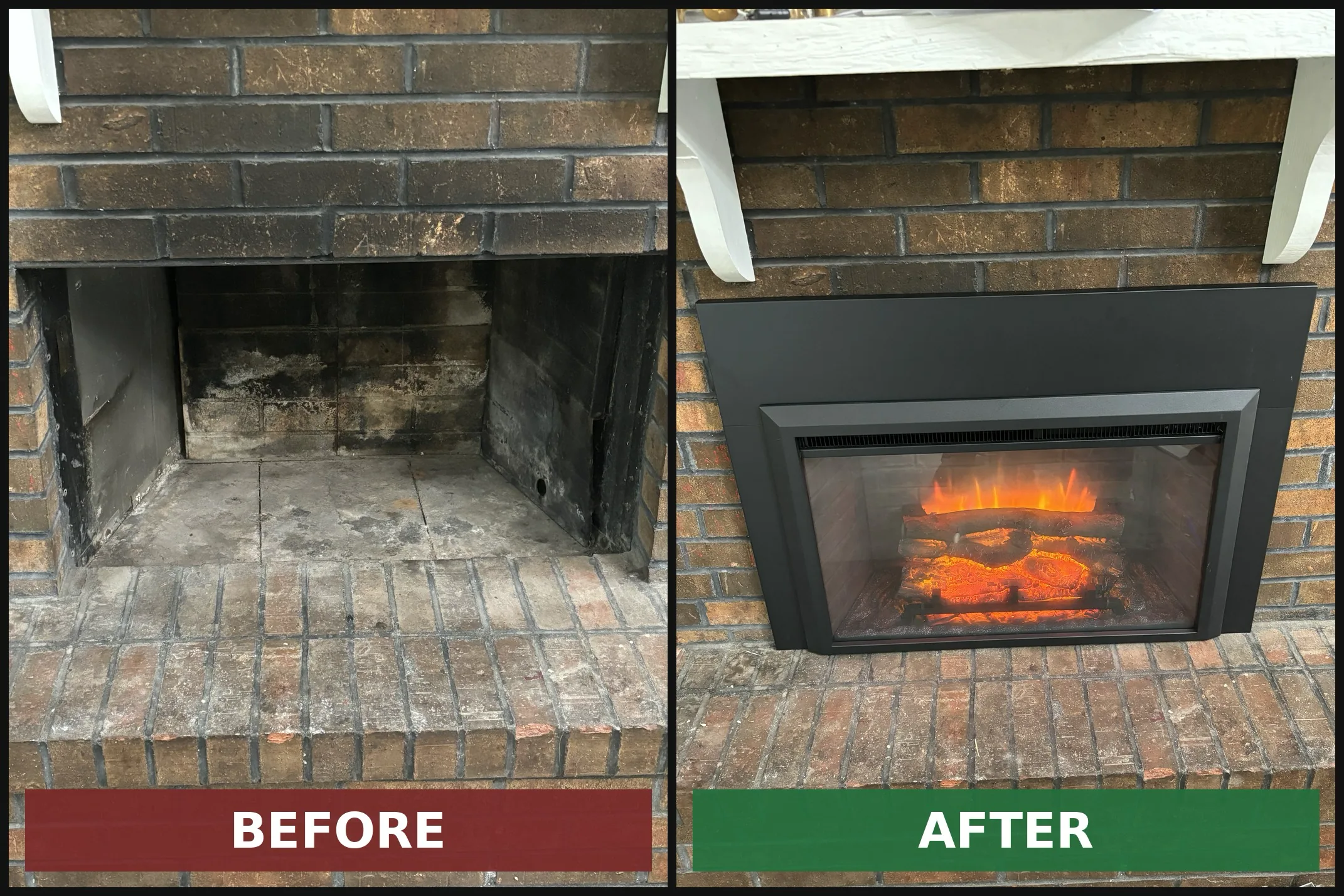
You have a fireplace in your Dallas–Fort Worth home that you never use. Maybe the damper is stiff, the firebox is stained, or hauling firewood just got old. Now you're shopping for a gas upgrade and you keep seeing two options that sound the same: gas logs and gas fireplace inserts. They are not the same thing — not in price, not in heat output, and not in what they do to your energy bill.
Here's the plain-English breakdown so you can pick the right one the first time.
What's the Actual Difference?
Gas logs are ceramic logs set over a gas burner that sits inside your existing open firebox. The fireplace stays open, and with vented gas logs the damper stays open while they burn. They look fantastic. But because the firebox is still open, most of the heat goes straight up the chimney — vented gas logs are widely treated as a decorative product, not a heater. Industry guides like this comparison from the We Love Fire dealer network put it bluntly: gas logs are for ambiance.
A gas fireplace insert is a sealed metal box with a glass front that slides into your existing masonry fireplace. It vents through a liner run up your chimney and pulls combustion air from outside. Because it's a closed system, inserts commonly run in the 70–85% efficiency range — real heat that stays in the room instead of escaping up the flue. The Hearth, Patio & Barbecue Association is a good starting point for how these appliances are rated and certified.
Side-by-Side Comparison
| Vented Gas Logs | Gas Fireplace Insert | |
|---|---|---|
| Main job | Looks — a pretty flame | Heat — a working heater |
| Efficiency | Low; most heat exits the chimney | Commonly 70–85% |
| Typical installed cost | Lower — logs, burner, hookup | Higher — unit, liner, surround, labor |
| Damper | Open during use (vented sets) | Sealed system with its own liner |
| Thermostat/remote heating | Limited | Yes on most models |
| Best for | Occasional ambiance | Regular use, heating a living area |
When Gas Logs Are the Right Call
- You burn a fire a handful of nights a year. In DFW, plenty of homeowners light the fireplace on Thanksgiving, Christmas, and the two weeks it actually gets cold. If that's you, paying insert money for looks doesn't add up.
- Your budget is tight. A quality vented log set installed costs a fraction of a full insert project.
- You love the open-fireplace look. No glass front, full open flame view.
When an Insert Is Worth the Money
- You'd use the fireplace weekly if it actually heated the room. An insert turns a drafty firebox into a zone heater you can run on a thermostat.
- Your energy bills spike in winter. Heating the room you're sitting in — instead of the whole house — is the point of a high-efficiency insert.
- Your old firebox or chimney has problems. An insert with a new liner is often the cleaner fix than restoring an aging open fireplace. We see this constantly on fireplace installation jobs across Dallas–Fort Worth.
Don't Skip This Step Either Way
Both options need a safe, sound chimney and a correct gas connection. The Chimney Safety Institute of America recommends annual inspections for all chimneys and vents, and the National Fire Protection Association reminds homeowners that heating equipment is a leading cause of home fires. Before you put new gas equipment into an old fireplace, get the system looked at.
That's exactly what our $199 gas fireplace inspection and cleaning covers — and if your existing unit is acting up instead, gas fireplace repair starts at $199, backed by our 1-year workmanship warranty.
FAQ: Gas Logs vs. Gas Inserts
Do gas logs give off any heat?
Some. Vented gas logs produce radiant warmth right in front of the fireplace, but because the damper stays open, most of the heat leaves through the chimney. Vent-free logs put more heat in the room but come with moisture and air-quality trade-offs and aren't right for every home.
Can I put a gas insert into any fireplace?
Most masonry fireplaces can take an insert, but it depends on firebox dimensions, chimney condition, and running a proper liner. An on-site measurement and chimney check settles it in one visit.
Which costs less to run each winter?
The insert, almost always. A sealed 70–85% efficient insert converts far more of the gas you pay for into room heat, while an open log set loses most of it up the flue.
Do both need yearly service?
Yes. Burners, pilots, ignition systems, and venting all need an annual check — that's the CSIA's standing recommendation for any fireplace or vent system, gas included.
Talk It Through With a Local Pro
We've been installing and servicing fireplaces in North Texas since 2009. Veteran-owned, straight answers, no upsell — if gas logs fit your life better than a $4,000 insert, we'll tell you.
Book online, call us in DFW at (817) 791-4606, or iMessage 817-946-8206. Gulf Coast neighbors can reach us at (251) 272-1990.