
1st Choice Residential journal
Gas Fireplace Won't Turn Off? How to Shut It Down Safely (DFW Guide)
Your gas fireplace is still burning after you flipped the switch off. Here's how to shut it down safely, what's actually stuck, and when to call a technician.
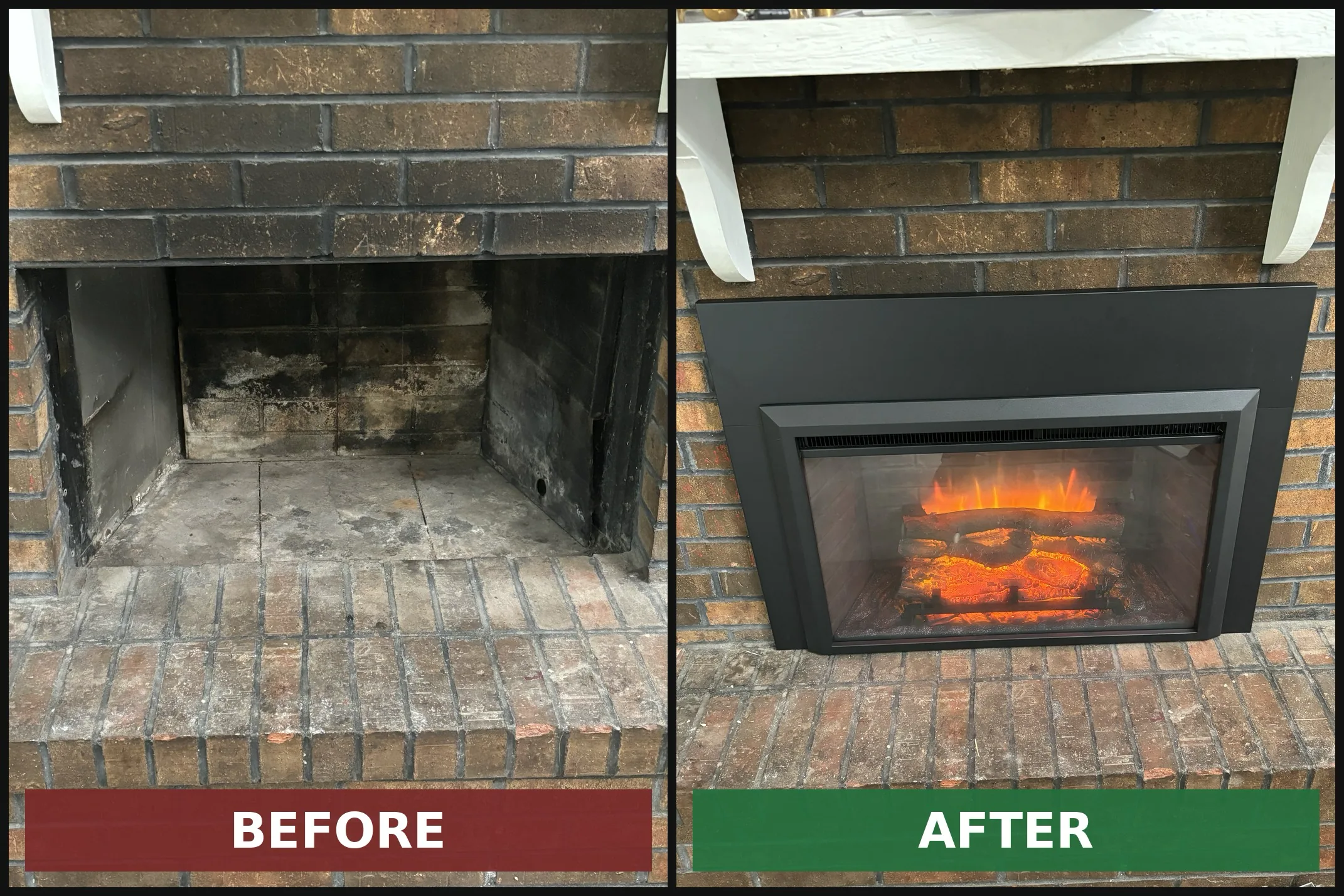
A cold front rolls through North Texas in September. You run the gas fireplace for one evening. The next afternoon it's 88 degrees again, you flip the wall switch off, and the flames keep burning.
You flip it again. Nothing. You find the remote and press OFF. Still burning. Now the living room is getting hot, you're standing there with your phone in your hand, and the only thing you actually want to know is how to make it stop.
Here's the honest version. Most of the time this is not an emergency, and about a third of the time nothing is broken at all. But you do need to know how to shut it down, and you need to know which of these causes means stop touching it and call someone.
First: is it actually still running?
Before anything else, look at what's burning.
If you see a small blue flame, a couple of inches tall, tucked behind or under the logs — that's the pilot light. Many gas fireplaces are built with a standing pilot that burns year round by design. The burner is off. The fireplace is off. Nothing is wrong.
If you see full flames across the burner, with the log set lit up — the main burner is still running, and that's the problem we're solving below.
A standing pilot puts out very little heat and very little gas. If that's all you're seeing, you can leave it alone, or you can turn it off for the summer using the control knob described in the next section. Plenty of DFW homeowners shut the pilot down in April and relight in November. Both choices are fine.
How to shut the burner off right now
Work down this list in order. Stop at the first one that works.
- 1. Check the receiver switch. If your fireplace has a remote, there's a small control box behind the lower grille or louver panel — usually with a three-position slide switch reading ON / REMOTE / OFF. If that switch is sitting on ON, the burner runs no matter what the handheld remote says. Slide it to OFF.
- 2. Turn the gas control knob to OFF. Open the bottom louver or grille. You'll find the gas valve, with a knob marked ON / PILOT / OFF. Turning it to OFF shuts the main burner and the pilot together. This is the manufacturer's own shutdown control and it's safe for a homeowner to use.
- 3. Close the shutoff valve. There is usually a gas shutoff valve within a few feet of the fireplace — in the floor, in the wall, or just outside the firebox. Some take a removable key handle. Turn it a quarter turn so the handle sits crosswise to the pipe. The flame should die within seconds.
If none of that stops the flame, or if you smell gas at any point: leave the house, take everyone with you, and call your gas utility's emergency line from outside. Do not go looking for the meter, don't flip light switches, don't take chances. A main valve that won't close is a failure of the appliance's primary safety control, and that is a job for the gas company and a technician — not a homeowner with a wrench.
The 5 real reasons a gas fireplace won't turn off
| What's going on | Why the flame stays lit | Who fixes it |
| It's just the pilot | Standing pilot burns continuously by design. The burner is already off. | Nobody. Turn the control knob to OFF if you want it out. |
| Shorted wall switch or wire | A millivolt fireplace runs on a tiny current generated by the pilot. A shorted switch or a pinched wire keeps that circuit closed, so the valve reads it as permanently ON. | Technician. Switch or wire replacement. |
| Receiver left on ON | The manual override on the receiver beats the handheld remote. Travis Industries spells this out in its own remote instructions: ON means the burner runs regardless of transmitter settings. | You. Slide it to OFF. |
| Batteries pulled from the control box | Some remote systems restart in standing pilot mode when the batteries or cover come out — and if the unit was in Remote Mode when it happened, you can no longer shut it off from the box. | You, usually. Reinstall batteries and cover, then resynchronize. |
| Failed gas valve | The valve is stuck mechanically open. Rare, but it happens with age, debris, or corrosion. | Technician. Valve replacement, gas test afterward. |
That fourth one catches people every year. Travis Industries' GreenSmart 2 remote instructions warn in bold that the batteries and cover must stay installed at all times, because pulling them can restart the system in standing pilot mode. Somebody swaps batteries in July, doesn't think about it again, and in September the fireplace won't respond to the remote. That's not a broken fireplace. That's a system waiting to be resynchronized.
What you can safely check yourself — and where to stop
Three things are fair game for a homeowner:
- The receiver switch position. ON / REMOTE / OFF. If it isn't on REMOTE, your remote isn't in charge.
- The remote batteries and the control box batteries. Replace with fresh alkalines, cover back on, then re-sync per your manual.
- The wall switch. If flipping it off does nothing but you can still kill the burner at the gas knob, the switch or its wiring is the suspect. Note that and tell your technician — it saves diagnostic time.
Stop right there if any of the following is true:
- You smell gas. Leave and call the utility from outside.
- The gas control knob will not stop the flame.
- A CO alarm has sounded at any point.
- You'd have to disconnect wiring at the gas valve to go further.
- The unit is vent-free and the room smells sharp or makes your eyes sting.
That last group isn't a sales pitch. Those are the points where the next step involves live gas connections and a manometer, and guessing gets expensive or dangerous.
Why this is worth fixing before burn season
A fireplace you can't turn off is a fireplace you'll stop using. And the same components that fail this way — the valve, the switch circuit, the thermopile, the receiver — are the ones that decide whether it lights reliably in January.
Both the CPSC and CSIA point homeowners the same direction on this. CPSC urges a yearly professional inspection of every fuel-burning heating system in the house, fireplaces and vents included. CSIA makes the same annual recommendation for gas appliances, because the vent is carrying combustion products out of your home whether the appliance is gas or wood.
What it costs in DFW
Straight numbers, no runaround:
- Gas fireplace inspection and cleaning — $199. Full component check, burner and pilot assembly cleaning, glass, gasket, venting, and operation test.
- Gas fireplace repair — from $199. Where it lands depends on the part. A wall switch and a gas valve are not the same job.
- Chimney sweep with camera inspection — $199, if the unit vents into a masonry chimney and you want eyes on the flue.
We don't quote a valve or a receiver replacement over the phone, and you should be skeptical of anyone who does. Until somebody reads the millivolt output at the valve terminals, nobody knows whether you need a $60 switch or a control valve. Every repair we do carries a 1-year workmanship warranty.
Frequently asked questions
Is it dangerous if my gas fireplace won't turn off?
Usually not immediately, as long as you can still shut it down at the gas control knob or the shutoff valve near the fireplace. It becomes an emergency if neither of those stops the flame, if you smell gas, or if a CO alarm sounds. In those cases, leave the house and call your gas utility from outside.
Why is my gas fireplace still burning after I turned the switch off?
The most common causes are a receiver override switch left in the ON position, a shorted wall switch or pinched wire keeping the millivolt circuit closed, or a control system that lost its programming after a battery change. A mechanically stuck gas valve is possible but much less common.
Can I just turn off the gas to my fireplace at the shutoff valve?
Yes. There's typically a shutoff valve within a few feet of the fireplace — in the floor, the wall, or beside the firebox. A quarter turn so the handle sits crosswise to the pipe closes it. That's the correct way to stop the flame when the controls won't respond. Leave it closed until a technician has looked at it.
Should the pilot light stay on all summer in Texas?
That's your call. A standing pilot uses a small amount of gas and adds a little heat to the room, which is why plenty of DFW homeowners turn it off in spring using the control knob and relight in the fall. Leaving it lit keeps moisture out of the firebox and makes startup faster. Neither choice is wrong.
How do I reset a gas fireplace remote after changing the batteries?
Install fresh batteries in both the handheld remote and the control box, put the battery cover back on, then re-pair them — on most systems that means pressing the PRG button on the control box, then the ON button on the remote. Check your specific manual, since the sequence varies by manufacturer.
Still burning? We'll come shut it down.
1st Choice Residential has been servicing gas fireplaces across Dallas–Fort Worth since 2009. We're veteran-owned, licensed and insured, locally owned rather than a franchise, and our technicians are NFI-certified. Over 500 five-star reviews, an Angi Super Service Award, and Thumbtack platinum status came from doing this work the same way every time.
If your fireplace won't shut off — or it shuts off and won't light again — we'll diagnose it properly instead of guessing at parts. See our gas fireplace repair service, or read more about what we do across Dallas–Fort Worth and Southlake.
Call DFW: (817) 791-4606
Gulf Coast: (251) 272-1990
Text or iMessage: 817-946-8206
Book your gas fireplace service online — pick your own time slot, no phone tag.