
1st Choice Residential journal
Why Does My Gas Fireplace Smell When I Turn It On? A Baldwin County Guide
That smell when your gas fireplace first kicks on each fall isn't always a problem — but one of them is. Here's how to tell burn-off from a real gas leak.
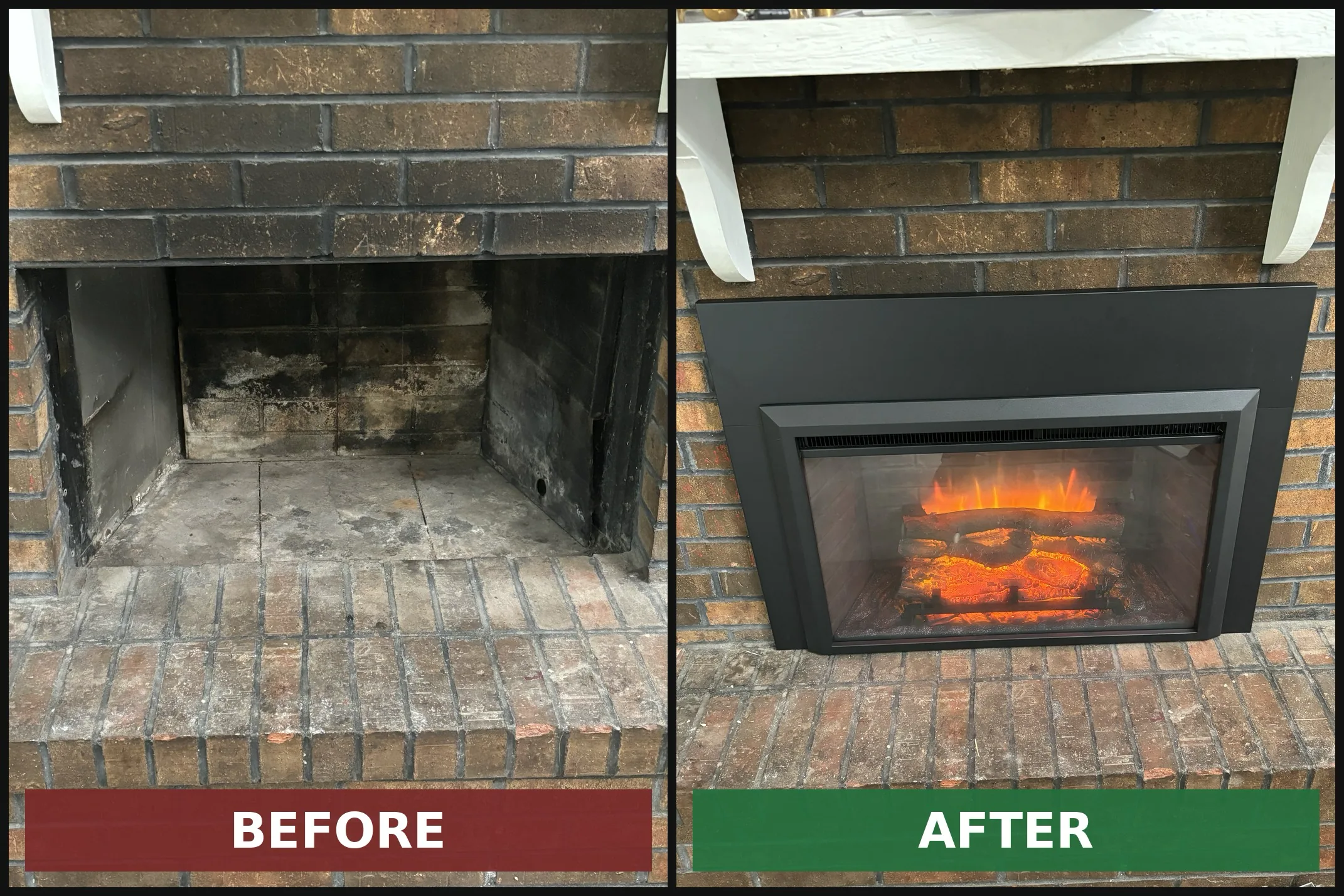
First cool morning of the year in Fairhope. Maybe 58 degrees, finally. You walk over to the fireplace, flip the switch, and about ninety seconds later the room smells like something is wrong.
Burning dust. Or hot metal. Or a chemical smell like fresh paint in a closed room. Now you're standing there with your hand near the switch wondering if you should turn it off.
Here's the honest answer: most of what you're smelling on the first burn of the season is normal and it goes away. One of them is not, and you need to be able to tell the difference in about five seconds. So let's start with that one.
The One Smell That Means Stop Right Now
Rotten eggs. Sulfur. Skunk. If that's what you smell, shut it off, get everyone out, and call your gas company from outside.
Natural gas and propane have no smell of their own. Suppliers add a sulfur compound called ethyl mercaptan on purpose so that a leak announces itself. It is a safety feature working exactly the way it was designed to. That rotten-egg smell is not a quirk of your fireplace. It is raw fuel in the room.
Do not troubleshoot it. Do not light anything, flip switches, or hunt for the source. Leave, then call.
The same rule applies to carbon monoxide, except CO gives you nothing to smell at all. The U.S. Consumer Product Safety Commission calls it the "invisible killer" because it is colorless, odorless, and undetectable to your senses. That is exactly why CPSC recommends a CO alarm on every level of the home, outside each sleeping area. Your nose is a decent gas-leak detector. It is a useless CO detector.
The Smells That Are Usually Fine
Everything below is common, especially on the first few burns after a long Gulf Coast summer.
| What you smell | What it usually is | How long it should last |
| Burning dust | Dust and pet hair settled on the logs and burner all summer | 15–30 minutes, gone after a burn or two |
| Hot metal | Firebox steel and the blower housing heating up for the first time | The first burn or two |
| Paint or chemical smell | Factory curing on a new or newly rebuilt unit | Hours of run time — see below |
| Musty or damp | Humidity in the flue, common near the bay | Clears as the flue warms and drafts |
| Scorched, sharp, one-time | Something in the firebox that shouldn't be there — a wasp nest, a leaf, a spider web on the burner | Should not repeat |
If Your Fireplace Is New or Just Rebuilt, Burn-Off Is Real
A brand-new gas fireplace, or one with a fresh set of logs or a repainted firebox, has to cure. High-temperature paint and manufacturing oils burn off the first several times the unit runs hot. It smells like a chemical plant and it can put a light haze on the glass.
Manufacturers build this into their instructions. Heat & Glo, for example, walks new owners through running the unit on high, letting it cool completely, and running it again — several hours of burn time before the odor is fully gone. Other brands publish their own break-in schedules, and they don't all match. Read the manual that came with your unit, not a generic number off the internet.
Open a window while it cures. Don't fight it with air freshener.
What's Different About Baldwin County
Our burn season is short and our off-season is brutal on hardware. A fireplace in Fairhope or Foley sits idle roughly eight months out of the year in salt air and heavy humidity. That does three things a Midwest fireplace doesn't deal with:
- Corrosion on the burner and pilot assembly. Salt air pits metal. A pilot hood with corrosion on it burns dirty, and dirty combustion smells sharp and sour.
- Insects in the ports. Mud daubers and spiders love a warm, dark burner tube. A blocked port makes an uneven, lazy flame, and an uneven flame makes soot and odor. This is one of the most common things we actually find.
- Moisture in the flue. Eight humid months with no draft leaves a damp, musty smell that shows up the second the unit warms.
What You Can Do Yourself — And Where to Stop
Safe to do with the gas off and the unit cold:
- Vacuum dust off the logs, the firebox floor, and the louvers with a soft brush attachment
- Wipe the glass with a cleaner made for fireplace glass (not ammonia glass cleaner — it etches)
- Look for webs, nests, or debris sitting on the burner
- Check that nothing flammable is stacked in front of the unit
- Test your CO alarms and replace the batteries
Stop and call a pro if any of these are true:
- You smell rotten eggs or sulfur at any point
- The chemical or burning smell is still there after several full burns on a unit that isn't new
- You see soot building on the glass or the logs
- The flame is mostly blue and lazy, or it lifts off the burner
- A CO alarm has ever sounded, even once, even if it stopped
- You moved or rearranged the ceramic logs and aren't sure they went back right
That last one matters more than people think. Log placement is engineered. A log sitting a half inch off its locator pin puts flame where the manufacturer never intended it, and that produces soot and carbon monoxide. It is not a cosmetic detail.
Why an Annual Inspection Isn't Just an Upsell
NFPA 211 calls for chimneys, fireplaces, and vents to be inspected at least once a year for soundness, freedom from deposits, and correct clearances. The Chimney Safety Institute of America makes the same point specifically about gas: gas burns clean, but the vent can still be blocked by a bird nest or debris, and a blocked vent on a gas appliance is a carbon monoxide problem, not a smoke problem.
Our gas fireplace inspection and cleaning runs $199. That covers cleaning the burner and logs, checking the pilot and safety controls, inspecting the venting, and confirming log placement against the manufacturer's diagram. If something needs fixing, repairs start at $199 and carry a 1-year workmanship warranty.
Anything bigger — a valve, a corroded burner assembly, venting work — gets quoted after we look at it. We won't price that over the phone, because a dirty pilot and a failed gas valve are not the same job and pretending otherwise is how people get surprised on the invoice.
Frequently Asked Questions
Is it normal for a gas fireplace to smell when you first turn it on?
Yes. A dusty, hot-metal smell on the first burn of the season is normal and usually clears within 15 to 30 minutes as summer dust burns off the logs and firebox. A chemical or paint smell is normal on a new or rebuilt unit while the high-temperature paint cures. A rotten egg or sulfur smell is never normal — shut the fireplace off, leave, and call your gas company.
How long should the burn-off smell from a new gas fireplace last?
It depends on the manufacturer. Break-in procedures generally involve several hours of run time, sometimes across multiple heating and cooling cycles, before the curing odor is fully gone. Check the manual for your specific model and follow that schedule. Open a window while it runs.
Can a gas fireplace leak carbon monoxide without me smelling anything?
Yes, and that's the whole danger. Carbon monoxide is colorless and odorless. You cannot smell it, taste it, or see it. CPSC recommends CO alarms on every level of the home, outside each sleeping area. If your gas fireplace is producing soot on the glass or logs, that is visible evidence of incomplete combustion and it should be inspected.
Why does my gas fireplace smell musty instead of smoky?
Usually moisture. Along the Gulf Coast, a flue that sits idle through a humid summer holds damp air, and you smell it the moment the unit warms up. If it doesn't clear after the flue drafts, the cause is often water getting in — a failed chimney cap or chase cover, or missing flashing. That's worth looking at before winter.
Should I use a gas fireplace that smells like it's burning something?
Not repeatedly. A one-time scorched smell from a leaf or a spider web is fine. A burning smell that comes back every time you run the unit means something is sitting where it shouldn't be, or the fireplace is burning dirty. Shut it off and have it looked at before you run it again.
Get It Checked Before the First Real Cold Front
September and October are the right time. Once the first genuine cold snap hits Baldwin County, everybody discovers their fireplace problem on the same weekend, and the schedule fills up fast.
1st Choice Residential is veteran-owned, locally owned rather than a franchise, licensed and insured, and we've been doing this since 2009. Our technicians are NFI-certified. We serve all of Baldwin County, including Fairhope, Daphne, Foley, Gulf Shores, and Spanish Fort.
Gulf Coast: (251) 272-1990
Text us: 817-946-8206
Or book your gas fireplace inspection online and pick a time that works for you.
And if you smell rotten eggs — put the phone down, get out of the house, and call the gas company first. Everything else can wait.